
Living in China
Opening a Business in China? (2026 Legal & Practical Guide for Students)
Introduction Opening a Business in China is a high-intent query for students

Scholarship application and exam preparation support.
Practice tests, strategies, and feedback to help you achieve your target score.
Targeted training and past paper practice to boost your exam performance.
Mock interviews and coaching to help you succeed in admissions and visa interviews.


How to write a study plan is one of the first questions international students ask when preparing applications for Chinese universities and scholarships. A study plan is one of the most important documents required when applying to Chinese universities and scholarships. Whether you are applying for a bachelor’s, master’s, or PhD program, your study plan helps universities understand your academic background, goals, motivation, and future direction.
For many applicants, grades alone are not enough to secure admission. Chinese universities evaluate students through a holistic process that includes academic performance, motivation, research potential, and long-term objectives. This is why a strong study plan can significantly improve your chances of acceptance.
A well-written study plan demonstrates:
Before preparing your study plan, it is important to understand the full application structure explained in this complete guide on Study in China for Moroccans: Everything You Need to Know 2026
and How to Apply for a Master in China or a Phd ? (Full Guide 2026), where all steps and university admission are broken down clearly.
If you are also exploring funding opportunities, you can check available China Scholarships 2026: Complete Guide to Study in China, to understand eligibility, benefits, and required documents.
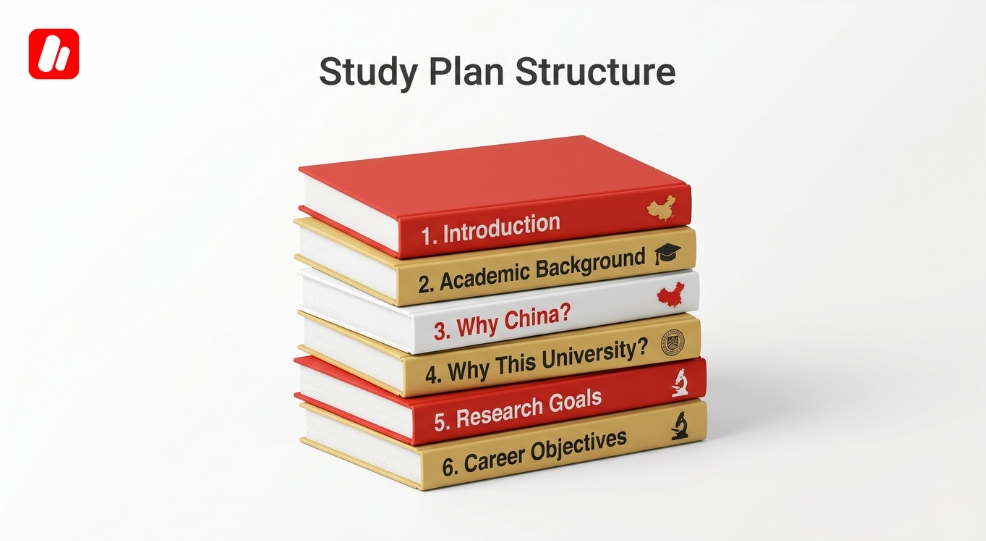
A study plan is an academic document written by the applicant to explain:
For graduate programs, a study plan often combines elements of:
Chinese universities use this document to evaluate whether you are academically prepared and genuinely motivated for the program.
Chinese universities receive thousands of international applications every year. The study plan helps admissions committees identify students who:
A weak or generic study plan can lead to rejection, even if the applicant has good grades.
For scholarship applications, especially government-funded programs, the study plan becomes even more important because scholarship committees want students with strong academic vision and future potential.
Different universities may have different requirements, but most follow general guidelines like these:
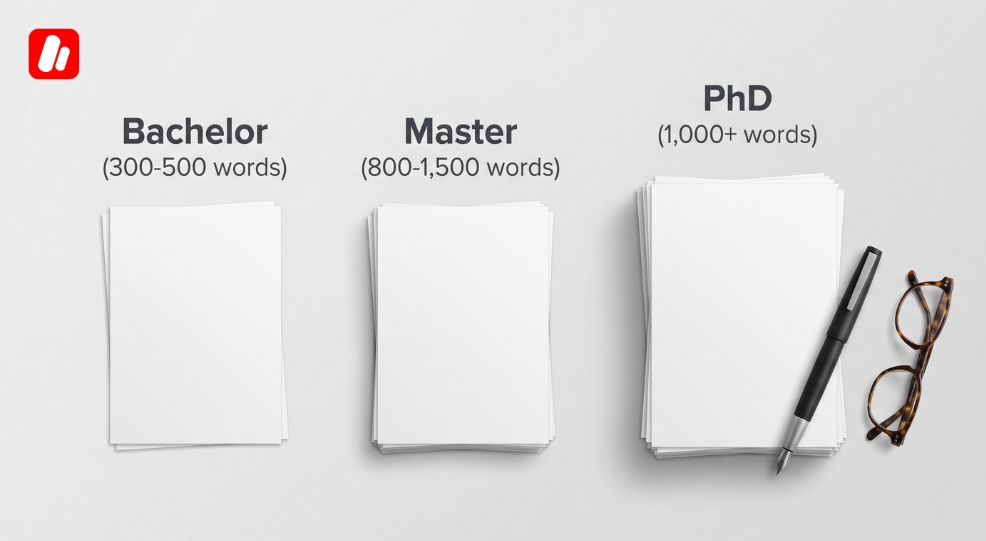
| Program Level | Recommended Length |
| Bachelor | 300–500 words |
| Master | 800–1,500 words |
| PhD | 1,000–2,000+ words |
Some universities specifically require postgraduate applicants to submit study plans with at least 1,000 words.
Always verify the exact requirement on the official university admission page.
1. Introduction
Begin by introducing yourself clearly.
Include:
Example:
I graduated with a Bachelor’s degree in Mechanical Engineering and intend to pursue a Master’s degree in Renewable Energy Engineering in China.
The introduction should immediately show your academic direction.
2. Academic Background
This section explains your educational history and relevant experience.
You should discuss:
Avoid simply repeating your CV. Instead, explain how your previous experiences shaped your academic interests.

Good study plans connect past experiences with future objectives.
3. Why Choose China for Higher Education ?
This section is extremely important for scholarship and university applications.
Chinese universities want to understand why you selected China specifically instead of another country.
Strong reasons may include:
Avoid generic statements such as:
“China is a beautiful country.”
Focus instead on academic and professional motivations.
Example topics:
4. Why Choose This University and Program ?
Admissions officers expect applicants to research the university carefully.
In this section, explain:
A strong study plan demonstrates that the applicant understands the university’s academic environment.
Example:
This creates stronger academic alignment.
5. Research Interests and Study Objectives
This is the most important section for master’s and PhD applicants.
You should explain:
Your objectives should be:
For research-based programs, universities evaluate whether your interests align with available supervisors and research priorities.
Example areas:
The more specific and structured your objectives are, the stronger your study plan becomes.
6. Career Goals
Chinese universities also evaluate long-term direction.
Explain:
Strong applicants demonstrate purpose and long-term planning.
Example:

The conclusion should reinforce:
Keep it concise and professional.
A strong ending leaves a positive final impression on the admissions committee.
Universities can quickly recognize copied or overly generic study plans.
Your document should reflect:
Personalization is essential.
Weak study plans often fail to explain:
Admissions officers prefer applicants with clear academic vision.
A study plan is an academic document, not a casual essay.
Avoid:
Professional academic tone is important.

Strong applicants align their study plans with:
This improves compatibility between the student and the program.
| Strategy | Why It Matters |
| Personalize your content | Makes your application authentic |
| Research the university carefully | Shows seriousness and preparation |
| Focus on academic goals | Demonstrates direction |
| Keep a logical structure | Improves readability |
| Use professional language | Creates credibility |
| Mention realistic objectives | Shows maturity and planning |
| Proofread carefully | Avoids grammar and spelling mistakes |
Applying to Chinese universities can be complicated, especially for international students preparing academic documents for admissions and scholarships.
Great Wall Education supports students with:
Their experience with Chinese university applications helps students improve document quality and avoid common application mistakes.
Competition for Chinese university admissions and scholarships continues to increase every year. Universities receive large numbers of applications from international students worldwide.
➤ APPLY NOW — Free Initial Consultation Available ➤
A study plan is an academic document explaining your educational background, academic goals, research interests, and reasons for studying in China.
Most universities require:
300–500 words for bachelor applications
800–1,500 words for master’s applications
1,000+ words for PhD applications
Yes. Most Chinese university scholarships and CSC applications require a study plan as part of the application package.
Yes. Universities can often detect copied or AI-generated content, especially generic templates that lack personalization.
You should begin preparing your study plan several months before application deadlines to allow enough time for revisions and proofreading.
Introduction Opening a Business in China is a high-intent query for students

Introduction Understanding how to send money to China as an international student is

Introduction Why Chinese universities reject documents is one of the biggest concerns for