
|
  • Francais
  • العربية

Study in China for Moroccans: Everything You Need to Know 2026

A Moroccan student smiling on a modern Chinese campus holding an admission notice, showcasing the top opportunities to study in China for Moroccans.
وقت القراءة :


Key takeaways (Read in 30s)

  • China offers fully funded scholarships that cover tuition, accommodation, and provide a monthly stipend
  • The cost of living is significantly lower than Europe, often by 2 to 3 times
  • Strong academic fields include engineering, medicine, computer science, and international business
  • Students can choose to study in English or Chinese, depending on their level and strategy
  • There are career opportunities after graduation both in China and Morocco
  • Admission is based on a smart application strategy, not just your GPA

Study in China Is a Strategic Choice; Not Just a Backup Plan

Study in China for Moroccans was seen as a secondary option. Today, that perception has completely changed. China is now considered a strategic destination for students who think long-term about their education and career.

One of the most common realizations among students already in China is that they underestimated its value. Many admit that if they had understood earlier the advantages; such as the quality of education, international exposure, and career opportunities; they would have chosen China as their first choice, not a backup.

China offers a unique combination that is difficult to find elsewhere:

  • Universities ranked in QS World University Rankings
  • Modern campuses and advanced infrastructure
  • Strong government support for international students
  • Access to fully funded scholarships

In addition, the economic relationship between Morocco and China continues to grow. This creates a strong demand for graduates who understand both markets, giving Moroccan students in China a clear competitive edge in the job market.

Conceptual diagonal split image a traditional European university on the left and a high-tech research lab at a top university in China on the right.

Can You Really Study in China for Free?

This is one of the most important questions;and the answer is yes, but only if you understand how the system works.

The main player here is the China Scholarship Council (CSC), which manages the largest scholarship program in China.

Fully Funded Scholarships (CSC)

These scholarships are highly attractive because they offer a complete financial package:

  • Full tuition coverage, meaning you don’t pay for your studies
  • Free accommodation in university dormitories
  • A monthly stipend to cover daily expenses
  • Comprehensive health insurance throughout your studies

However, getting a CSC scholarship is not about luck. It is about strategy and positioning.

Successful applicants usually:

  • Apply to multiple universities instead of relying on one option
  • Choose universities where their profile matches the requirements
  • Write a strong and personalized motivation letter

Provincial Scholarships

Provincial scholarships are offered by local governments in China and are often overlooked by students.

  • They can cover part or all of the tuition fees
  • Requirements vary depending on the province
  • They are generally less competitive than CSC scholarships

This makes them an excellent backup plan for students who want to maximize their chances.

University Scholarships

Some universities offer their own funding programs, such as:

These scholarships may include:

  • Full or partial tuition coverage
  • Accommodation support
  • Partial financial aid

They are particularly useful for students who did not secure CSC funding but still want to study at a reduced cost.

Self-Funded Study

If you don’t receive a scholarship, studying in China is still financially accessible.

  • Tuition fees range between $2,000 and $4,000 per year
  • Combined with low living costs, the total remains lower than one year in Europe

This makes China one of the few destinations where even self-funded education remains affordable.
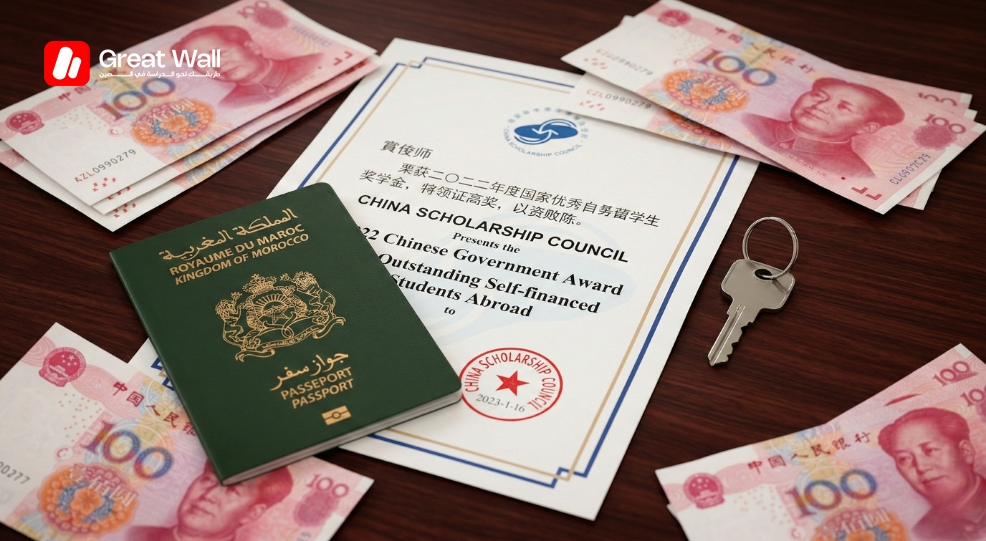
Close-up of a China Scholarship Council (CSC) certificate and a Moroccan passport, showing the first successful admission and visa steps for China.

Requirements to Study in China: What Really Determines Acceptance?

A common mistake among Moroccan students is focusing only on grades. While GPA is important, Chinese universities take a holistic approach.

They evaluate:

  • Your academic background
  • Your motivation and clarity of goals
  • The consistency of your application
  • Your ability to explain why you chose your major

This means:

  • A student with average grades but a strong application can be accepted
  • A student with high grades but a weak application can be rejected

Start Your Journey to Study in China

We guide you step by step to choose the right university and build a strong application.

English vs Chinese: A Strategic Decision

Choosing the language of study is a key decision that affects your chances of acceptance and your future opportunities.

  • English programs
    • Easier access for most students
    • Higher competition, especially in top universities
  • Chinese programs
    • Require passing HSK and sometimes a preparatory year
    • Offer more opportunities, especially for long-term careers in China

Top universities include:

Choosing early allows you to build a clear strategy and increase your chances of success.

CSCA Test: Is It Really Difficult?

In 2026, the CSCA test has raised many concerns among applicants. However, the reality is much simpler.

  • It is not required by all universities
  • It is mainly used to filter large numbers of applicants
  • It reflects a more organized admission process, not a harder one

Students who prepare properly often find that the test is manageable and can even become a competitive advantage. Therefore, we provide a mock test for our students for training and honing their skills.
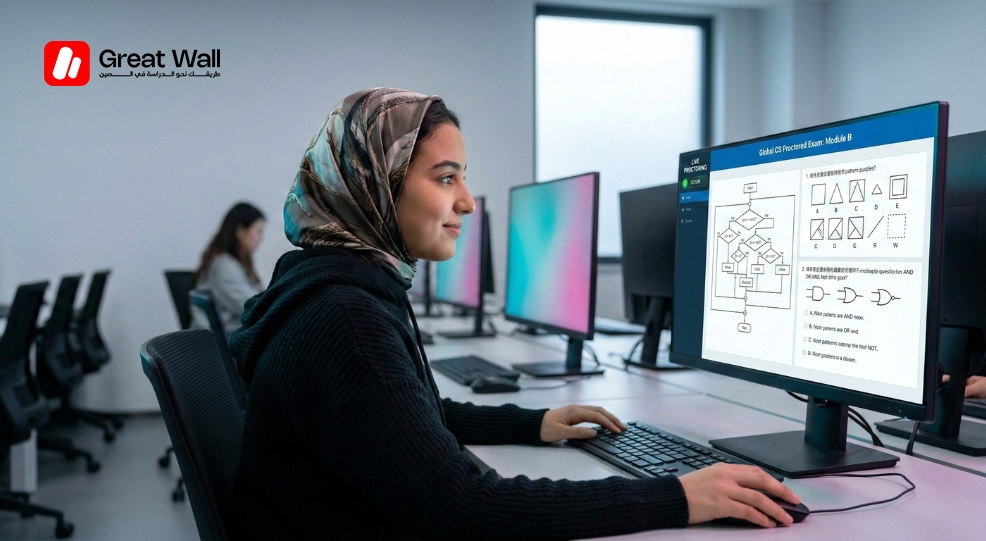
A Moroccan female student focused on digital logic exams at a prestigious Chinese university within a high-tech learning environment.

Choosing Your Major: The Decision That Will Shape Your Future

Choosing your major is not just an academic step; it’s a life direction that will influence years of your personal and professional journey.

In China, certain fields clearly stand out; not only in terms of education quality, but also in career opportunities after graduation.

  • Computer Science & IT
    In this field, you won’t just learn basic programming. You’ll dive into advanced areas such as artificial intelligence, data analysis, and software engineering. These skills are directly aligned with the global job market, making graduates highly employable both in China and internationally.
  • Engineering
    Engineering is one of China’s strongest advantages. From renewable energy to infrastructure and industrial systems, you will study in an environment where theory is closely connected to real-world applications. This practical exposure gives students a significant edge after graduation.
  • Medicine & Pharmacy
    These fields require more awareness and careful planning. While the quality of education is high, the recognition of medical degrees in Morocco may involve equivalency procedures. This makes it essential to fully understand the implications before choosing this path.
  • International Business & Trade
    This is a strategic choice for forward-thinking students. Studying in China; one of the world’s largest economic hubs, gives you direct insight into global trade systems. This experience becomes a powerful long-term advantage that is difficult to replicate elsewhere.

These fields represent a strong balance between education quality, employability, and admission opportunities.

Admission & Visa Process: From First Decision to Arrival in China

Applying to study in China may seem complex at first. But once you understand each step, the process becomes clear, structured, and manageable.

The difference between a rejected application and a successful one often comes down to how well you follow a complete and strategic process.

Initial Preparation & Required Documents

Before anything else, you must carefully prepare all required documents. These typically include:

  • Copy of your passport or national ID
  • Baccalaureate certificate (or proof of enrollment in the final year)
  • Academic transcripts and certified documents
  • Recent passport-size photos
  • Language certificates depending on the program:
    • HSK for Chinese-taught programs
    • TOEFL or IELTS or Duolingo for English-taught programs

These documents form the foundation of your entire application. Missing or incorrect documents can lead to delays or rejection.

Choosing Your Major & University

The next step is selecting universities that match your academic level and ambitions.

  • Top-tier universities in cities like Beijing and Shanghai
    Offer highly competitive programs, strong internship opportunities, and international networks.
  • Mid-tier universities in cities like Wuhan and Nanjing
    Provide an excellent balance between education quality and living costs.
  • More affordable universities in cities like Jilin and Luoyang
    Are ideal for students who want a quieter environment and lower expenses.

If you need to improve your Chinese or adapt to the academic system, you can start with a preparatory year, which is an excellent transition before beginning your degree.

A Moroccan medical student using a digital microscope in a high-tech lab, reflecting the strong scientific programs available when you study in China.

Applying for Scholarships

China offers a wide range of scholarships, including:

  • China Scholarship Council (CSC)
    Fully funded (tuition, accommodation, monthly stipend)
  • University scholarships
    Offered by institutions like Zhengzhou University and Jiangsu University

Your success depends on strategy:

  • Apply to multiple universities and scholarships
  • Customize your application for each program
  • Write a strong, personalized motivation letter

Required Tests

  • HSK (Chinese proficiency test)
    Required for Chinese-taught programs and directly impacts your admission chances
  • CSCA test
    Used by some universities as a filtering step; not necessarily difficult, but important to prepare for

Proper preparation for these tests gives you a strong competitive advantage.

Admission & Official Documents

Once accepted, the university issues key documents needed for your visa:

  • JW201 → Pre-admission document (used for scholarship processes)
  • JW202 → Official admission notice required for visa application

This step is extremely important; any mistake can delay or even jeopardize your visa.

Visa Application Process

After receiving the JW202 form, you prepare your visa file:

  • Complete visa application forms
  • Verify all documents carefully
  • Book an embassy appointment
  • Track your visa process (usually around 5 working days)

At this stage, the process becomes more than administrative;it bec omes a complete strategy that significantly increases your chances of success.

Living Costs & Student Life in China

One of the biggest surprises students discover after arriving in China is that life is much simpler and more affordable than expected.

With a monthly budget between $200 and $400, a student can live relatively comfortably; especially when staying in university housing. This typically covers food, transportation, and daily expenses.

A Moroccan student in a modern dormitory in Chengdu, showcasing the quality of life and affordable housing costs in China for internationals.

But what truly makes China unique is flexibility.

You can:

  • Reduce your expenses easily
  • Or upgrade your lifestyle depending on your budget

This level of control is rarely available in other study destinations.

Housing, Safety & Daily Life

Moving to China raises important questions about accommodation and daily living—but the reality is often better than expected.

  • Safety
    China is considered one of the safest countries in the world, offering a secure and stable environment for Moroccan and international students.
  • Accommodation options
    • Affordable and convenient university dormitories
    • Private apartments near campus for more comfort
  • Muslim-friendly environment
    Many cities offer:
    • Mosques
    • Halal restaurants
    • Muslim student communities

This makes adaptation significantly easier for Moroccan students.

Technology & Lifestyle

China offers a highly advanced digital ecosystem.

You can use your phone for:

  • Payments
  • Transportation
  • Shopping
  • Daily services

This makes everyday life extremely efficient and flexible.

Final Insight

With proper planning and a clear understanding of your options; housing, food, and budgeting; you can:

  • Adapt quickly
  • Live comfortably
  • Avoid financial surprises

The key is preparation; not just arrival.

Can You Work While Studying in China?

The short answer is yes; but with important limitations that every student must clearly understand before relying on it.

Chinese regulations allow international students to work part-time under specific conditions, usually requiring approval from the university and immigration authorities. This means that working is not completely open or flexible like in some European countries.

In practice, students may find opportunities such as:

  • Part-time jobs related to language skills (translation, tutoring)
  • Internships connected to their field of study
  • Small freelance or campus-based work opportunities

These experiences can be extremely valuable; not just financially, but professionally. They allow you to:

  • Improve your Chinese or English communication skills
  • Gain real-world experience in an international environment
  • Build early professional connections

However, it is very important to stay realistic:

  • Part-time work is not stable income, especially in the beginning
  • Opportunities can be limited depending on your city and language level
  • Your main focus must always remain your studies

The smartest approach is to plan your budget independently, and treat work as a bonus; not a necessity.

Using a mobile payment app in a Chinese university cafeteria, highlighting the modern lifestyle and cost of living in China for students.

What Happens After Graduation?

Graduating from a Chinese university is not the end of your journey; it is the beginning of multiple career opportunities.

Thanks to China’s global economic position and its strong connection with Africa, Moroccan graduates are increasingly valued in both local and international markets.

After graduation, you typically have three main paths:

  • Work in China
    Some universities and companies offer internships and job opportunities for international graduates. Students who already gained experience during their studies have a clear advantage in securing positions.
  • Return to Morocco with a competitive edge
    A Chinese degree combined with international exposure makes your profile stand out. Moroccan companies increasingly look for candidates who understand global markets—especially China.
  • Build an international career
    Many graduates leverage their experience to work in other countries or continue their studies abroad.

During your time in China, you don’t just earn a degree; you develop:

  • A global mindset and international exposure
  • A strong professional network (students, professors, companies)
  • The ability to adapt to multicultural environments

These elements often matter more than the diploma itself in today’s job market.

Are Chinese Universities Recognized in Morocco?

This is a critical concern for Moroccan students; and the answer is reassuring.

Yes, most major Chinese universities are recognized in Morocco, especially well-established institutions with international rankings and strong academic reputations.

A degree from a recognized Chinese university allows you to:

  • Work in Morocco in both public and private sectors
  • Apply for further studies abroad (Europe, Asia, or elsewhere)
  • Compete in international job markets

However, recognition alone is not everything. The real value of your degree depends on several factors:

  • Your field of study (some fields like medicine may require equivalency procedures)
  • The skills you develop during your studies
  • Your international exposure and practical experience

In other words, your diploma opens the door; but your profile determines how far you go.

A Moroccan professional shaking hands with a Chinese businessman in Casablanca, symbolizing career growth and the ability to work while studying in China.

Best Cities in China Based on Your Lifestyle

Choosing your city in China is not just about location; it’s about defining your entire lifestyle during your studies.

Each city offers a different balance between cost, opportunities, and environment.

  • Shanghai & Shenzhen
    These are among the most dynamic cities in China, offering strong international exposure, access to global companies, and excellent internship opportunities. They are ideal for students who want a fast-paced environment and career growth.
  • Hangzhou & Nanjing
    These cities provide a balanced lifestyle, combining high-quality education with a more affordable cost of living. They are perfect for students who want both comfort and focus.
  • Jilin & Luoyang
    These cities are quieter and significantly more affordable. They are ideal for students who want to concentrate on their studies, improve their language skills quickly, and avoid distractions.

The best choice depends on your goals, personality, and budget; not just the popularity of the city.

Great Wall Education: Your Strategic Partner

If you’ve reached this stage, you are no longer just exploring; you are preparing to make a real decision about your future.

This is where Great Wall Education becomes a key partner.

Instead of navigating the process alone and risking mistakes, you can work with a team that understands every step of the journey and how to maximize your chances of success.

They support you with:

  • University selection and admissions strategy
  • Applications for CSC and other scholarships
  • Preparation for exams such as HSK and CSCA
  • Full management of your application from start to finish

What truly makes the difference is not submitting an application; but how the application is built and positioned.

A strong strategy can significantly increase your acceptance chances and reduce risks.

Arrival & Support in China: Where the Real Journey Begins

One of the biggest mistakes students make is thinking that the process ends once they receive admission or a visa.

In reality, the most challenging phase often begins after arrival in China.

Adapting to a new country, language, and system can be overwhelming if you are alone. This is why post-arrival support is essential.

With proper guidance, your transition becomes smooth and stress-free.

You receive support as additional services with :

  • Airport pickup upon arrival
  • Accommodation setup before you arrive
  • University registration and administrative procedures
  • Opening a bank account and obtaining a residence permit
  • Getting a SIM card and internet access

But the most important part is continuity.

You are not left alone after the first few days; ongoing support ensures that you can:

  • Solve problems
  • Adapt faster to your new environment
  • Focus fully on your studies

This is where the real difference is made; not just in getting accepted, but in succeeding once you arrive.

Conclusion

Study in China is not necessarily the easiest path; but it is one of the most strategic and rewarding ones.

The difference between success and failure does not depend on luck or even grades alone. It depends on:

  • How well you understand the process
  • How you build your application
  • How you plan your journey

If you approach it with the right strategy, studying in China can completely transform your academic and professional future.

FAQs

Is studying in China free for Moroccan students?

Yes, it can be completely free if you obtain a scholarship such as the CSC, which covers tuition, accommodation, and provides a monthly stipend.

How much does a student need per month in China?

On average, a student needs between $200 and $400 per month, depending on the city and lifestyle.

Is a Chinese degree recognized in Morocco?

Yes, but some fields such as medicine require an equivalency process, so it’s important to verify before choosing your major.

Can students work while studying?

Yes, but in a limited capacity and under conditions that vary depending on the university.

Sources & References

Iyad Rouijel

Table of Contents

Subscribe to our newsletter

Subscribe to receive the latest academic updates and the best guidance on studying in China.

Subscription Form News Post EN

By submitting the form I agree with the Privacy policy

Related posts