How To - Guides
How to Choose the Best Chinese University and Scholarship for International Students in 2027
Find the best Chinese university and scholarship for 2027 with our expert breakdown

Scholarship application and exam preparation support.
Practice tests, strategies, and feedback to help you achieve your target score.
Targeted training and past paper practice to boost your exam performance.
Mock interviews and coaching to help you succeed in admissions and visa interviews.

Securing full funding for international study is highly competitive, leading many Moroccan applicants to consider China University Partial Scholarships as a dependable route to their degree. While fully funded awards from the Chinese Government Scholarship (CSC) provide comprehensive living stipends, institutional partial grants directly target your primary academic expenses. At Great Wall Education, we help you understand how these institutional mechanisms work so you can plan your studies realistically.
Opting for a study in China pathway through institutional support allows students to substantially lower their baseline educational costs. A standard partial scholarship in China typically takes the form of a direct China university tuition waiver, though certain awards also include university fee waivers for on-campus lodging. Understanding these distinctions early prevents financial surprises during your academic stay.
Every university applies its own evaluation benchmarks, making it essential to review the official China university GPA requirements before submitting an institutional application. This guide examines how study in China partial funding works in practice, detailing the exact structure of academic waivers, out-of-pocket budget realities, and official institutional evaluation procedures.

Chinese higher education institutions structure financial support across distinct tracks, allowing international applicants to target awards that match their academic profile. The table below outlines these funding categories, though you must verify exact dates and terms on official institutional portals.
| Track | Coverage | Application Window | Target Group |
|---|---|---|---|
| Class A (Full Waiver) | 100% Tuition exemption | January 1 – May 30 | Top-tier undergraduate & postgraduate applicants |
| Class B (Partial Waiver) | 50% Tuition exemption | January 1 – May 30 | Merit-based degree candidates |
| Institutional Grant | Tuition subsidy or fixed rebate | January 1 – May 30 | Self-funded students seeking partial relief |
Base tuition costs set by universities and regulated by the Ministry of Education of the People’s Republic of China establish the baseline for these awards. Undergraduate degree programs cost 14,000 to 30,000 RMB per year depending on the major, while Master’s and PhD programs range from 18,000 to 45,000 RMB annually.
Securing a China university tuition waiver changes your budgeting model significantly. Unlike Chinese Government Scholarships (CSC), which provide a comprehensive package covering tuition, dorms, and monthly stipends, a partial scholarship in China targets specific fee items. Recipients remain responsible for their personal living costs, study materials, and residual tuition balances.
Applicants planning their path to study in China should note that visa procedures require verified financial stability. Consular instructions from the Embassy of the People’s Republic of China in the Kingdom of Morocco require self-supported and partially funded candidates to prove they have adequate financial means for remaining expenses before departure.
Most institutional funding frameworks divide awards into standardized tiers based on incoming academic merit. Understanding how an individual China university tuition waiver works across degree levels helps you plan your baseline budget accurately.

Universities primarily divide their tuition relief into three distinct categories:
Standard tuition waiver tiers:
Institutions set quota distributions according to degree priorities. Bachelor’s degree programs often offer broad access to Tier 2 and Tier 3 China university fee waivers, spreading resources across a larger cohort. Graduate faculties prioritize Tier 1 waivers to attract international research talent to specialized laboratories. When you choose a Chinese university, examine its departmental brochure, as Tier 1 allocations differ significantly among engineering, medical, and humanities faculties.
Beyond academic discounts, institutional awards frequently subsidize essential living costs through targeted grants. A comprehensive partial scholarship in China may bundle housing subsidies or medical coverage with direct course discounts, though institutions configure these benefit packages differently.
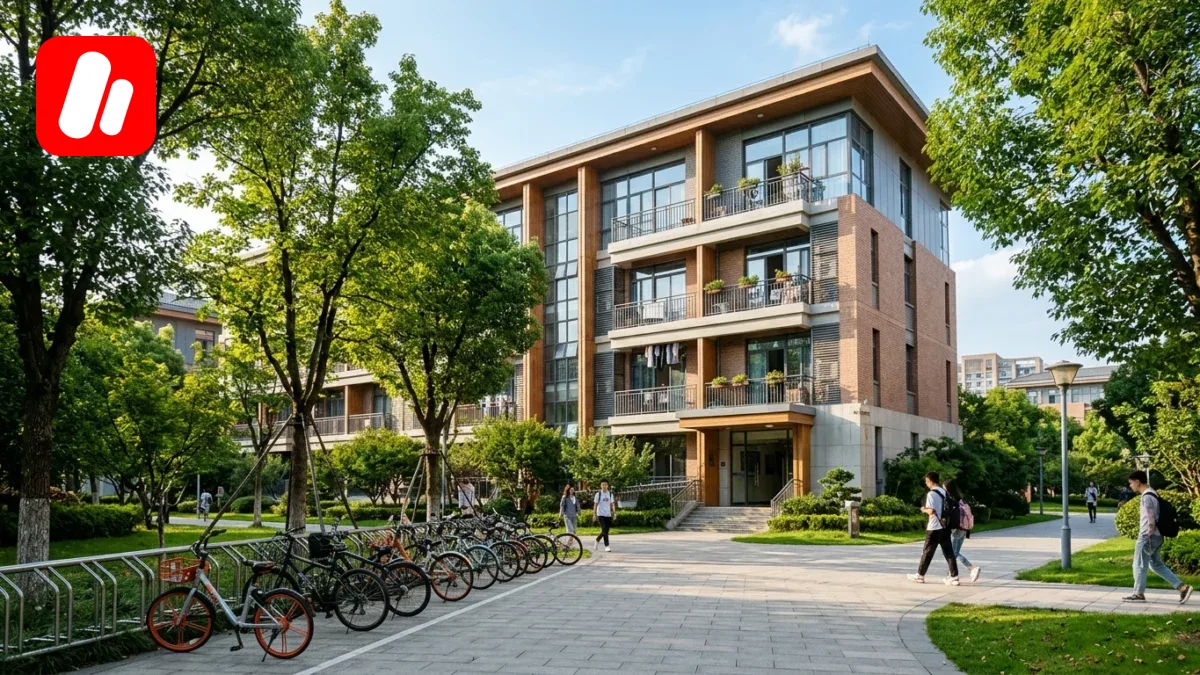
On-campus housing represents a notable expense during your degree program. Standard campus dormitories generally cost between 600 and 1,500 RMB per month, depending on room occupancy and city tier. When universities include accommodation relief, they typically assign students to double or quad rooms in official international student residences rather than paying cash stipends.
Common benefit combinations in partial awards:
Whether your admission notice includes these perks depends entirely on faculty funding guidelines. While first-tier partial grants frequently pair dorm allowances with academic waivers, entry-level awards usually focus solely on tuition relief.
💡 Tip from the Great Wall Education team: Always check whether your admission letter specifies a free dormitory bed or a monthly housing subsidy. If room coverage is omitted, budget at least 600 to 1,500 RMB monthly for your room deposit and rent upon arrival on campus.
Understanding who funds your award helps you navigate the application channels correctly. When seeking a partial scholarship in China, you will generally encounter two primary institutional funding sources: provincial government programs and individual university presidential awards.
Provincial awards originate from regional departments of education, such as the Jiangsu Provincial Government Scholarship, the Zhejiang Provincial Government Scholarship, or the Guangdong Government Outstanding International Student Scholarship. University awards, on the other hand, come directly from an institution’s endowment or operating budget in the form of chancellor’s or presidential merit scholarships.
Funding mechanics and administration:
While provincial allocations reflect regional development priorities, university-specific awards give academic departments flexible study in China partial funding options to recruit targeted talent directly.
Although provincial and institutional funding streams operate through different administrative channels, both evaluate your application against standardized institutional thresholds. Securing China University Partial Scholarships requires meeting strict academic, demographic, and character standards set by individual admissions committees.

Standard academic and age limits:
Language requirements depend entirely on your chosen medium of instruction. For English-taught degrees, universities generally require a minimum score of 6.0 in IELTS (International English Language Testing System) or 105 on the Duolingo English Test. Chinese-taught programs require an official HSK (Hanyu Shuiping Kaoshi) certificate, typically level 4 for scientific disciplines and level 5 for humanities or business.
Every applicant seeking a partial scholarship in China must also submit an authenticated non-criminal record certificate issued by their home country’s authorities within the preceding six months.
Meeting these academic benchmarks gives you a dependable route to study in China partial funding. China University Partial Scholarships significantly reduce the upfront cost of your degree, turning higher education abroad into an attainable reality. By combining a reliable China university tuition waiver with realistic budgeting for daily living expenses, you can focus on your studies without financial strain.
Keeping your award requires steady academic dedication throughout your stay, so that your benefits are renewed without disruption each year. When you start your preparation early, navigating university criteria becomes a straightforward milestone rather than an overwhelming hurdle.
Our team at Great Wall Education helps Moroccan students identify eligible institutions, review documentation thoroughly, and submit verified applications with confidence. Preparing your study plan well in advance ensures you approach your degree in China with clarity and peace of mind.
China University Partial Scholarships typically cover part or all of your tuition, saving between 14,000 and 30,000 RMB per year for bachelor’s degrees and 18,000 to 45,000 RMB for postgraduate programs. Some packages also waive on-campus housing costs of 600 to 1,500 RMB monthly, though students still pay their own living expenses.
The official application window runs from January 1 to May 30 each year for the autumn semester intake. Most Chinese institutions evaluate admissions and fee waivers on a rolling basis, so our team advises Moroccan applicants to prepare their academic files and submit early within this timeframe.
Most universities require a minimum cumulative GPA between 2.8 and 3.0 out of 4.0, or an academic equivalent of 70% to 75%. Highly competitive programs or full tuition waivers may set higher benchmarks, while individual faculties review high school transcripts or previous degree performance during admissions.
You need roughly 2,500 to 4,500 RMB per month to cover meals, local transport, and study supplies. Additionally, securing the X1 student visa requires proof of financial support through a personal or parental bank guarantee holding at least 2,500 to 3,000 USD per study year.
No, fee waivers are not renewed automatically. Continuing recipients must pass an annual scholarship evaluation held every year between May and June. Your institution assesses academic grades, classroom attendance records, and campus conduct before approving fee exemptions for the subsequent academic year.
Find the best Chinese university and scholarship for 2027 with our expert breakdown

Discover how provincial government scholarships fund international students in China for 2027. Compare
Explore China university partial scholarships, tuition waiver options, living costs, and accurate application