
Chinese Universities
Choose a Chinese University: 4 Crucial Steps
Learn how to choose a Chinese university in 2027 with accurate data on

Scholarship application and exam preparation support.
Practice tests, strategies, and feedback to help you achieve your target score.
Targeted training and past paper practice to boost your exam performance.
Mock interviews and coaching to help you succeed in admissions and visa interviews.

Are you trying to figure out how to choose a Chinese university that genuinely aligns with your future ambitions? With thousands of degree programs opening for the 2027 academic year, deciding where to submit your application can quickly feel overwhelming when balancing academic prestige against realistic budgets.
Making an informed decision comes down to a few critical factors:
Key considerations for your choice:
This guide walks you through every essential benchmark, from interpreting Chinese university rankings to meeting official China university admission requirements. At Great Wall Education, we help you break down each stage so you can choose a Chinese university with total confidence.

Global league tables only tell part of the story when assessing Chinese higher education. National development initiatives determine how institutions are funded, staffed, and recognized globally, making them a crucial reference point when you evaluate your options.

China classifies its top educational institutions through specific policy designations:
Subject reputation often outweighs institutional prestige. When comparing Chinese university rankings, a specialized technical or medical university frequently provides superior laboratories, industry ties, and career outcomes over a broadly ranked comprehensive school.
Institutional prestige provides a useful starting point, but finding your best match requires looking closely at how an institution connects with your long-term plans. When you choose a Chinese university, aligning the campus environment and degree credentials with your chosen profession ensures you graduate with marketable skills.

The city you select shapes your day-to-day lifestyle, industry access, and total cost of living just as much as your department does.
Tier 1 metropolises (Beijing, Shanghai, Guangzhou, Shenzhen):
Emerging regional hubs (Hangzhou, Wuhan, Chengdu, Xi’an):
Verifying program recognition before applying protects your future career, particularly in tightly regulated fields.
Key accreditation checkpoints:
Once you narrow down your target academic locations, timing becomes your most critical asset. Missing an admission portal cutoff will delay your plans by an entire year, regardless of how qualified your profile may be.

| Intake Track | Application Window | Target Audience | Indicative Deadlines |
|---|---|---|---|
| Spring Intake (March) | October 2026 – December 2026 | Language preparatory students and select postgraduate research tracks | Mid-December to early January |
| Autumn Intake (September) | November 2026 – June 2027 | Direct bachelor, master, and doctoral degree candidates across all disciplines | March to late June 2027 |
Please note that all posted dates are strictly indicative and must always be confirmed directly on individual university portals.
The vast majority of degree-granting programs, especially those assessed in global evaluations like the Times Higher Education World University Rankings, open exclusively for the autumn semester. If you apply for standard degrees starting in September 2027, university admissions platforms generally accept submissions until late spring.
By contrast, the March spring intake offers limited slots. It focuses primarily on non-degree Chinese language immersion programs, foundational semesters, or specialized postgraduate research where departments accept mid-year enrolments.
Carefully mapping these calendar differences will keep your enrollment trajectory on schedule as you choose a Chinese university that fits your academic timeline.
💡 Tip from the Great Wall Education team: Do not wait until the final deadline week; submission portals often experience heavy server traffic, and departmental document screening operates on a rolling basis.
Meeting standard China university admission requirements involves preparing a clean, authenticated dossier well before department portals close. Academic eligibility benchmarks also matter, so review the China University GPA Requirements to verify your standing before gathering your paperwork.
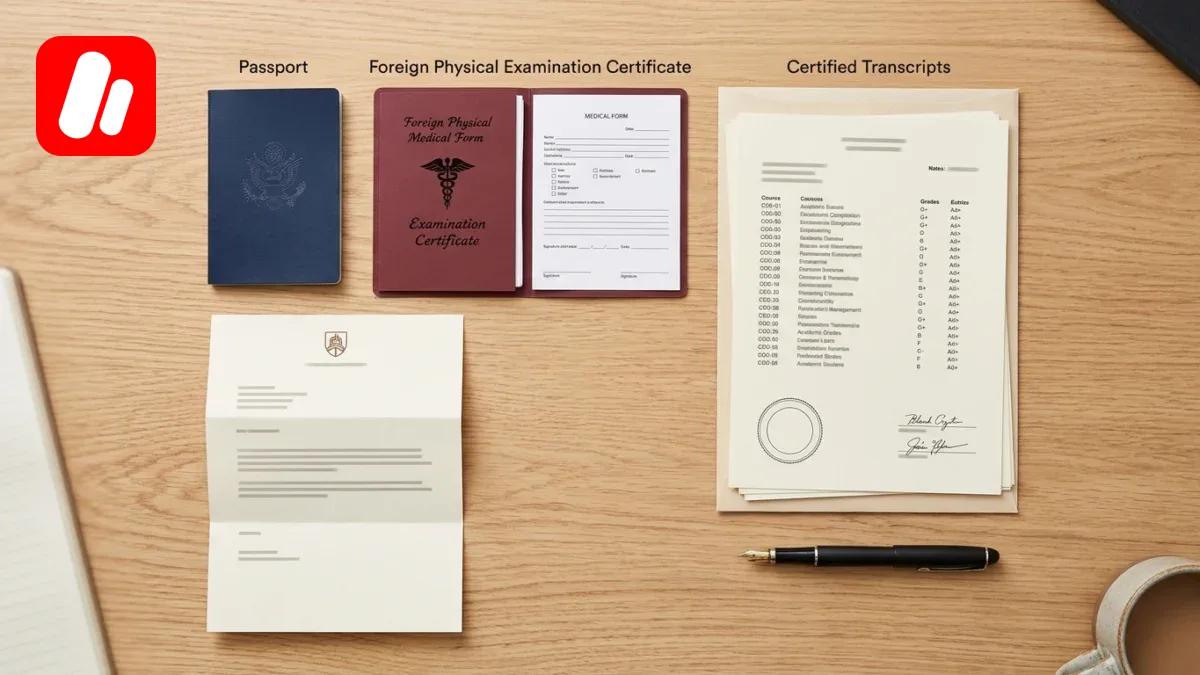
Core application documents:
Language conditions depend entirely on your instruction medium. For English-taught programs, universities require a minimum IELTS score of 6.0 or TOEFL iBT 80. Chinese-taught majors demand HSK Level 4 for undergraduate entry or HSK Level 5 for postgraduate degrees.
Every original file not in English or Chinese must be translated by a certified service and legalized by a notary. Submitting clear, authenticated scans prevents administrative rejections as you choose a Chinese university for the 2027 academic year.
Once you gather your application paperwork, planning your realistic budget is the next essential step to choose a Chinese university. Academic expenses remain predictable across public institutions, though costs vary considerably depending on your chosen field and degree level.

Standard annual tuition ranges:
Your living budget depends heavily on geography. Tier 1 hubs like Beijing and Shanghai require 4,000 RMB to 6,000 RMB monthly, while Tier 2 educational centers such as Wuhan, Chengdu, and Xi’an average between 2,000 RMB and 3,500 RMB. For an itemized look at everyday spending, read our guide on self-funding studies in China.
On-campus international student dormitories generally cost between 600 RMB and 1,800 RMB per month, whereas private off-campus rentals easily double those figures. Before finalizing financial guarantees, always confirm official consular guidance directly through the Embassy of the People’s Republic of China in the Kingdom of Morocco.
Securing financial support can significantly offset living costs and tuition expenses. When evaluating options to choose a Chinese university, understanding the available funding tracks allows you to target programs that match your academic profile.

International applicants can target three main tiers of funding depending on their academic background and study level.
Available funding tracks:
Full funding typically covers comprehensive medical insurance, on-campus accommodation, and full tuition waivers. Reviewing the CSC scholarship application terms shows that living allowances follow a standardized national structure.
Fixed monthly stipend rates:
Competition remains rigorous, particularly for English-taught master programs at prestigious institutions. Submitting well-structured research proposals and validated academic transcripts significantly improves admission competitiveness.
Even strong candidates miss out on admission when small procedural details slip through the cracks. Once you choose a Chinese university, navigating the application pipeline accurately is just as vital as your academic record.

Watch out for these critical traps before submitting your file:
Finding the right academic path comes down to aligning your career goals with the right city budget and preparing your documentation well before institutional deadlines. When you choose a Chinese university, balancing institutional strengths against real living costs gives you the clearest route to a rewarding degree in 2027.
Every intake presents genuine opportunities for international and Moroccan applicants who organize their files early. Taking the time to verify course prerequisites, assemble certified records, and plan your funding allows you to navigate the admissions calendar with clarity and confidence.
Navigating university portals and scholarship criteria is much easier when you have experienced guidance beside you. If you want personalized support evaluating eligible programs and securing your placement, reach out to our advisory team at Great Wall Education to plan your next steps.
Compare both annual tuition and city living costs. Standard English-taught degrees cost between 18,000 RMB and 45,000 RMB per year, while MBBS programs range from 30,000 RMB to 50,000 RMB. Living expenses average 4,000 to 6,000 RMB monthly in Tier 1 cities like Beijing and Shanghai, but drop to 2,000 to 3,500 RMB in Tier 2 hubs like Hangzhou, Chengdu, and Wuhan.
Focus on university quota allocations, degree level, and eligibility requirements. Chinese Government Scholarship (CSC) applications for the September 2027 intake run from November 2026 to early April 2027. Full CSC awards cover tuition, accommodation, and provide monthly stipends of 2,500 RMB for undergraduates, 3,000 RMB for master students, and 3,500 RMB for doctoral researchers across participating institutions.
You need a recognized high school diploma or bachelor degree, certified academic transcripts, a valid passport, a physical examination record, and proof of language proficiency. English-taught degrees require at least an IELTS 6.0 or TOEFL iBT 80. Chinese-taught programs require HSK Level 4 for undergraduate entry or HSK Level 5 for master and PhD programs.
Not automatically. While top-ranked institutions offer robust research facilities and global prestige, international employers prioritize degree recognition, program accreditation, practical internships, and technical skills. For fields like medicine or engineering, choosing a university officially approved by your home country’s licensing bodies and relevant professional ministries matters far more than general global ranking tables.
You need an X1 visa if your academic program lasts longer than 180 days, which applies to full degree tracks. For short-term study or exchange programs under 180 days, you must apply for an X2 visa. Once you arrive in China on an X1 visa, you must convert it into a temporary residence permit within 30 days.
Learn how to choose a Chinese university in 2027 with accurate data on

Explore China Scholarships for Moroccan Students for 2027–2028. Discover CSC types, ministry requirements,

Planning on self-funding studies in China? Discover real 2027 costs, tuition fees, accommodation