
Living in China
Opening a Business in China? (2026 Legal & Practical Guide for Students)
Introduction Opening a Business in China is a high-intent query for students

Scholarship application and exam preparation support.
Practice tests, strategies, and feedback to help you achieve your target score.
Targeted training and past paper practice to boost your exam performance.
Mock interviews and coaching to help you succeed in admissions and visa interviews.


How to apply for a Master in China or a Phd is a question thousands of international students ask every year. China has become one of the world’s most competitive postgraduate destinations, with institutions like Peking University and Tsinghua University holding places in the global top 20 in the QS World University Rankings 2026. The application process follows a clear pathway: verify your eligibility, prepare the required documents, submit through the university portal (and the CSC system if applying for a scholarship), then obtain your student visa.
This guide walks you through every stage — from the first document you need to gather to the moment you arrive in China and convert your visa into a residence permit. All information has been verified against official admissions pages from Tsinghua University, Peking University, Zhejiang University, and UCAS, as well as the official Chinese Government Scholarship (CSC) system, as of May 2026.

China’s higher education system has undergone a remarkable transformation over the past two decades. The country now hosts more than 500 universities and research institutes accepting international postgraduate students. In the 2026 QS World University Rankings, mainland China had 72 institutions ranked — the third-highest national representation after the United States and the United Kingdom. Peking University held 14th place globally, while Tsinghua rose to 17th, and Fudan University climbed to 30th.
Beyond rankings, China offers several compelling advantages: tuition fees significantly lower than Western counterparts, a vast range of English-taught programs in science, engineering, and business, generous government scholarships that eliminate costs entirely, and one of the world’s most active research environments — particularly in AI, materials science, renewable energy, and biomedical engineering.

| Important: Degree Authentication Degree diplomas issued by overseas universities must be authenticated by the Chinese Service Center for Scholarly Exchange (CSCSE), under China’s Ministry of Education, before university registration. Students expected to graduate in 2026 must provide a pre-graduation certificate at the time of application and submit the authenticated degree before enrollment. |
The documents below are required by the vast majority of top Chinese universities for the 2026 intake. Individual programs may require additional materials — always verify with the specific university’s admissions page.
| DOCUMENT | WHO NEEDS IT | NOTES |
| Valid Passport (non-Chinese) | Both | Must be valid throughout your study period. Photocopy of data page required. |
| Bachelor’s Degree Certificate & Transcript | Both | Must be in Chinese or English; other languages require notarized translation. |
| Master’s Degree Certificate & Transcript | PhD Only | Overseas degrees must be authenticated by CSCSE. |
| Degree Authentication Report (CSCSE) | Both | Required for all degrees issued outside mainland China. |
| Language Proficiency Certificate | Both | IELTS 6.5 / TOEFL 85 for English programs; HSK 4–5 for Chinese programs. |
| Personal Statement / Motivation Letter | Both | Minimum 1,500 words; include academic background, reasons for applying, study plan, and career goals. |
| Research Proposal / Study Plan | PhD Only | Detailed research plan aligned with chosen supervisor’s field. Minimum 1,500 words. |
| Two Recommendation Letters | Both | From full or associate professors on official letterhead with signature, contact number, and email. |
| CV / Résumé | Both | Complete educational and professional history from university onwards. |
| Supervisor’s Acceptance Form | PhD — Recommended | Signed by the university supervisor. Strongly recommended; increases admission success significantly. |
| Physical Examination Record for Foreigners | Both | Completed by an authorized medical facility; required for visa and residence permit. |
| Recent Passport-Style Photograph | Both | White background, full face, no headwear. |

Deadlines vary by institution. Below is the typical timeline for the standard September intake, based on verified 2026 admissions calendars from Tsinghua, Peking University, ZJU, and UCAS.
| NOV–DEC | Application Portals Open Most major universities open their online application systems. CSC scholarship system opens. Begin contacting supervisors (PhD applicants). |
| JAN–FEB | Early Deadlines English-taught doctoral programs at PKU close by end of February. Some universities close CSC Type B applications by February 15. Begin CSCSE authentication if not already started. |
| MAR–APR | Main Deadline Period General CSC scholarship deadline: approximately April 30. Most university portals close for both Master’s and PhD applications. Submit well before the deadline — portals may restrict access in the final days. |
| JUN–JUL | Admission Notices Issued Universities issue admission notices and JW forms. Some universities also accept summer applications for October or next-cycle intakes. |
| JUL–AUG | Visa Application Period Apply for your X1 visa at the Chinese Embassy/Consulate. This is peak season — start as early as possible. Processing typically takes 4–10 business days. |
| SEP | Arrival and Registration Report to your university for registration. Register at the local police station within 24 hours of arriving. Apply for Residence Permit at PSB within 30 days. |
One of the strongest reasons to pursue postgraduate study in China is the availability of generous scholarships. The most significant is the Chinese Government Scholarship (CSC), administered by the China Scholarship Council and open to students worldwide.
| FULLY FUNDED Chinese Government Scholarship (CSC) — Type A Applied through your country’s nominating body (e.g., the Moroccan Ministry of Higher Education) or the Chinese Embassy. Covers tuition, accommodation, health insurance, and monthly stipend. Open December–April. |
FULLY FUNDED Chinese Government Scholarship (CSC) — Type B Applied directly through the university’s portal at campuschina.org. Deadline typically February 15 – April 30 depending on institution. Same benefits as Type A. |
| FULLY FUNDED CAS-ANSO – Scholarship (UCAS) Offered by the University of Chinese Academy of Sciences. PhD students receive RMB 5,000/month. Master’s students receive RMB 3,500/month. Full tuition waiver included. |
UNIVERSITY-SPECIFIC University Excellence Scholarships Most C9 universities offer their own scholarships covering partial or full tuition. Examples include Tsinghua’s Fellowship and PKU’s Graduate Scholarship for International Students. |
| CSC Scholarship Benefits at a Glance (2026) ✔ Master’s students: Tuition waiver (RMB 30,000/year) + RMB 3,500/month stipend + accommodation + insurance ✔ PhD students: Tuition waiver (RMB 40,000/year) + RMB 5,000/month stipend + accommodation + insurance ✔ Age limits: Master’s applicants under 35; PhD applicants under 40 ✔ Must not hold any other Chinese government scholarship simultaneously |

The following universities consistently rank among China’s best for international postgraduate students and are officially included in the CSC scholarship program. Rankings reflect the QS World University Rankings 2026.
| UNIVERSITY | CITY | QS 2026 | STRENGTHS |
| Peking University (PKU) | Beijing | #14 | Humanities, Law, Life Sciences, Economics |
| Tsinghua University (THU) | Beijing | #17 | Engineering, Computer Science, Architecture, AI |
| Fudan University | Shanghai | #30 | Medicine, Management, International Relations |
| Shanghai Jiao Tong University (SJTU) | Shanghai | Top 50 | Engineering, Medicine, Finance |
| Zhejiang University (ZJU) | Hangzhou | Top 50 | Engineering, Agriculture, Computer Science |
| Nanjing University | Nanjing | #103 | Chemistry, Earth Sciences, Physics |
| Wuhan University | Wuhan | #186 | Remote Sensing, Law, Information Science |
| University of Chinese Academy of Sciences (UCAS) | Beijing | Research | Natural Sciences, Engineering, Technology |
Chinese universities accept postgraduate applicants in English-taught or Chinese-taught programs. The language of instruction determines the required proficiency certificate.
If you are not yet at the required language level, many universities offer a one-year preparatory Chinese language program that leads into the full degree program.
All international Master’s and PhD students studying in China for more than 180 days must obtain an X1 student visa before traveling. The X1 is a single-entry visa that must be converted to a multi-year Residence Permit within 30 days of arrival.
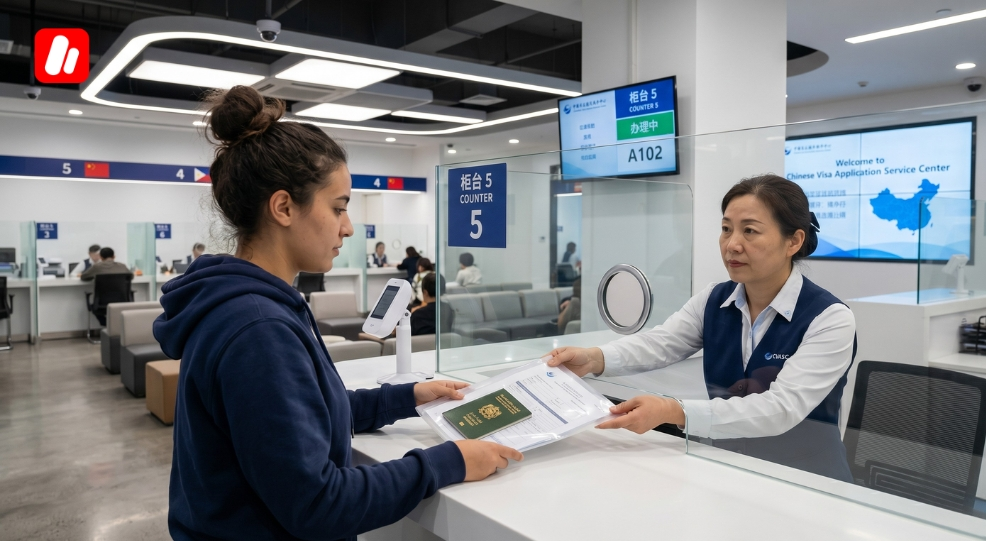
| Step 1: Receive Admission Notice and JW Form The university sends your official Admission Notice and the JW201 (scholarship holders) or JW202 (self-funded) form. Since June 2023, JW202 forms are issued electronically and downloadable. Allow 3–4 weeks after enrollment confirmation. |
| Step 2: Complete a Physical Examination Obtain a completed Physical Examination Record for Foreigners from an authorized hospital or medical center. This document must be valid within 6 months of your visa application date. |
| Step 3: Gather Visa Documents Prepare: valid passport (6+ months validity, 1+ blank visa page), completed Visa Application Form (V.2013), two recent passport photos, Admission Notice, JW201/JW202 form, physical examination record, and proof of financial support (bank statements for USD 5,000–10,000, or scholarship award letter). |
| Step 4: Submit at the Chinese Embassy or Consulate Visit the Chinese Embassy or Consulate in your home country (or a Chinese Visa Application Service Center). Book an appointment in advance. Regular processing takes 4–10 business days; express and rush options are available for an additional fee. |
| Step 5: Travel to China and Register Enter China on your X1 visa. Register with the local police station within 24 hours of arrival (university dormitory staff typically assist). Keep all original documents — Admission Notice, JW form, and Physical Examination Record — safe. |
| Step 6: Convert X1 to Residence Permit (within 30 days) Apply for your Temporary Residence Permit at the local Public Security Bureau (PSB) within 30 days of arriving in China. Required documents: passport, Admission Notice, JW form, physical examination report, proof of accommodation, and two passport photos. Failure to apply within 30 days results in illegal stay penalties. |
| Common Mistakes to Avoid – Forgetting to register at the police station within 24 hours of arrival – Missing the 30-day PSB window for the Residence Permit (fines apply) – Not downloading a VPN before entering China – Submitting applications close to the deadline (university portals often restrict access in the final days) – Missing the CSCSE authentication step for overseas degrees |
Tuition fees in China vary by university, field, and program type. The following represent typical ranges for international students not covered by scholarships, based on official 2025–2026 fee schedules.
CSC scholarship recipients are fully exempt from tuition fees, accommodation charges, and health insurance costs. The net cost of studying on a full CSC scholarship can be as low as zero.

Great Wall Education is Morocco’s leading consultancy specializing in guiding Moroccan students through every step of studying in China — from selecting the right university and scholarship to visa support, pre-departure preparation, and on-arrival assistance. We have helped hundreds of Moroccan students secure admission and full CSC scholarships at China’s top universities, including Tsinghua, Peking University, Fudan, and UCAS.
Our team combines deep knowledge of Chinese university admissions with expertise in the Moroccan academic system, ensuring your application is positioned as strongly as possible. We handle document preparation, translation coordination, supervisor outreach, CSC portal guidance, and visa application support — so you can focus on your academic goals.
➤ APPLY NOW — Free Initial Consultation Available ➤
To apply for a Master’s degree in China, you need a recognized bachelor’s degree (or equivalent), a valid passport as a non-Chinese citizen, language proficiency proof (IELTS 6.5 / TOEFL 85 for English-taught programs, or HSK 4–5 for Chinese-taught programs), complete academic transcripts, a personal statement or motivation letter (minimum 1,500 words), and two recommendation letters from professors. Some programs additionally require a GRE or GMAT score.
PhD applicants in China must hold a Master’s degree in a relevant discipline. Some universities in sciences and engineering accept bachelor’s degree holders directly into doctoral programs. You must also submit a detailed research proposal or study plan (min. 1,500 words), two academic recommendation letters from full or associate professors, a complete CV, and — strongly recommended — a supervisor’s acceptance letter. CSC scholarship PhD applicants must be under 40. All overseas degrees must be authenticated by China’s CSCSE before registration.
Master’s programs typically take 2 to 3 years. Doctoral programs generally last 3 to 4 years. Students admitted directly from a bachelor’s degree to a doctoral program (available at select universities in STEM fields) usually require 5 years to complete the degree.
Yes. The CSC scholarship is fully funded and covers tuition fees, university accommodation or an accommodation subsidy, health insurance, and a monthly living stipend. For 2026, PhD students at UCAS receive RMB 5,000/month, and Master’s students receive RMB 3,500/month. Tuition is waived: RMB 30,000/year for Master’s and up to RMB 40,000/year for PhD programs.
Deadlines vary by university. Most fall between January and April for the September intake. The general CSC scholarship window runs from approximately December 15 to April 30. English-taught PhD programs at Peking University close by the end of February. Always verify exact dates on the university’s official admissions portal.
Yes. Many top Chinese universities offer Master’s and PhD programs fully in English, particularly in science, engineering, business, technology, and international relations. Standard minimum requirements for English-taught programs are IELTS 6.5 or TOEFL 85 (iBT). Some programs set higher thresholds. Chinese-taught programs require HSK 4 (Master’s) or HSK 5 (PhD).
Master’s and PhD students must apply for an X1 visa, which is issued for study programs lasting more than 180 days. After arriving in China, X1 visa holders must register at the local Public Security Bureau (PSB) within 30 days and convert the X1 into a multi-year Residence Permit. Failing to do so within the 30-day window results in illegal stay status and financial penalties.
While not universally mandatory, securing a supervisor’s acceptance letter before applying strongly improves a PhD application — particularly for the CSC scholarship. You should identify 2–3 potential supervisors from your target university’s faculty list, contact them with your CV and a summary of your research interests, and request a formal acceptance or support letter. Some programs at UCAS and Zhejiang University explicitly require the Supervisor’s Acceptance Form.
Admission competitiveness varies significantly by university and program. Top-tier institutions like Tsinghua, PKU, and Fudan are highly selective and comparable in difficulty to elite Western universities. However, China’s ‘Double First-Class’ universities — comprising 147 institutions — offer high-quality programs with acceptance rates more accessible to international applicants, especially those applying with strong CSC scholarship profiles.
Introduction Opening a Business in China is a high-intent query for students

Introduction Understanding how to send money to China as an international student is

Introduction Why Chinese universities reject documents is one of the biggest concerns for