CSCA
CSCA test center locations: In-Person & Remote Hubs
Check official CSCA test center locations, in-person testing hubs, and remote online exam

Scholarship application and exam preparation support.
Practice tests, strategies, and feedback to help you achieve your target score.
Targeted training and past paper practice to boost your exam performance.
Mock interviews and coaching to help you succeed in admissions and visa interviews.

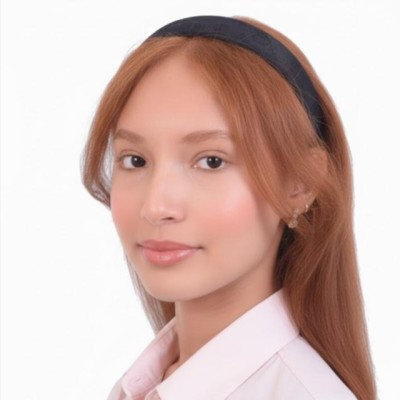
Applying to Chinese higher education with a Moroccan science diploma involves demonstrating academic readiness on an international scale. Structuring your Moroccan Baccalaureate Prep for CSCA gives you a clear pathway to translate your rigorous secondary training into the standardized scores that admissions committees expect.
Chinese universities increasingly look for standardized benchmarks to evaluate applicants from diverse educational systems, making dedicated CSCA exam preparation Morocco students pursue essential. The China Scholastic Competency Assessment (CSCA) serves as a common entrance exam for international students, assessing your aptitude in core STEM subjects administered primarily in English or Chinese. While Moroccan diplomas reflect thorough analytical training, institutions use these standardized results to calibrate scores across international grading frameworks.
Moroccan students from Sciences Mathématiques and Sciences Expérimentales backgrounds already hold solid theoretical foundations. This guide provides an objective CSCA test topic mapping to clarify how your high school curriculum aligns with the assessment format, helping you bridge subject variations and approach your preparation methodically.
Understanding the administrative structure of the China Scholastic Competency Assessment (CSCA) helps streamline your Moroccan Baccalaureate Prep for CSCA before diving into curriculum comparisons. As Chinese universities align their international admissions under standards guided by the Ministry of Education of the People’s Republic of China, the CSCA serves as a primary benchmark across STEM degree programs.
| Subject Module | Format | Approximate Fee (RMB) | Typical Session Window |
|---|---|---|---|
| Mathematics | Computer-based (MCQ & short answer) | 400 RMB (single) | December – January / March – April |
| Physics | Computer-based (MCQ & problem-solving) | Combined module rates apply | December – January / March – April |
| Chemistry | Computer-based (MCQ & quantitative) | Up to 800 RMB (full STEM battery) | December – January / March – April |
Testing dates and specific booking slots remain indicative and must be confirmed directly through the official registration portal at csca.cn. To align your studies with the Moroccan baccalaureate CSCA syllabus for the 2027 intake cycle, candidates should register well ahead of institutional submission deadlines.
Administered primarily in English or Chinese, the CSCA evaluates foundational aptitude rather than rote formula recall, which is why reviewing a detailed CSCA test topic mapping is so beneficial. For applicants planning their China University Admission Entrance Exams, understanding the core format is vital.
Core registration parameters:
Establishing these administrative foundations ensures your CSCA exam preparation Morocco proceeds without scheduling surprises or missed registration cutoffs.
Transitioning from the general examination architecture to subject-level strategy requires an analytical look at the mathematics curriculum. Moroccan students typically enter this assessment with rigorous mathematical reasoning, yet tailoring your Moroccan Baccalaureate Prep for CSCA requires understanding where your national syllabus directly applies and where syllabus divergence demands targeted study.
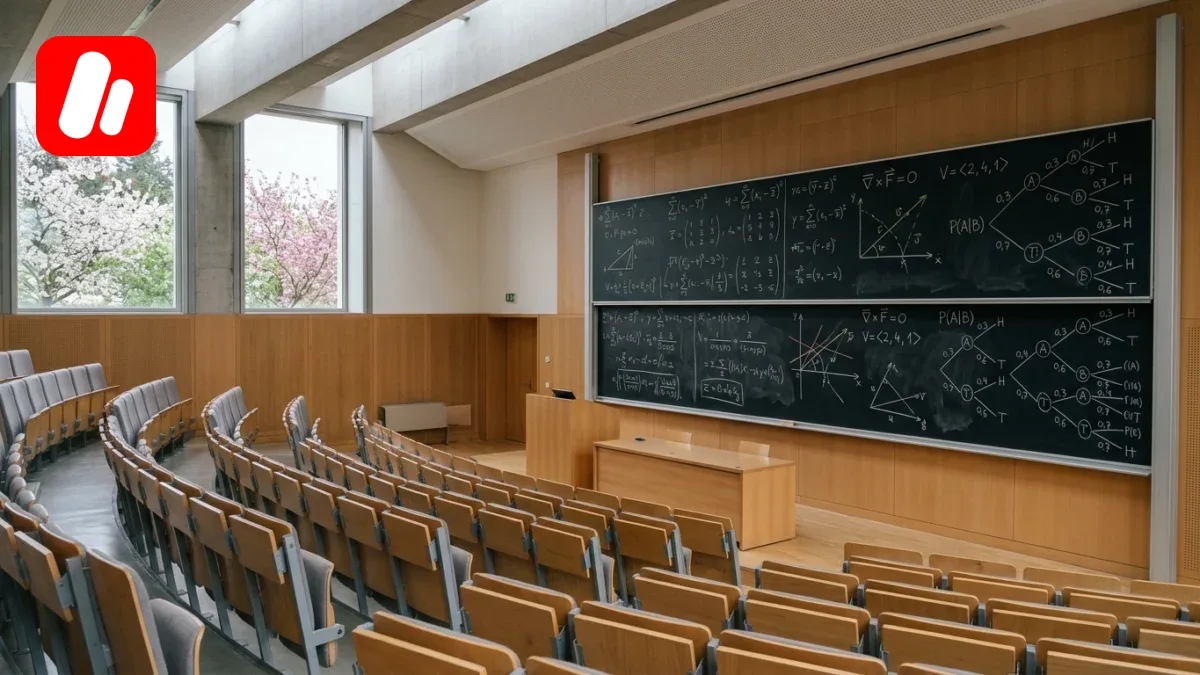
Moroccan students from both Sciences Mathématiques (A and B) and Sciences Expérimentales (PC and SVT) possess strong foundations in several core domains tested by this China university entrance exam Morocco applicants take, especially within the CSCA Mathematics paper.
Primary areas of direct alignment:
While the theoretical calculus depth in Morocco is rigorous, the official China Scholarships for Moroccan Students frameworks prioritize applied computational breadth that Moroccan secondary education distributes differently.
Critical topics to self-study:
Addressing these specific syllabus discrepancies forms the core of effective CSCA exam preparation Morocco candidates must undertake. For students planning their academic trajectory alongside the visa and validation guidelines outlined by the Embassy of the People’s Republic of China in the Kingdom of Morocco, mastering this computational syllabus transition is essential.
💡 Tip from the Great Wall Education team: Do not spend weeks re-solving long Moroccan Baccalaureate national exam analysis problems; focus your prep hours immediately on practicing rapid multiple-choice drills covering 2×2 matrices and basic combinatorics.
Moving from mathematical structures to the physical sciences reveals a similar pattern of theoretical depth meeting practical testing speed. Moroccan Baccalaureate Prep for CSCA requires recognizing that while the Moroccan National Exam rewards multi-step analytical proofs, the China Scholastic Competency Assessment (CSCA) tests broad conceptual fluency through timed multiple-choice and short-answer prompts.
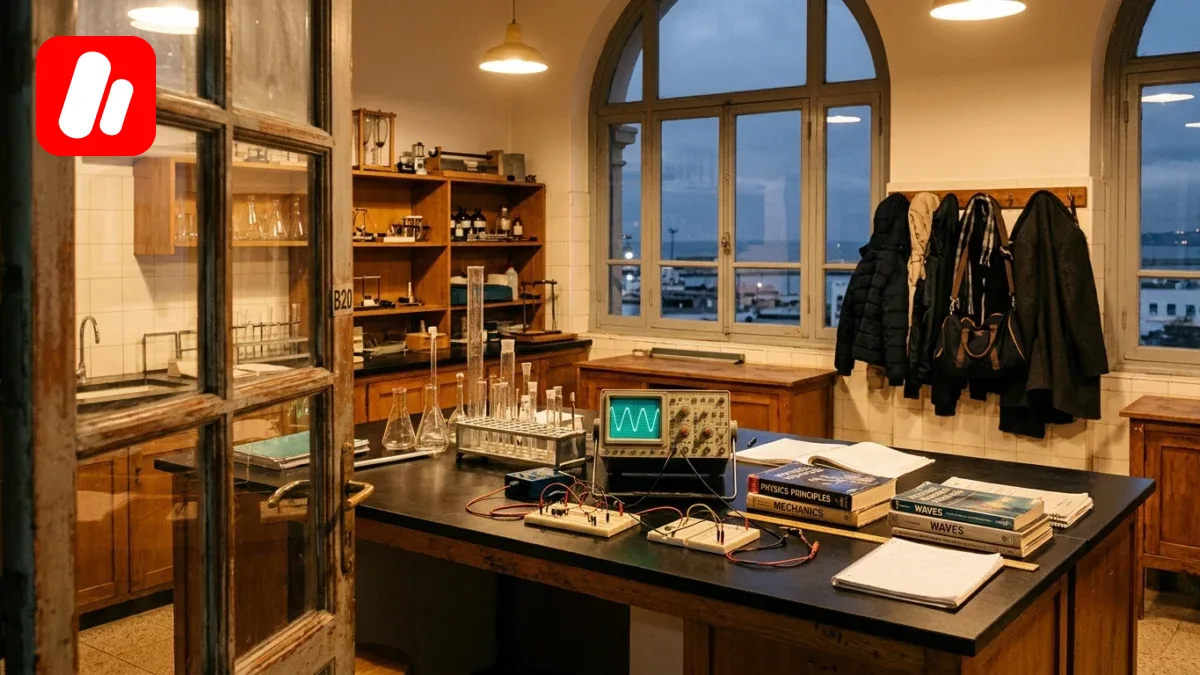
The Moroccan physics curriculum (Sciences Mathématiques and PC) emphasizes rigorous calculus-based mechanics, second-order differential equations, and detailed oscillatory systems such as RLC circuits. In contrast, the CSCA physics module de-emphasizes lengthy derivations, testing quick problem-solving across core physical laws.
Primary syllabus divergences in physics:
Under the Moroccan baccalaureate CSCA syllabus comparison, chemistry shares significant overlap in equilibrium and pH calculations. However, the testing delivery demands distinct approaches to pacing and data interpretation.
Core differences in chemistry assessment:
Moroccan students from Sciences Mathématiques and PC tracks possess rigorous analytical preparation, yet sitting this China university entrance exam Morocco presents a distinct language barrier. Because your secondary curriculum evaluates scientific principles in French, interpreting test items in English requires immediate recognition of standard international terminology rather than real-time translation.
Bridging this gap is an essential stage of your Admission in China for Moroccan Students. Converting your existing knowledge into English ensures that unfamiliar vocabulary does not slow your problem-solving cadence during timed modules.
Core mathematical and chemical terminology mappings:
Our team recommends compiling bilingual formula sheets as part of your Moroccan Baccalaureate Prep for CSCA. Drilling sample problem stems in English trains you to identify requested parameters instantly without hesitation.
Beyond mastering scientific vocabulary in English, candidates often encounter structural pitfalls during their revision cycle. Effective Moroccan Baccalaureate Prep for CSCA requires adjusting both your examination habits and logistical planning to match Chinese testing standards.
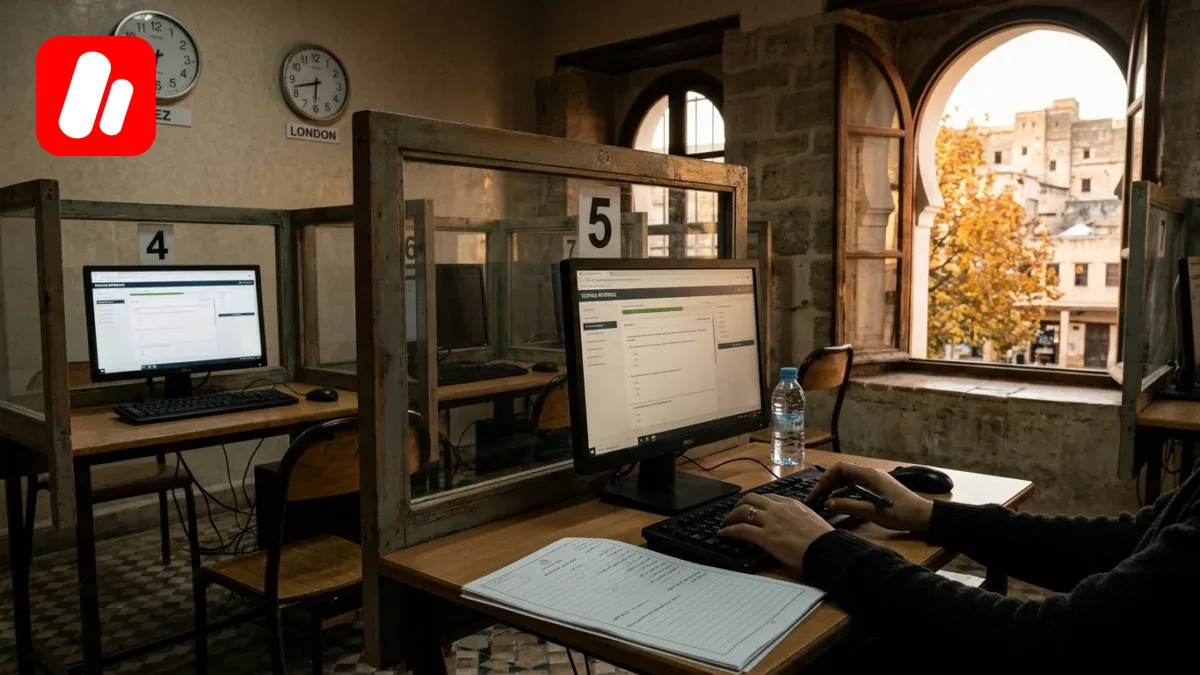
Moroccan applicants commonly make several key errors when preparing for this China university entrance exam Morocco benchmark:
Stepping past these common strategy traps allows you to focus on your greatest academic asset: your rigorous scientific foundation. Successful Moroccan Baccalaureate Prep for CSCA does not require relearning secondary school science from scratch. Instead, it demands adapting your existing knowledge of calculus, mechanics, and reaction kinetics to standardized English problem phrasing and fast-paced testing formats.
Establish a realistic study schedule early in your academic year to systematically bridge the syllabus gaps we examined. Consistent practice with English STEM terminology alongside your regular national coursework will steadily build both speed and confidence for exam day.
The transition from a French-medium curriculum to an international standardized assessment is challenging, but Moroccan science graduates consistently demonstrate the analytical depth required to succeed. Our team at Great Wall Education wishes you thorough preparation and every success as you work toward your academic goals in China.
Yes, your Moroccan Baccalaureate syllabus covers most core scientific concepts tested in the China Scholastic Competency Assessment (CSCA). However, Sciences Mathématiques and Sciences Expérimentales students must independently bridge gaps in specific topics, adapt to multiple-choice formats, and transition from French terminology to English scientific vocabulary before sitting for the exam.
Moroccan Baccalaureate math covers calculus, functions, and complex numbers thoroughly, matching the primary requirements of the CSCA syllabus. The main mapping difference lies in application style: the CSCA emphasizes fast problem-solving and discrete math over the lengthy theoretical proofs standard in the Moroccan curriculum, requiring students to adapt their revision methods accordingly.
Official CSCA testing fees range between 400 RMB and 800 RMB, depending on how many subject modules you register for. Moroccan applicants must complete registration and payment online directly through the official csca.cn portal for their selected subjects, typically choosing Mathematics alongside Physics or Chemistry.
Moroccan students should start by building a bilingual scientific glossary during their Moroccan Baccalaureate prep for CSCA. Because Moroccan high schools teach STEM subjects in French, mastering English technical vocabulary for formulas, calculus notation, and reaction mechanics is critical to understanding the questions and avoiding misinterpretations on exam day.
Morocco operates at UTC+1 (and UTC+0 during Ramadan), which is 7 hours behind Beijing Time (UTC+8). Online CSCA testing sessions adhere strictly to Beijing schedules, meaning a morning exam in China will take place in the middle of the night or very early morning in Morocco, requiring candidates to plan ahead.
Check official CSCA test center locations, in-person testing hubs, and remote online exam
Discover the cheapest student cities in China for 2027. Compare low cost Chinese
Finding halal food in China is straightforward for Muslim students. Discover campus halal