
Living in China
Opening a Business in China? (2026 Legal & Practical Guide for Students)
Introduction Opening a Business in China is a high-intent query for students

Scholarship application and exam preparation support.
Practice tests, strategies, and feedback to help you achieve your target score.
Targeted training and past paper practice to boost your exam performance.
Mock interviews and coaching to help you succeed in admissions and visa interviews.
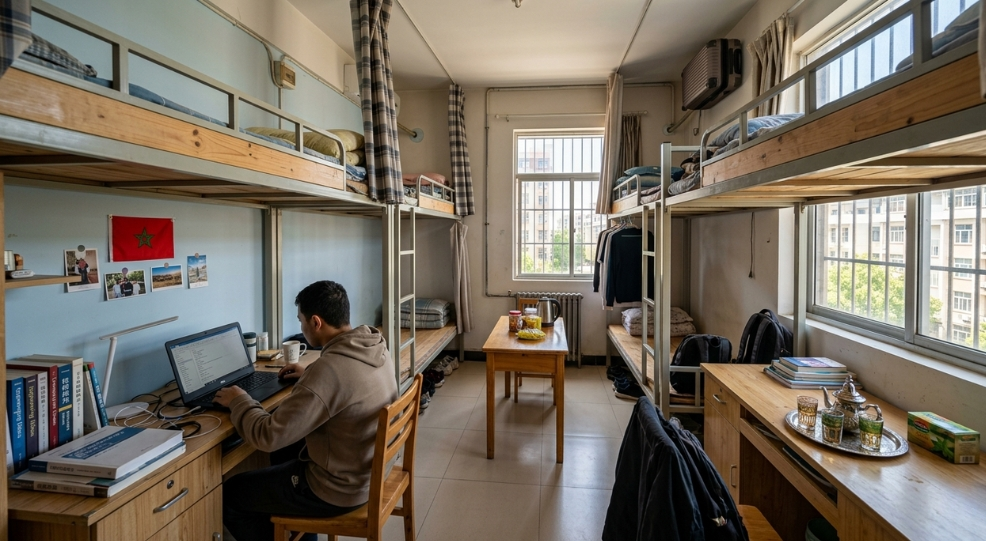

Student dorms in China are one of the most misunderstood parts of the study-abroad process. Brochures show spacious, well-lit rooms. Reality is more nuanced. The price ranges are real — but so are the variations. A shared quad room in Wuhan costs ¥650/month. A single room at a top Shanghai university costs ¥2,800. Both are called “dorm rooms”. Neither is wrong — but if no one explains the difference before you arrive, the surprise can be brutal.
This guide exists to give you that explanation, in full. We cover every room type, every price range, every city tier, every fee that gets buried in the fine print, and a step-by-step checklist for how to actually apply for and secure your dorm before you land. No glossing over. No marketing language.
Great Wall Education has accompanied over 300 Moroccan students through this process. What follows is everything we’ve learned, distilled into one reference document.
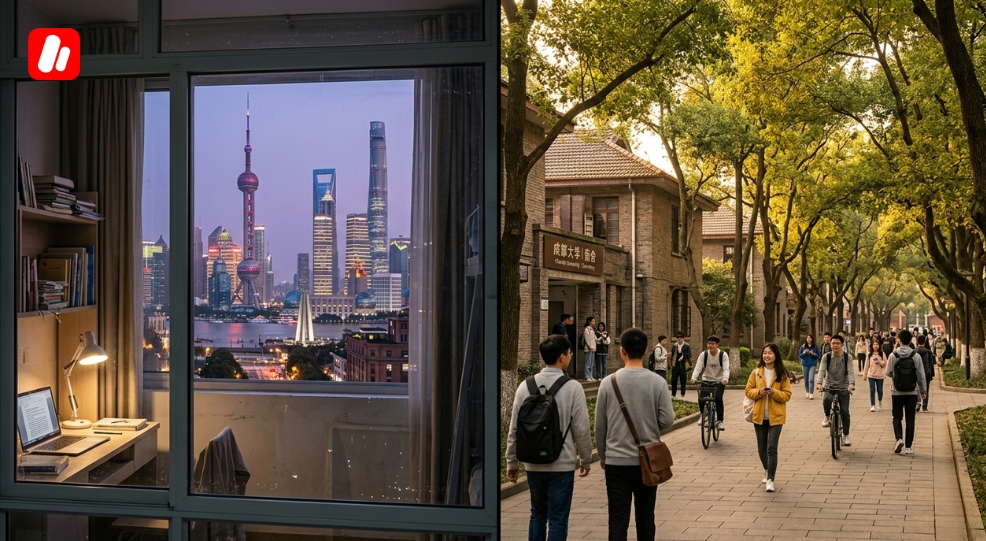
Most Chinese universities offer international students a choice between three room configurations. Understanding the difference upfront prevents a lot of frustration.
| 3 Main dorm room types at most Chinese universities | 20–30m² Typical shared room floor area | 24/7 Dorm access for international students |
The standard option at the vast majority of Chinese universities. A 20–25 m² room housing 3 to 4 students, with individual bunk beds, one study desk per person, shared wardrobe space, and a window. This is what most scholarship holders and self-funded students in mid-tier cities end up in.
A significant upgrade in privacy and comfort. Two students share a room of roughly 20–25 m², meaning each person has considerably more space. Single-level beds are more common at this configuration. Available at most universities but fills faster than shared rooms — applying early is critical.
Private rooms are available at higher-tier universities and international student blocks, typically 15–20 m² for one person. Attached bathroom is common at this level. Significantly more expensive and limited in supply. Some universities allocate singles exclusively to postgraduate or PhD students — always verify with your specific institution.
ROOM TYPE REALITY CHECK
Here’s what most guides don’t show you: the price range is enormous, and where you study matters as much as what type of room you choose. Below are verified price ranges based on 2025–2026 data from universities across China.
| Room Type | Tier-1 City (Beijing/Shanghai) | Tier-2 City (Wuhan/Xi’an/Chengdu) | Tier-3 City (Lanzhou/Yinchuan) |
| Shared (3–4 students) | ¥1,200–1,800/mo | ¥600–1,000/mo | ¥400–700/mo |
| Double (2 students) | ¥1,800–2,400/mo | ¥900–1,400/mo | ¥600–900/mo |
| Single (private) | ¥2,200–3,200/mo | ¥1,200–2,000/mo | ¥800–1,300/mo |
| Approx. in MAD (shared) | 2,000–3,000 MAD | 1,000–1,700 MAD | 650–1,200 MAD |
*Prices are indicative ranges based on 2025–2026 data. Exact costs vary by university and room allocation. Always confirm with the international admissions office.
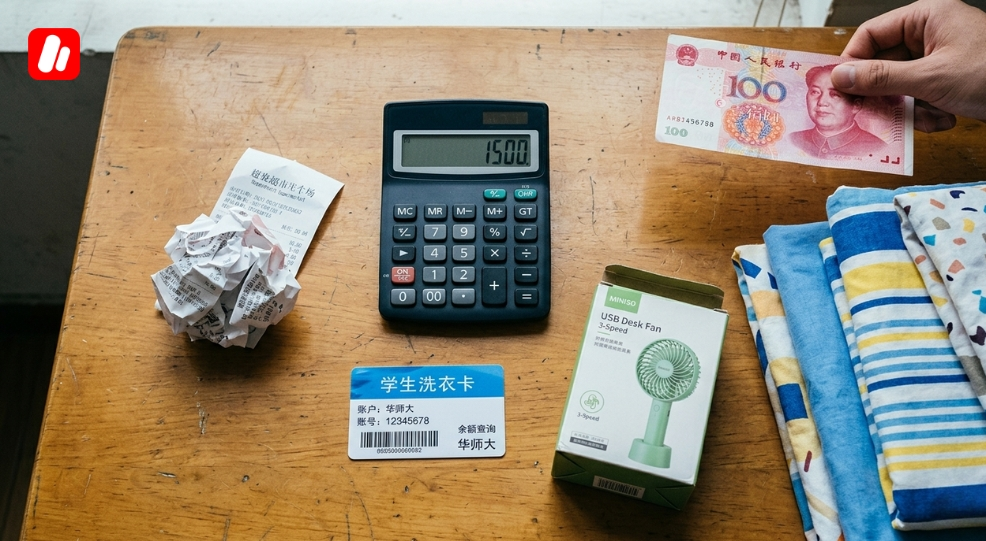
This is the section most universities would prefer you didn’t read. The monthly dorm rate is real . but it’s rarely the full picture. Here is every additional cost we’ve documented across Moroccan students’ experiences in China:
Budget reality check: add ¥300–600/month on top of your base dorm rate to cover these additional costs. In your first month, expect a one-time spike of ¥1,000–1,800 for deposits, bedding, cards and registration fees.
Conditions vary significantly depending on the university, the building, and the year of construction. Here’s a transparent breakdown:
RELIABLY GOOD
VARIABLE OR BELOW EXPECTATION
Scholarship type is the single biggest factor in what you’ll actually pay for accommodation. Here’s the breakdown:
| Scholarship Type | Dorm Coverage | What You Still Pay |
| Full CSC (Chinese Govt.) | Free — dorm provided | Bedding kit, deposits, AC card, laundry |
| Provincial Scholarship | Partial or full — varies by province | Confirm with provincial office |
| University Scholarship | Partial — often 50% discount | Remaining 50% + extras |
| Self-Funded | Full cost — paid by student | Full monthly rate + all extras |
| Belt & Road Scholarship | Full — dorm included | Deposits, bedding, personal costs |
For Moroccan students applying through the CSC scholarship pathway, accommodation is covered in full at most universities. The key is to confirm the specific dorm arrangement with your assigned university before you accept your placement — a handful of institutions place CSC students off-campus in partner residences at additional cost.
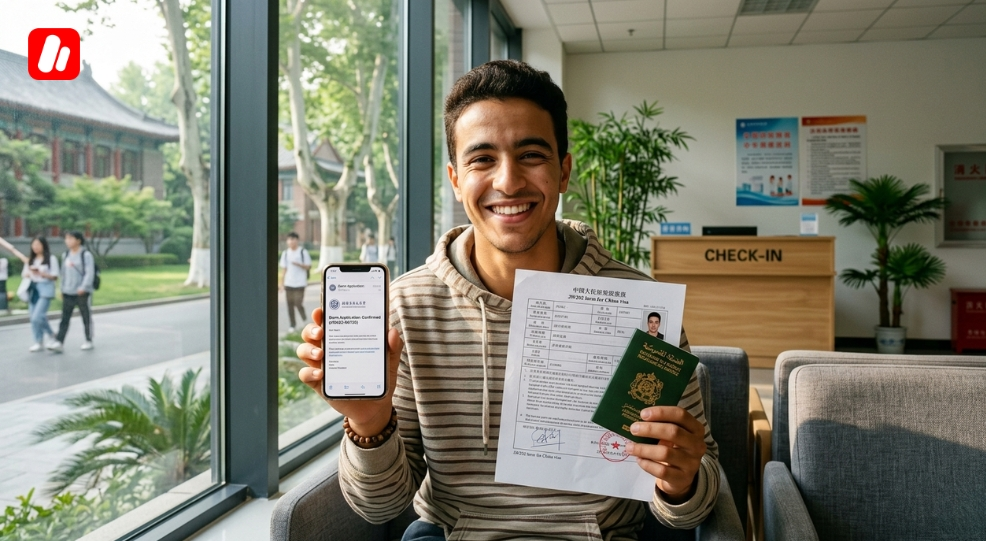
The application process for student dorms in China is often bundled with your university admission — but it’s not automatic. Here’s exactly what to do:
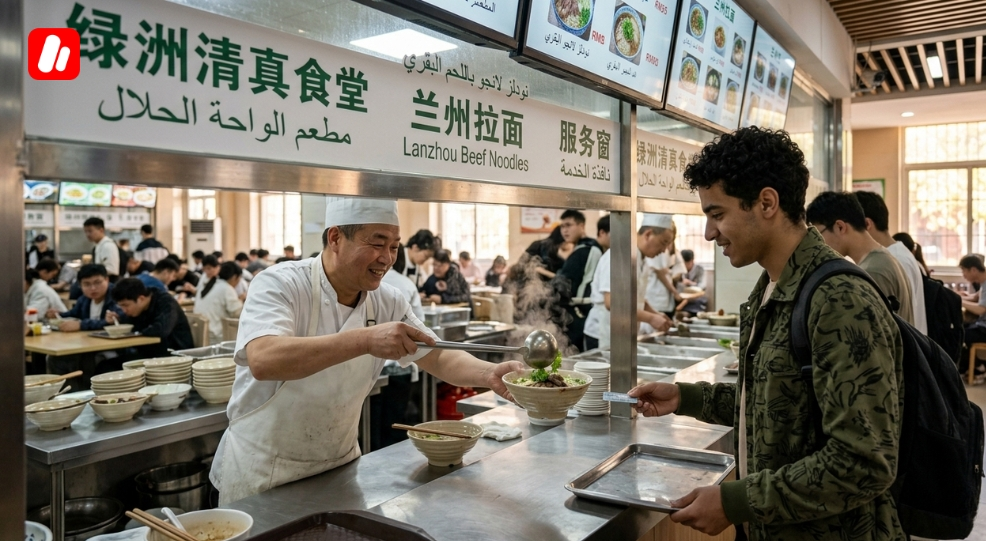
For most Moroccan families, this is the question that matters as much as cost: Will my child eat properly?
The answer is yes — with some planning. Most large Chinese universities have at least one halal canteen window (清真, qīngzhēn) operating on campus. In cities with significant Muslim populations — Xi’an, Lanzhou, Urumqi, Yinchuan — the options are plentiful both on and off campus. In tier-1 cities, dedicated halal options exist but require a short commute off campus.
Practical tip: ask the International Student Office directly about halal availability before finalising your university choice. Great Wall Education can also advise based on our student network.
Here is an honest, all-in monthly cost estimate for a Moroccan student living in a student dorm in China in 2026:
| Expense Category | Budget (Tier-2 City) | Budget (Tier-1 City) |
| Shared dorm room | ¥600–1,000 | ¥1,200–1,800 |
| Food (3 meals/day) | ¥600–900 | ¥900–1,400 |
| Transport (metro/bus) | ¥100–200 | ¥200–350 |
| AC / utilities top-up | ¥100–250 | ¥150–300 |
| Phone / data plan | ¥80–120 | ¥80–150 |
| Personal / leisure | ¥200–400 | ¥300–600 |
| TOTAL / month | ¥1,680–2,870 | ¥2,830–4,600 |
| In Moroccan Dirhams | 2,800–4,800 MAD | 4,700–7,700 MAD |
Great Wall Education has helped 300+ Moroccan students study in China. You could be next.
We handle everything — university selection, CSC & provincial scholarship applications, visa file, pre-departure prep, and on-the-ground support from day one. No hidden fees. No vague timelines.
Costs range from ¥400–700/month in smaller cities (tier-3) to ¥2,200–3,200/month for a single room in Beijing or Shanghai. The most common range for Moroccan students in mid-tier cities like Wuhan or Xi’an is ¥600–1,000/month for a shared room.
Yes — university campuses in China are among the safest environments for international students globally. 24h security, CCTV, keycard access, and midnight curfew gates are standard. Moroccan parents consistently cite campus safety as a positive surprise.
Most large Chinese universities have at least one dedicated halal canteen window (清真). Cities with large Muslim populations — Xi’an, Lanzhou, Urumqi — offer the most extensive options on and off campus. Always confirm halal availability before finalising your university choice.
In most cases, yes — full CSC scholarship holders receive free accommodation at their assigned university. However, a small number of universities place CSC students in off-campus residences with additional costs. Always confirm the dorm arrangement in writing before accepting your placement.
Apply through the International Student Office (ISO) immediately after accepting your admission offer. State your room preference in writing, pay the refundable deposit (¥500–1,000), and confirm your check-in date. Apply as early as🏙️ BEIJING & SHANGHAI — Highest cost, highest prestige
Top universities: Peking University, Tsinghua, Fudan, Tongji, ECNU
Shared dorm: ¥1,200–1,800/month — 2–3× more than comparable rooms in Wuhan
Living costs outside campus also significantly higher (food, transport, leisure)
Best suited to: students with full CSC scholarships covering accommodation OR self-funded students with strong financial backing possible — single and double rooms fill within weeks of applications opening.
Budget an additional ¥300–600/month for: AC electricity top-ups, laundry card, hot water card (older buildings), and cleaning fees. In your first month, expect a one-time spike of ¥1,000–1,800 for the refundable deposit, bedding kit, internet activation, and registration cards.
Generally no — room assignment is handled by the International Student Office. However, if you have a specific request (e.g., a same-nationality roommate or a quieter floor), emailing the ISO early and asking politely often works. No guarantees, but it is worth asking.
Introduction Opening a Business in China is a high-intent query for students

Introduction Understanding how to send money to China as an international student is

Introduction Why Chinese universities reject documents is one of the biggest concerns for