
Living in China
Opening a Business in China? (2026 Legal & Practical Guide for Students)
Introduction Opening a Business in China is a high-intent query for students

Scholarship application and exam preparation support.
Practice tests, strategies, and feedback to help you achieve your target score.
Targeted training and past paper practice to boost your exam performance.
Mock interviews and coaching to help you succeed in admissions and visa interviews.
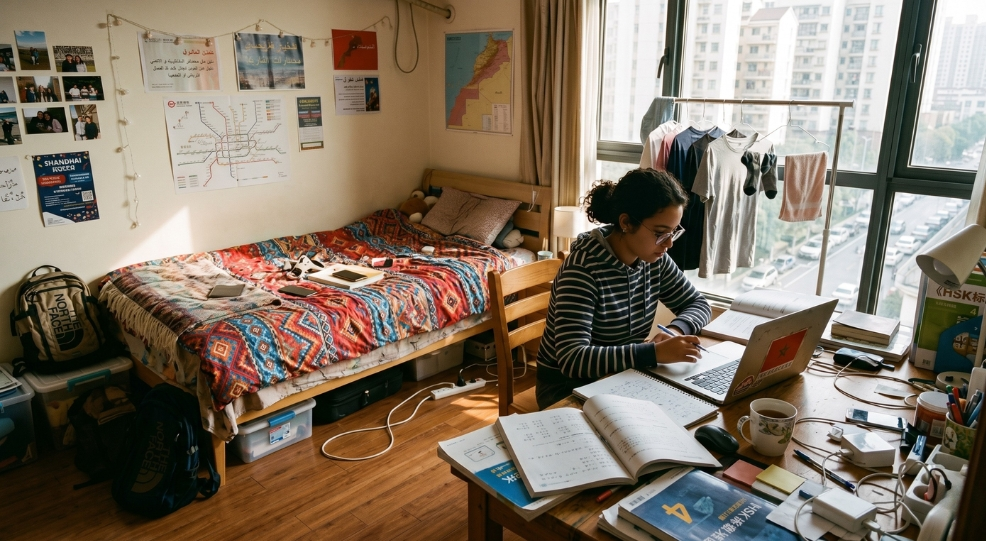

Chinese dorm life is the part of studying abroad nobody fully prepares you for. You’ll read about scholarship amounts, tuition fees, and top-ranked universities — but almost nothing about what it actually feels like to wake up at 6AM in a shared room in Wuhan, share a bathroom with strangers from three different continents, and find a canteen breakfast for ¥7 that somehow becomes your favourite meal of the week.
This article is different. Rather than a checklist, it’s a real day in the life of Hiba— a Moroccan student currently studying engineering in China. We follow him from the moment his alarm goes off to the moment the dorm goes quiet at midnight. Every detail is grounded in the experience of students Great Wall Education has accompanied over the past several years.
Whether you’re a Moroccan student seriously considering making the move, or a parent trying to picture what your child’s daily life would look like, this guide gives you the honest, unfiltered version. Chinese dorm life, Moroccan student perspective — no filters, no glossing over the hard parts, no overselling.
| 500k+ International students in China per year (MOE, 2023) | ¥800 Average dorm cost / month | 3–4 Roommates in a standard shared dorm room |
Hiba arrived in Wuhan last September with two suitcases, a list of 40 contacts from his mother, and absolutely no idea what a Chinese dorm room looked like.
Six months later, She navigates the campus canteen half-asleep, orders “我要加辣” (make it spicy) without flinching, and sleeps straight through the 6:30AM campus broadcast that terrified him on day one.
The room is small — about 20–25 m² shared between four people. Bunk beds, a desk per student, one shared wardrobe, and a window looking out onto either a courtyard or another identical dorm block, depending on your luck with room allocation.
The first thing Hiba did on arrival? She counted the power outlets. Two. For four people. Welcome to the negotiation.
Most international student dorms across China are functional and clean, even if modest. Expect:
Some universities offer single or double rooms in the international student block at a higher price (¥1,200–2,000/month). Most Moroccan students opt for the shared quad option (¥600–1,000/month) and find it far less daunting than expected once they settle in.
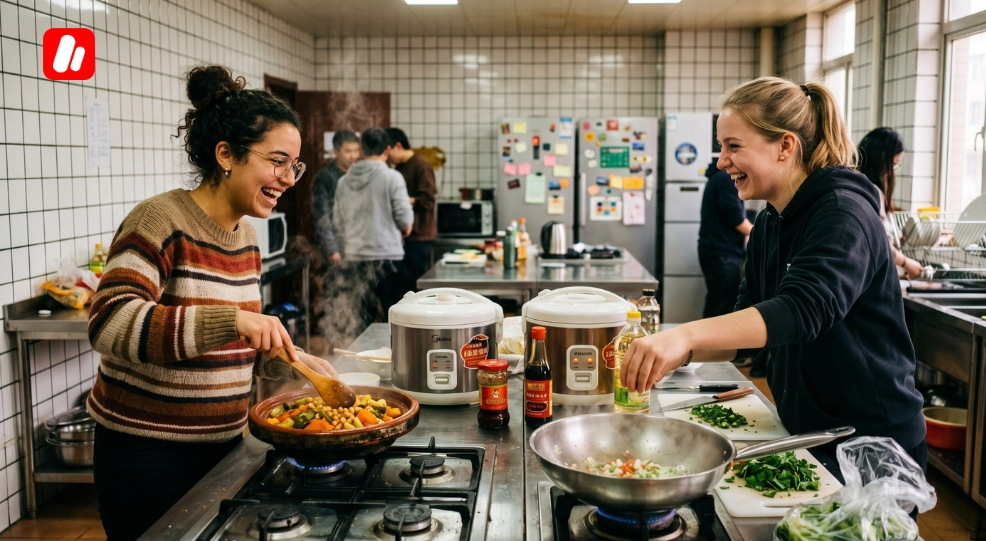
The campus canteen opens at 6:30AM. By 7:30 it’s already busy. Hiba‘s go-to order: jianbing — a thin, crispy egg crepe filled with chili paste, scallions, and a fried cracker — for §7. Around him: a student from Pakistan ordering rice porridge, a French exchange student cautiously inspecting a bamboo steamer basket of baozi.
What surprises most Moroccan students: Chinese university canteens are genuinely good value. A full hot meal costs ¥8–15 (12–22 Moroccan Dirhams). Most large campuses have several canteen buildings, each with different regional cuisines. You will not eat the same thing twice in a week unless you choose to.
Halal food (清真, qīngzhēn) is available on most large campuses as a dedicated window or stall. However, availability varies significantly between universities and cities. Always confirm halal options before finalising your university choice. Cities with large Muslim populations — Xi’an, Urumqi, Lanzhou, Yinchuan — have the most extensive halal options both on and off campus.
“I was prepared to miss my mother’s cooking every single day. Then I found the beef noodle stall on Floor 2. I go there four times a week.”
— Hiba, Engineering, Wuhan University of Technology
Most international students take their first-year courses in English while Mandarin skills are still developing. Over time — and depending on your program — courses shift progressively toward Chinese. Universities prepare students for this transition with structured language support.
Teaching style in China feels different from Morocco. Lectures are the dominant format — large groups, structured note-taking, limited spontaneous discussion. Professors expect attendance and it directly impacts your grade. Punctuality is taken seriously.
Hiba’s schedule: 8AM to noon on weekdays, occasional afternoon labs. Wednesday afternoons are free — a detail She now guards jealously.
The hour after lunch is sacred in China. Xiuxi — the midday rest — is a cultural institution. Dorms go quiet. Some students sleep. Others scroll with headphones in. Hiba uses this window to call his family. The two-hour time difference with Morocco makes it perfect timing.
His roommates: one from Nigeria, one from Russia, one from Indonesia. Coordinating video calls took exactly one awkward week. Now they have an unspoken rota, negotiated entirely through facial expressions and scheduling apps.
This is the part of Chinese dorm life no brochure captures: the dorm becomes its own country. You cook instant noodles together at 11PM. You teach each other words in your language. Someone plays music from home and the room turns briefly into somewhere else. The space is cramped and the negotiation is constant and — in retrospect — irreplaceable.
“My roommate from Lagos taught me to say “I’m tired” in Yoruba. I taught him the Moroccan hand gesture for “be patient.” We still use both.”
— Hiba, 22
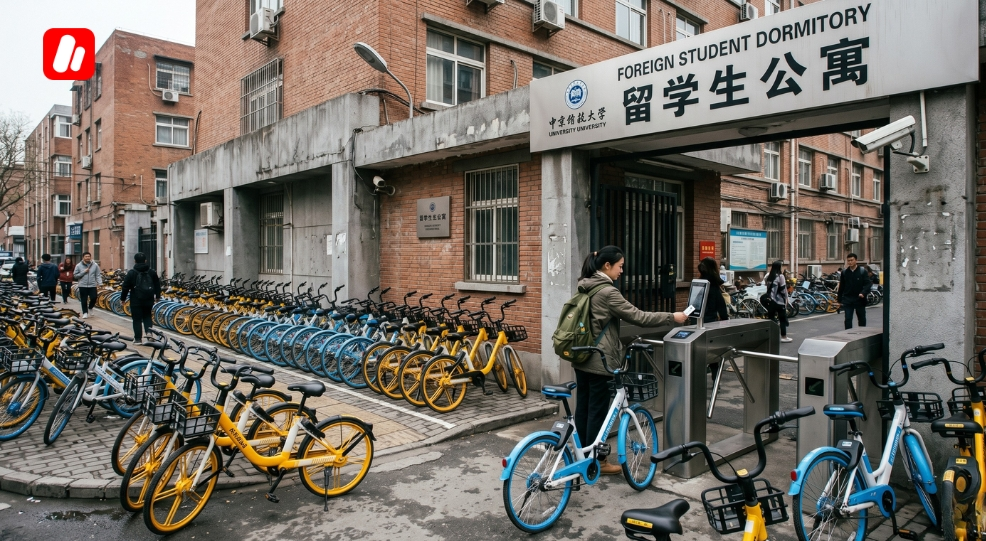
Chinese university campuses are large — often 200+ hectares with their own shops, barbershops, pharmacies, gyms, lakes, running tracks, and sports courts. Students don’t leave campus after class. They live there.
Hiba discovered badminton in his third week. Now She plays three afternoons a week — court rental is ¥10/hour. The gym is student-subsidised. The track is free. If staying active far from home has been a concern, China’s campus infrastructure makes it genuinely easy.
Most universities also have an International Student Association that organises weekend trips, cultural exchanges, and seasonal events. These are the moments that turn acquaintances into lasting friendships — and that make study in China something students remember long after graduation.
This surprises most Moroccan students: Chinese cities are alive at night. Night markets, bubble tea shops open until 2AM, 24-hour convenience stores stocked with hot food — the rhythm of city life doesn’t stop at sunset.
Hiba’s Friday ritual: walk ten minutes to the local night market, eat lamb skewers (羊肉串, yángròu chuàn — halal street food that’s become a staple), and practise Mandarin with the vendor who now knows his name. Total cost: around ¥20 for the whole evening out.
Safety is a genuine and underrated advantage. China’s cities consistently rank among the world’s safest for international students. Walking back to campus at midnight is unremarkable. This matters deeply — particularly for Moroccan families back home who are nervous about the distance.
| ¥20–40 A full evening out: food, transport, drinks | Top 5 China globally for international student safety (Numbeo) | 24/7 Campus access for international students |
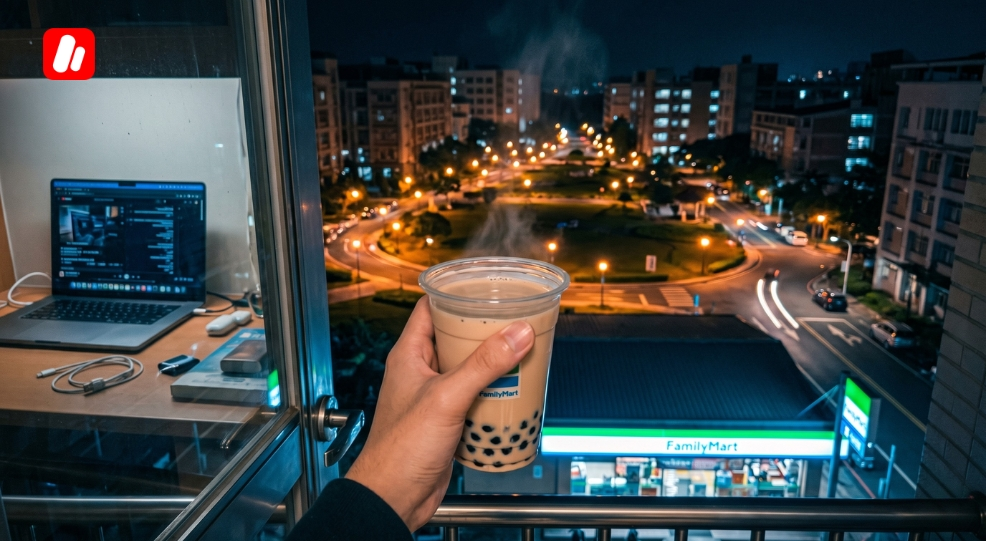
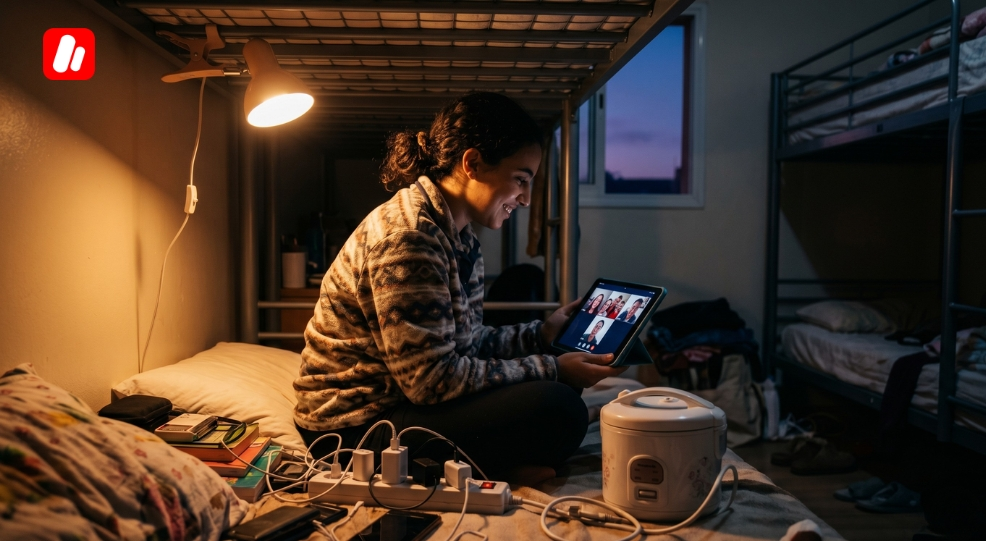
Most Chinese university dorms have a midnight curfew — entry requires your student card after a certain hour. By 10PM the room has its own rhythm: someone cooking, someone calling home, someone finishing an assignment with their desk lamp on low.
Hiba’s final ritual each night: a voice note to his mother. SHe started on day two. She hasn’t missed a night in six months. “It takes five minutes,” She says. “And it means she doesn’t worry.”
By 11:30PM the room is dark. Four people from four continents, each somewhere between homesickness and something that’s starting to feel, inconveniently, like home.
“You go there to get a degree. You come back as someone your family almost recognises.”
— Hiba — end-of-year reflection
Here are the concrete facts for any Moroccan student or parent doing serious research:
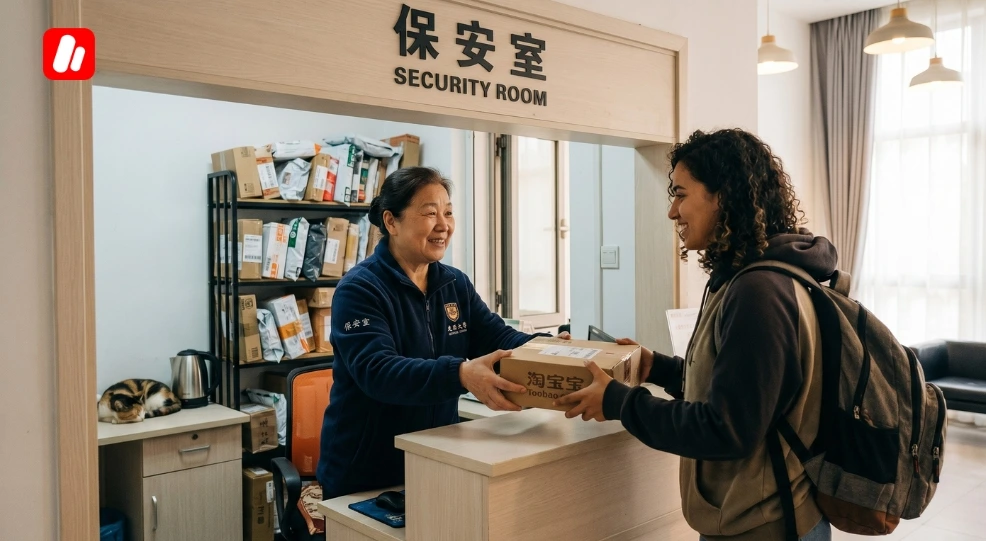
Great Wall Education has helped 300+ Moroccan students study in China. You could be next.
We handle everything — university selection, CSC & provincial scholarship applications, visa file, pre-departure prep, and on-the-ground support from day one. No hidden fees. No vague timelines.
Chinese dorm life for a Moroccan student means sharing a small furnished room with 2–3 other international students, eating affordable campus canteen meals, attending structured lectures, and building friendships with people from across the world. It’s more communal and disciplined than most students expect — and more rewarding.
Yes — most large Chinese universities have at least one halal canteen window (清真, qīngzhēn). Cities with large Muslim populations (Xi’an, Urumqi, Lanzhou) have the widest options on and off campus. Always confirm availability before finalising your university choice. Great Wall Education can guide you.
Between ¥600 and ¥1,500/month (approximately 1,000–2,500 MAD) depending on university, city tier, and room type. Shared rooms of 3–4 students are the most affordable. Some universities include dorm costs within full scholarship packages (CSC).
WhatsApp, Instagram, Google, and YouTube are blocked in China by the Great Firewall. International students use a VPN — this is standard practice. Critical: download and activate your VPN before departing Morocco, as VPN websites are also blocked once you’re inside China.
Yes — China consistently ranks among the world’s safest countries for international students. University campuses are monitored and well-lit. Students routinely walk or cycle at midnight without concern. Moroccan parents frequently cite safety as one of the most positive surprises after their child starts studying in China.
The most widely used is the Chinese Government Scholarship (CSC), which covers tuition, accommodation, and a monthly stipend. Provincial scholarships and individual university scholarships offer additional paths. Great Wall Education manages the full application process for eligible Moroccan students — contact us to check your eligibility.
Introduction Opening a Business in China is a high-intent query for students
Introduction Understanding how to send money to China as an international student is

Introduction Why Chinese universities reject documents is one of the biggest concerns for