How To - Guides
How to Choose the Best Chinese University and Scholarship for International Students in 2027
Find the best Chinese university and scholarship for 2027 with our expert breakdown

Scholarship application and exam preparation support.
Practice tests, strategies, and feedback to help you achieve your target score.
Targeted training and past paper practice to boost your exam performance.
Mock interviews and coaching to help you succeed in admissions and visa interviews.


Can your secondary school diploma determine which university degrees you are legally allowed to pursue abroad? Aligning your high school track to China majors is one of the most critical steps when planning your undergraduate journey, as admissions committees evaluate your secondary stream long before assessing your extracurricular profile.
When you prepare to study in China after high school, understanding institutional admission structures prevents costly application rejections. Chinese university admissions place heavy structural importance on stream alignment, meaning that applicants from humanities backgrounds cannot simply register for engineering degrees without verified preparatory prerequisites. Every degree path connects directly to official China university bachelor requirements established by the Ministry of Education.
Whether you hold a scientific, economic, or literary secondary diploma, mapping baccalaureate tracks China universities recognize ensures you choose major in China programs that match your verified academic credits. This institutional guide outlines the core eligibility rules governing undergraduate enrollment across Chinese faculties.

Aligning your academic background with official university standards is the foundation of a successful application. While some global destinations permit flexible transitions across disciplines, Chinese public institutions follow strict curriculum pathways regulated under the Ministry of Education of the People’s Republic of China. Transitioning smoothly from your high school track to China majors requires verifying that your secondary graduation certificate matches your target faculty’s prerequisite courses.
The standard undergraduate intake for the Autumn semester operates from mid-October through June 30 annually. Institutional requirements and admission schedules vary significantly across provinces and tier-level universities; this table outlines typical faculty mapping:
| High School Track | Eligible China Majors | Core Prerequisite Subjects | Indicative Deadlines |
|---|---|---|---|
| Mathematical Sciences / Physical Sciences | Engineering, Computer Science, Data Science, Artificial Intelligence, Architecture | Advanced Mathematics, Physics, Chemistry | Rolling: March 31 – June 30 |
| Experimental & Life Sciences | Clinical Medicine (MBBS), Pharmacy, Biotechnology, Environmental Engineering | Biology, Chemistry, Mathematics, Physics | Early rounds: February 28 – May 30 |
| Economics & Management | International Economics and Trade, Finance, E-Commerce, Supply Chain | Mathematics, General Economics, Social Studies | Rolling: April 15 – June 30 |
| Humanities, Arts & Literature | International Relations, Chinese Language, Cross-Cultural Communication, Law | History, Literature, Foreign Languages, Philosophy | Regular rounds: March 15 – June 15 |
Admission committees will reject engineering or medical applications submitted with purely literary credentials. Evaluating these China university bachelor requirements beforehand ensures your application dossier meets faculty benchmarks without unexpected rejections during initial screening.
Secondary diplomas follow defined subject groups that directly shape undergraduate eligibility across Chinese faculties:
Science and mathematical streams:
Humanities, arts, and literature streams:
If you plan to study in China after high school, confirming your secondary profile prevents administrative denials. Many Moroccan candidates assessing whether to study in China or Malaysia or Türkiye find that Chinese institutions apply more structured curriculum checks. Understanding how your specific baccalaureate tracks China universities recognize ensures you choose major in China programs that reflect your academic qualifications.
Transitioning from the general stream mappings to technical degrees requires a closer look at specific academic thresholds. Engineering and computer science programs at Chinese universities operate under stringent quantitative standards, meaning your high school transcript must demonstrate sustained competency in analytical disciplines.
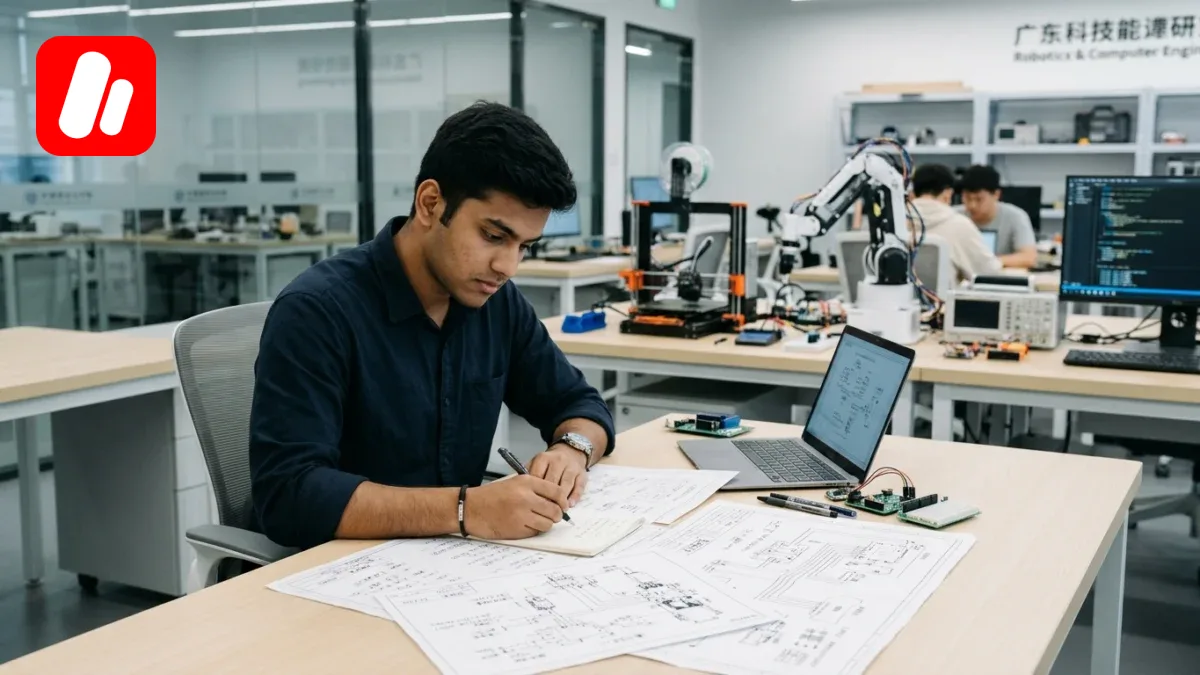
For high-demand disciplines such as Civil Engineering, Mechanical Engineering, Computer Science, and Artificial Intelligence, Chinese admissions committees evaluate your grades in specific foundational courses rather than your overall diploma average alone.
Mandatory subject credits:
Meeting standard China university bachelor requirements involves proving that your secondary diploma reflects rigorous mathematical training. When Moroccan students plan to study in China after high school, admission offices verify these specific subject grades on the official transcripts.
Applicants holding a literary, humanities, or general arts baccalaureate face direct structural barriers when seeking entry into engineering programs. Admissions faculties generally reject direct applications from non-science streams for technical specializations because the initial university coursework assumes an existing mastery of advanced secondary mathematics and physics.
Students from non-science baccalaureate tracks who attempt to choose major in China within technical fields must complete a formal pre-university science foundation program. These preparatory pathways provide the missing academic modules needed to qualify for technical degree enrollment.
💡 Tip from the Great Wall Education team: If your secondary diploma curriculum lacks advanced physics credits, request a certified syllabus breakdown from your school to present alongside your transcript, as some engineering departments accept supplementary math-heavy coursework during initial eligibility checks.
While engineering programs prioritize advanced calculus and mechanics, medical faculties enforce the strictest entry filters in the country. If you plan to study in China after high school within a clinical discipline, your academic stream determines your eligibility before any entrance interview takes place.
Undergraduate medical programs—most notably the Bachelor of Medicine and Bachelor of Surgery (MBBS) and Pharmacy—require direct academic preparation in experimental sciences. Official China university bachelor requirements establish that applicants must present strong foundational marks from their secondary school transcripts.
Core academic prerequisites:
Chinese medical admissions boards operate under rigid regulatory directives. Students from humanities, literature, or general arts baccalaureate tracks cannot be admitted to clinical medicine or pharmacology degrees, regardless of extracurricular achievements or language proficiency.
When aligning your high school track to China majors, our team verifies that your science credits match the faculty standards before proceeding with application filings.
Graduating from an arts, literature, or social sciences secondary stream opens clear routes to higher education, provided you verify subject compatibility beforehand. When you study in China after high school within non-STEM disciplines, admissions committees evaluate your secondary coursework against faculty-specific analytic demands.
For commerce and quantitative disciplines, standard China university bachelor requirements distinguish sharply between descriptive business fields and mathematics-heavy financial tracks.
Baseline secondary subject expectations:
When you choose major in China within business faculties, our team at Great Wall Education checks your high school mathematics scores to confirm whether your academic record satisfies the university’s quantitative prerequisites.
Beyond subject prerequisites, matching your High School Track to China Majors requires verifying your medium of instruction. Admissions offices set definitive language thresholds that determine your entry route into undergraduate studies.
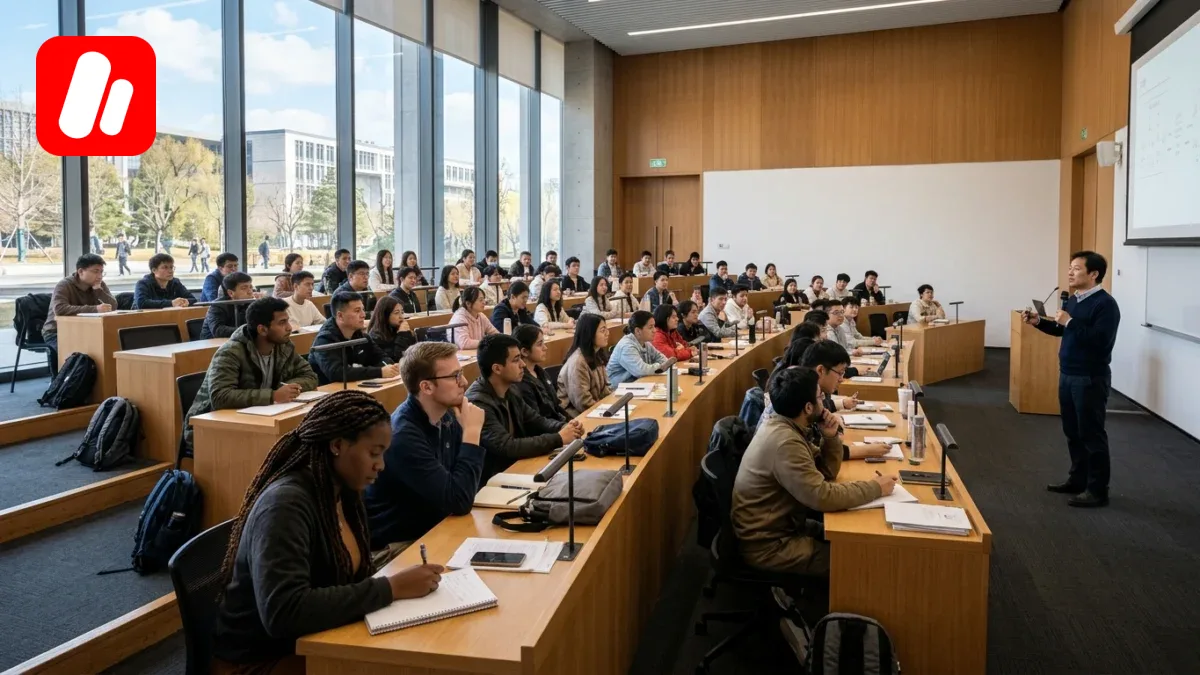
Mandatory language standards for undergraduate degrees:
Evaluating whether to enroll in English vs Chinese-Taught Majors is vital before applying. A frequent error occurs when students assume high high school marks bypass these language standards or compensate for syllabus mismatches.
If your diploma curriculum lacks specific subject hours or you fall short of the required HSK level, direct admission is often refused. In these situations, an official pre-university foundation program serves as an accredited corrective pathway.
These preparatory courses run for 1 to 2 semesters (6 to 12 months). They bridge subject gaps in advanced mathematics, physics, and technical Chinese, allowing you to satisfy strict China university bachelor requirements before entering your chosen degree.
Aligning your high school academic background with your intended degree remains the fundamental standard across admissions offices. When you plan to study in China after high school, admission committees assess your eligibility directly through your completed secondary coursework and transcript marks. Matching your specific high school track to China majors ensures that your application meets institutional prerequisite rules before official evaluations begin.
Every institution maintains distinct expectations, meaning that early academic planning protects your application timeline. Having your secondary credentials verified ahead of formal deadlines helps identify eligible degree options that accurately reflect your subject strengths. Our team at Great Wall Education evaluates your academic records systematically, ensuring your documents match institutional admission criteria before you submit your file.
No, direct entry into Chinese engineering majors generally requires a solid scientific high school background. Universities mandate secondary coursework in advanced Mathematics and Physics. If you graduated from a humanities or literature stream, admissions committees typically require you to complete a 1 to 2 semester university preparatory foundation program before enrolling in a technical bachelor’s degree.
Your secondary stream directly determines MBBS eligibility because Chinese medical faculties require an experimental sciences background. Applicants must present minimum passing grades of 60% to 70% in high school Mathematics, Physics, Chemistry, and Biology. Non-science graduates cannot directly enter clinical medicine programs in China without meeting these core prerequisites through certified bridge programs.
Yes, high school graduates from arts and humanities tracks qualify directly for numerous undergraduate degrees in China. Standard options include International Trade, Business Administration, International Relations, Chinese Language, and Cross-Border E-Commerce. While advanced economics programs may evaluate basic quantitative skills, most social science faculties do not mandate advanced secondary physics or chemistry for admission.
Language requirements depend strictly on your medium of instruction. English-taught bachelor programs require an IELTS band of 6.0 to 6.5 or a TOEFL iBT score of 80 to 90. Chinese-taught programs require an HSK Level 4 score of 195 to 210 or above for engineering and sciences, and HSK Level 5 with at least 180 points for humanities and medicine.
The standard undergraduate application cycle for the Autumn intake runs annually from mid-October to June 30. Early submission between December and March improves admissions evaluation and scholarship consideration. Depending on your high school track and target discipline, annual undergraduate tuition fees range from 14,000 RMB to 45,000 RMB across Chinese universities.
Find the best Chinese university and scholarship for 2027 with our expert breakdown

Discover how provincial government scholarships fund international students in China for 2027. Compare

Explore China university partial scholarships, tuition waiver options, living costs, and accurate application