
How To - Guides
How to Choose the Best Chinese University and Scholarship for International Students in 2027
Find the best Chinese university and scholarship for 2027 with our expert breakdown

Scholarship application and exam preparation support.
Practice tests, strategies, and feedback to help you achieve your target score.
Targeted training and past paper practice to boost your exam performance.
Mock interviews and coaching to help you succeed in admissions and visa interviews.
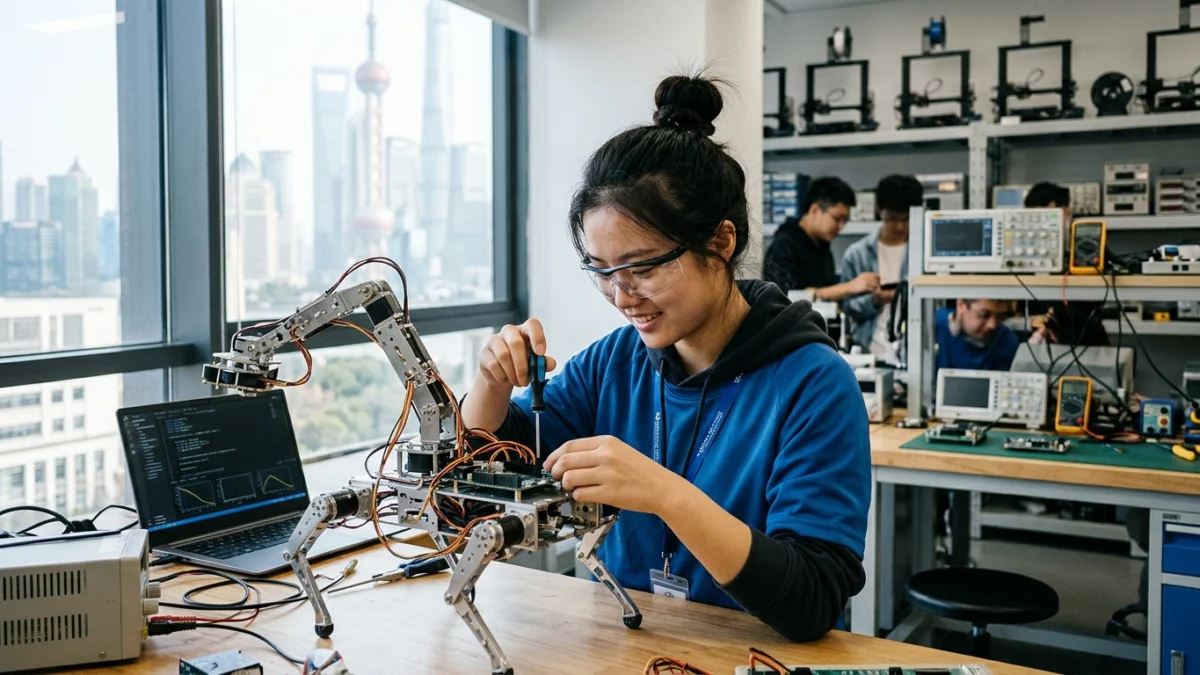

You have likely pictured your future as a technical innovator, but selecting the right engineering majors to study in China requires navigating dozens of specialized fields and entry paths. Chinese universities now stand at the global forefront of applied technology, offering international students cutting-edge laboratories, world-renowned teaching faculty, and direct exposure to dynamic industrial ecosystems.
Planning your academic future means evaluating practical realities early. Pursuing an engineering bachelor degree in China gives you access to modern research infrastructure alongside competitive tuition rates, making it an increasingly attractive route for Moroccan and international students looking forward to the 2027 intake.
Whether you want to learn in international classrooms or secure valuable financial backing, our team at Great Wall Education helps you evaluate your options to study in China with complete clarity and purpose.
Planning your academic roadmap begins with understanding how the admissions calendar and curriculum operate for the upcoming cycle. If you are exploring options to study in China after baccalaureate graduation, tracking key benchmarks ensures your application stays on schedule.
| Program Track | Duration | Tuition Range (Annual) | Application Window (2027 Intake) |
|---|---|---|---|
| English-Taught Bachelor | 4 years | 20,000 RMB to 45,000 RMB | Mid-November 2026 to June 30, 2027 |
| Chinese-Taught Bachelor | 4 years | 18,000 RMB to 35,000 RMB | Mid-November 2026 to June 30, 2027 |
All dates are indicative and must be verified on official university portals.
When you select an engineering bachelor degree China program, your studies follow a structured 4-year progression regulated by the Ministry of Education of the People’s Republic of China. This structure balances fundamental theory with extensive technical training.
Core stages of the 4-year curriculum:
Once you understand the four-year degree structure, selecting the right academic specialization becomes your next priority. International faculties design their English-medium curricula around intensive lab rotations, industrial partnerships, and modern computing infrastructure to prepare graduates for global technical careers.

When weighing your options to study engineering in China in English, several fields stand out for their comprehensive English-taught coursework and advanced research facilities.
Computer science curricula integrate advanced mathematics with direct programming implementation. Students work extensively on machine learning architectures, distributed computing networks, and computer vision systems.
Core laboratory exposure:
This track balances classical mechanics with modern smart manufacturing. The coursework covers thermodynamics, finite element analysis, mechatronics, and precision instrumentation, training students to bridge physical hardware with automated digital control.
Key curriculum components:
China is globally recognized for megaproject engineering, from high-speed railway networks to sea-crossing bridges. Students pursuing an engineering bachelor degree China provides in this domain study structural resilience, geotechnical mechanics, seismic engineering, and modern smart-city planning.
Practical laboratory training:
With massive investments in grid modernizations, electrical engineering departments emphasize power distribution, renewable systems, and semiconductor physics. Students investigate photovoltaic materials, battery storage chemistry, and high-voltage direct current transmission lines.
Academic exchanges and cooperative degree programs in these fields are supported through diplomatic bilateral frameworks coordinated with the Embassy of the People’s Republic of China in the Kingdom of Morocco, ensuring streamlined recognition for international students.
Selecting among these premier engineering majors to study in China gives you direct access to research infrastructure that mirrors modern industrial demands.
Once you know which discipline matches your career plans, the next step is choosing an institution that provides world-class facilities and direct access to cutting-edge industries. Finding the right campus makes all the difference when you prepare to earn an engineering bachelor degree China.
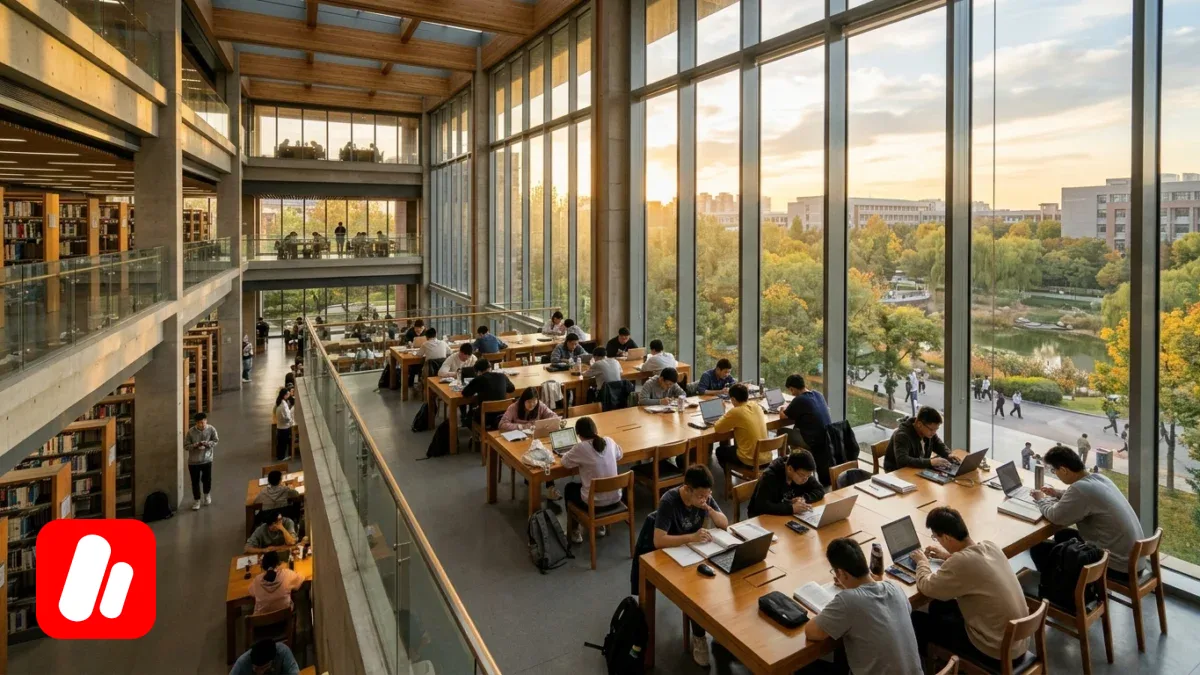
Four institutions stand out as top engineering universities in China for international applicants seeking English-medium STEM degrees:
1. Tsinghua University (Beijing)
Located in the Haidian university cluster, Tsinghua is globally celebrated for automation, computer science, and civil infrastructure. Its research centers link directly to high-tech enterprises in Beijing’s Zhongguancun technology hub.
2. Shanghai Jiao Tong University – SJTU (Shanghai)
Renowned for naval architecture, robotics, and mechanical engineering, SJTU maintains direct ties to heavy industry and automated manufacturing clusters along the Yangtze River Delta.
3. Zhejiang University (Hangzhou)
Offering specialized English-taught engineering tracks through Zhejiang University International Programs, this university sits inside China’s e-commerce and AI heartland, maintaining strong research bridges with regional tech innovators.
4. Harbin Institute of Technology – HIT (Harbin and Shenzhen)
HIT is a national powerhouse for aerospace, advanced materials, and hardware engineering. Its satellite campus in Shenzhen places students directly inside the hardware manufacturing capital of southern China.
💡 Tip from the Great Wall Education team: When selecting where to study engineering in China in English, look beyond classroom rankings and evaluate the surrounding industrial ecosystem to secure the strongest final-year capstone projects.
Securing your seat in competitive technical disciplines requires demonstrating strong analytical fundamentals. When evaluating applicants for an engineering bachelor degree China programs prioritize quantitative ability over extensive extracurricular profiles.

Admissions offices inspect your high school performance with particular focus on senior secondary STEM coursework. You must submit certified transcripts alongside your graduation certificate.
Core academic expectations:
Your chosen instruction medium dictates the required language certification.
Standard language thresholds:
For top-tier engineering majors to study in China, standard grades might not be the final evaluation step. Institutions frequently run proprietary testing to benchmark international applicants against rigorous domestic standards.
Selective institutions, including the Tsinghua University English Admissions Portal, often require candidates to sit for written subject evaluations or submit standardized test scores. Engineering departments commonly administer their own online entrance exams focused strictly on Mathematics and Physics. Additionally, some universities now utilize the CSCA (China Standardized College Admissions) test, an entrance examination designed specifically to evaluate foreign high school graduates in quantitative reasoning, spatial problem-solving, and foundational science before extending an offer.
Once you meet the entrance criteria, calculating your investment is the natural next step. Earning an engineering bachelor degree in China remains remarkably affordable compared to North American or European equivalents, offering top-tier STEM facilities without long-term debt.

Standard annual costs to expect:
International applicants targeting engineering majors to study in China can access generous funding packages to offset both tuition and living costs.
Primary scholarship categories:
If you plan to secure competitive China engineering scholarships 2027, building a well-documented portfolio early gives your file the strongest advantage.
Choosing to pursue an engineering bachelor degree in China gives you direct access to advanced research facilities and world-class industrial hubs. When you evaluate the right engineering majors to study in China, aligning your academic strengths with an institution suited to your career ambitions remains the most decisive step toward long-term success.

Applying early allows you to carefully assemble your academic records, prepare required language scores, and position your profile effectively for key funding opportunities. You can move forward through each milestone with clear expectations and fewer surprises along the way.
Our team at Great Wall Education is here to guide you through university comparisons, admission criteria, and file preparation for the 2027 academic year. Reach out to our advisors today to find the engineering path that matches your professional goals.
The top engineering majors to study in China are computer science, civil engineering, mechanical engineering, electrical engineering, and biomedical engineering. These four-year programs are widely offered in English, feature cutting-edge laboratory training, and align closely with global industry standards for international careers.
Yes, international students can pursue several engineering majors to study in China completely in English. Most leading Chinese universities offer four-year English-taught bachelor degrees, requiring proof of English proficiency such as an IELTS score between 6.0 and 6.5 or a TOEFL iBT score of 80 to 90.
Tuition for an English-taught engineering bachelor degree in China ranges from 20,000 RMB to 45,000 RMB per academic year. Additionally, student living expenses in Tier 1 and Tier 2 Chinese cities typically range from 2,500 RMB to 4,500 RMB per month.
Yes, international applicants can apply for Chinese Government Scholarships (CSC Type A and Type B) covering full tuition and living allowances. The scholarship application window for the 2027 intake runs from November 2026 to April 2027, depending on your target university and dispatch authority.
Yes, selected elite institutions require the CSCA (China Standardized College Admissions) test or internal entrance examinations in mathematics and physics. While many universities admit students based on high school transcripts and language scores alone, competitive engineering departments use these subject tests to evaluate scientific aptitude.
Find the best Chinese university and scholarship for 2027 with our expert breakdown

Discover how provincial government scholarships fund international students in China for 2027. Compare

Explore China university partial scholarships, tuition waiver options, living costs, and accurate application