Living in China
Opening a Business in China? (2026 Legal & Practical Guide for Students)
Introduction Opening a Business in China is a high-intent query for students

Scholarship application and exam preparation support.
Practice tests, strategies, and feedback to help you achieve your target score.
Targeted training and past paper practice to boost your exam performance.
Mock interviews and coaching to help you succeed in admissions and visa interviews.
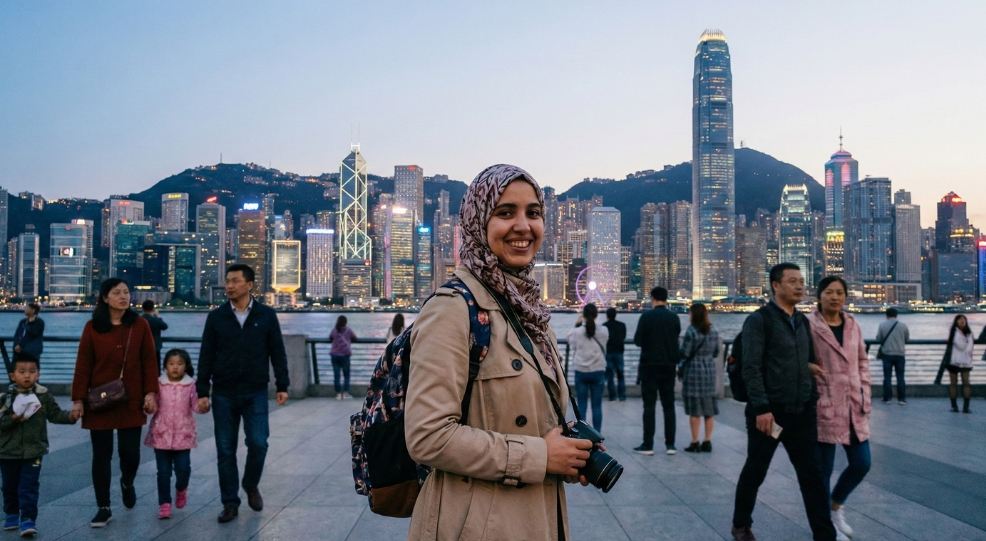

Is China safe for Moroccans? Yes, it is—whether you are a student, a woman, or a family traveling abroad. From a security standpoint, China ranks among the safest study destinations in 2026, especially within university campuses.
The concern is understandable. China feels far, unfamiliar, and is often misrepresented online. This article doesn’t aim to sell a dream or minimize discomfort. Instead, it explains clearly and honestly what safety in China actually looks like for Moroccans—where real risks exist, where they don’t, and how students experience daily life once the initial fears fade.
Yes, China is safe for Moroccans. Violent crime is very rare, law enforcement is strict, and university campuses are highly secured. While Moroccans may experience cultural curiosity or awkward interactions, serious racism or physical danger is uncommon. For students, daily life in China is often more controlled and safer than in many European cities.
China’s reputation for safety is not accidental. Street violence, armed robbery, and random assaults are extremely rare. Gun ownership is tightly controlled, and police response is fast and visible. This creates an environment where most Moroccan students quickly stop worrying about crime altogether.
That said, the risks that do exist are not violent; they are opportunistic.
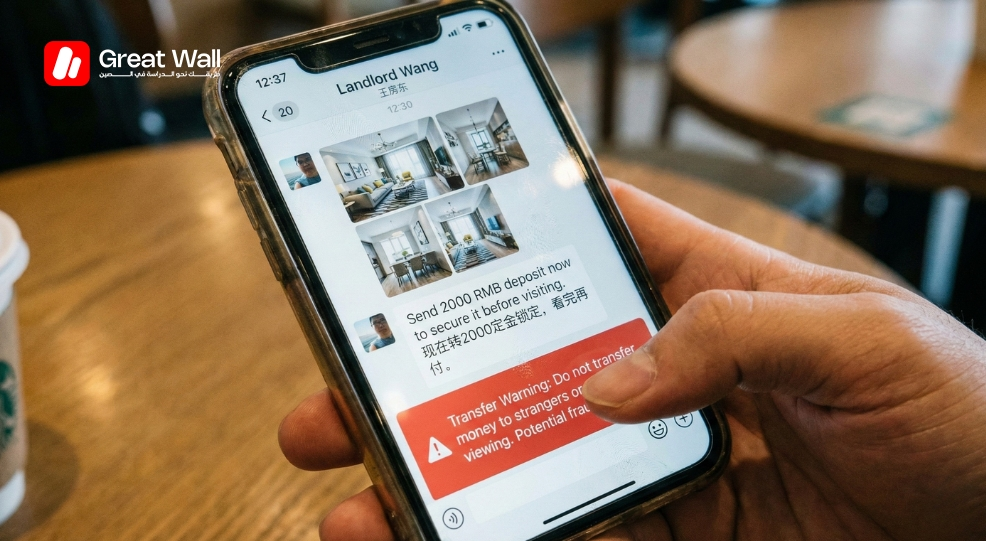
The most common issue Moroccan students encounter is the WeChat housing scam. Fake landlords post attractive apartments, request a deposit, and disappear before any visit takes place.
Another recurring problem involves fake part-time job offers, often shared in student groups, where a “registration fee” is requested before work begins. In tourist areas, especially in Beijing or Shanghai, some students encounter the classic tea house scam, where a friendly invitation ends with an inflated bill.
These situations are frustrating, not dangerous, and they are avoidable once students learn one rule: never send money before verification, and trust university-approved channels.
Public transport in China—metro, trains, buses—is reliable and very safe. The real adjustment comes above ground.
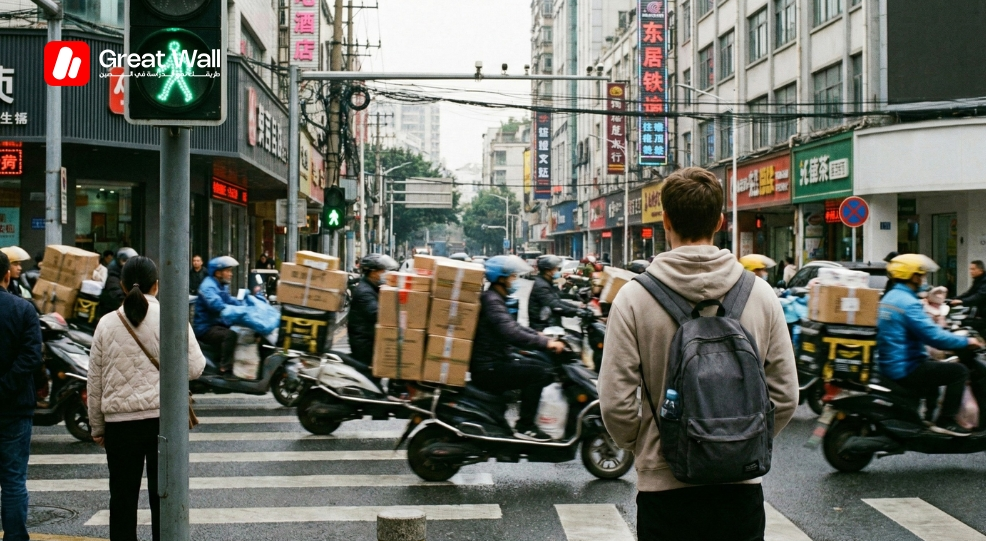
Cars generally follow traffic rules, but electric scooters and e-bikes often do not. They are silent, fast, and frequently ignore traffic lights or pedestrian crossings. Many Moroccan students say the most stressful moment of their first month in China was simply crossing the street.
Students adapt quickly by learning to:
Once this habit forms, traffic stops feeling dangerous; but it is an adjustment that deserves to be mentioned honestly.
Moroccans in China do experience racism, but it rarely takes the form people fear. What students describe most often is visibility. Being stared at on buses, asked where they are “really from,” or hearing comments about skin color—especially in smaller cities—is common. Some students have experienced strangers taking photos without permission.
What is notably rare are physical attacks, threats, or exclusion from academic life. Inside universities, Moroccan students are treated primarily as international students. Professors, administrators, and dorm staff generally follow clear institutional rules and are cautious about discriminatory behavior.
A useful way students describe the difference is this:
In Europe, discrimination can be subtle and persistent. In China, it is visible but usually harmless.
Chinese universities operate as controlled environments. Dormitories have entry cards, security guards are present day and night, and visitor access is limited. Many campuses enforce curfews and restrict overnight guests—rules that students initially find strict, but parents often find reassuring.
This structure dramatically reduces safety risks and explains why China is considered a good option for younger students and first-time travelers.
Related guide: Dorms vs. Renting: Accommodation in China (Prices & Rules 2026)
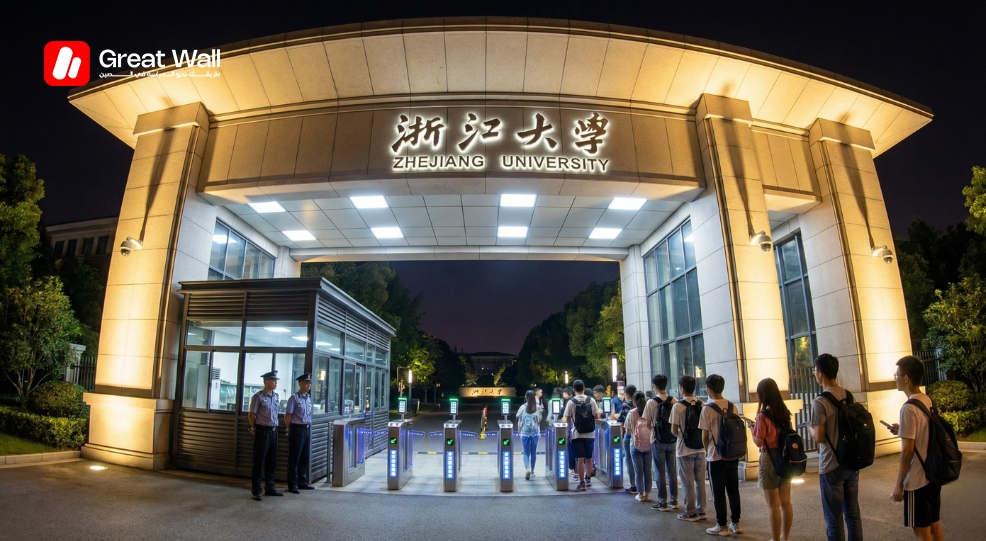
For Moroccan Muslims, safety is not just physical—it is also about daily comfort. In most university cities, halal food is easy to find, mosques exist, and practicing Islam privately does not attract attention. Moroccan identity is often met with curiosity rather than suspicion.
Problems are more likely to come from misunderstanding than hostility. Students who communicate calmly and respect local norms generally report neutral or positive experiences.
Full guide: Halal Food & Mosque Access: Being Muslim in China (2026 Guide)
Moroccan students stay safe in China largely by understanding what not to cross.
Political discussions, jokes about sensitive topics, or public criticism of authorities should be avoided—not because students are targeted, but because foreigners are expected to remain neutral guests.
Also, remember the bureaucratic rule: You must register your address with the local police station (PSB) within 24 hours of arriving. It is a simple formality, but forgetting it can lead to a fine.
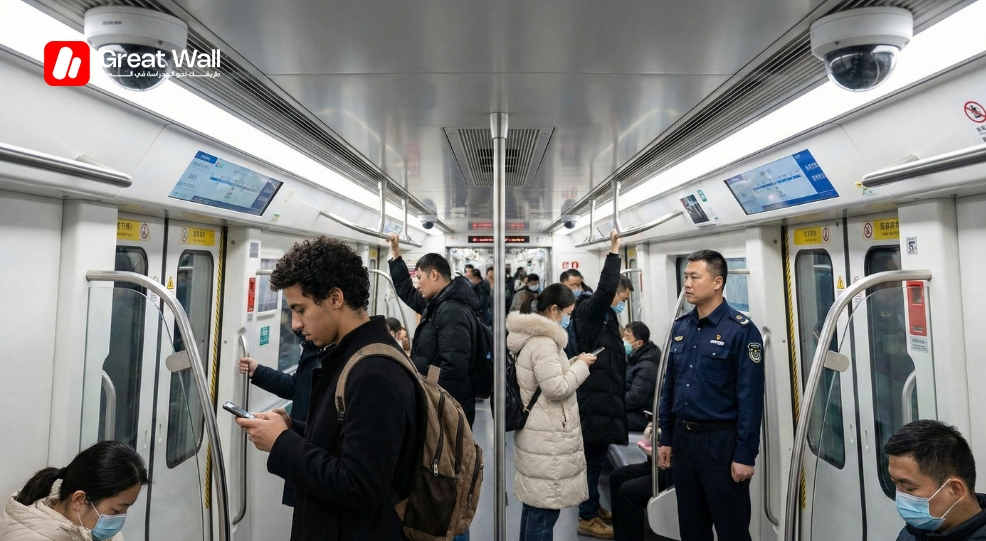
Many Moroccan students arrive anxious, alert to every difference. The first weeks are about adjustment—language barriers, new rules, unfamiliar habits. Then routines form. Streets become familiar. Campuses feel safe. The fear that dominated decision-making quietly disappears.
What replaces it is something unexpected: confidence.
Europe offers familiarity, but also higher exposure to street crime in many cities. China offers structure, rules, and predictability. For students, especially those living on campus, this structure often translates into a stronger sense of safety.
Parental fear usually comes from distance and uncertainty, not from facts. Once families understand how universities operate and how controlled student life is, concern often turns into confidence.
A Parent’s Guide to Sending Your Child to China (2026)
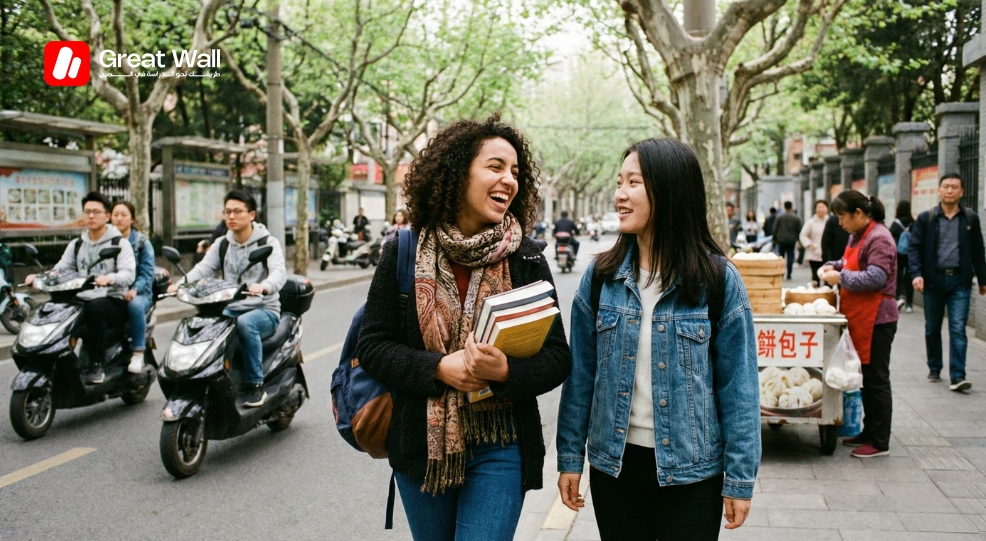
China is safe, but it is not intuitive.
Great Wall Education helps Moroccan students avoid common mistakes; choosing the wrong housing, trusting the wrong contacts, misunderstanding rules, and supports families through each stage of the journey.
Contact us today to start your personalized guidance and ensure a smooth, safe study experience in China.
Learn more: Why Study in China? A Guide For Moroccan Students (2026)
The fear that started this conversation is understandable. It is also often misplaced.
China is not a reckless choice. It is a structured one. Students who respect the system feel protected by it.
Judge China by reality, not rumor. For many Moroccans, it is safer than expected, and transformative.
Yes. China remains one of the safest destinations for Moroccans, particularly for students living on university campuses.
Some experience curiosity or awkward behavior, but violent or systemic racism is rare.
In terms of violent crime and campus security, China is often safer than many European cities.
Yes. Female students commonly report feeling safe due to strict laws and controlled environments.
Beijing, Shanghai, Guangzhou, Hangzhou, Shenzhen, and major university cities.
Introduction Opening a Business in China is a high-intent query for students
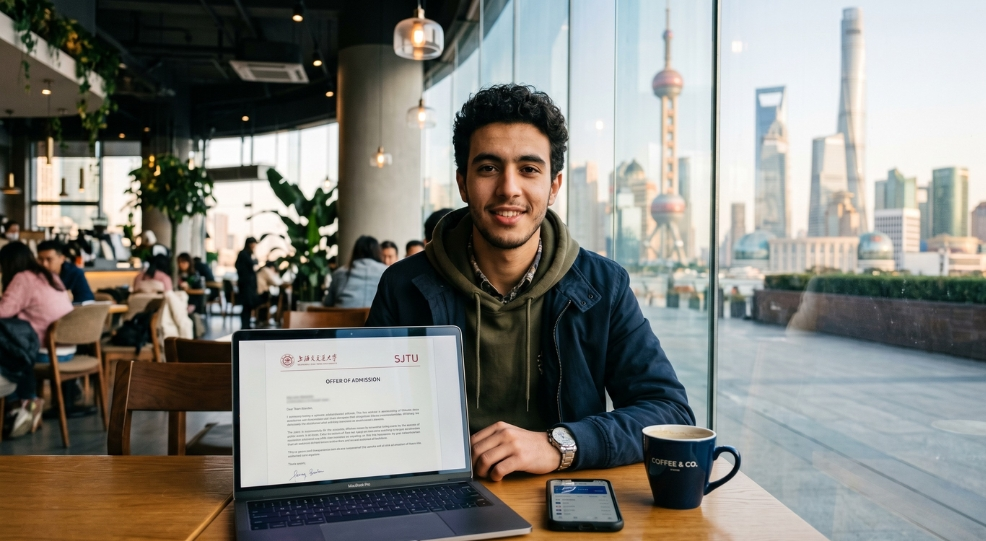
Introduction Understanding how to send money to China as an international student is
Introduction Why Chinese universities reject documents is one of the biggest concerns for