
Scholarships in China
How to Apply CSC Scholarship 2026: Full Guide
Learn how to apply CSC scholarship 2026 step by step. Complete guide covering

Scholarship application and exam preparation support.
Practice tests, strategies, and feedback to help you achieve your target score.
Targeted training and past paper practice to boost your exam performance.
Mock interviews and coaching to help you succeed in admissions and visa interviews.


With over 3,000 higher education institutions across the country, navigating the full china university majors list can feel completely overwhelming when you are planning your degree. What most students don’t realize is that you do not need fluent Mandarin to unlock these opportunities, as top-tier universities now offer hundreds of accredited programs delivered entirely in English.
Whether you want to study in China after baccalaureate or you are targeting an advanced master’s degree, the Chinese academic system operates on a flexible dual-track model. You can step directly into high-demand English-taught degrees in fields like artificial intelligence and international finance, or choose a Chinese-taught discipline paired with an intensive one-year foundation course.
If you are getting ready to study in China for the 2026–2027 academic year, choosing the right degree path early determines your admission chances and funding options. This guide walks you through every major discipline, top university pairings, realistic tuition fees, and competitive scholarship tracks so you can build your application with total clarity.
What most students don’t realize is that China doesn’t invent degree titles at random. Every program you encounter on a china university majors list fits into a standardized national framework strictly supervised by the central government.

According to the regulatory curriculum guidelines of the Ministry of Education of the PRC, all degree-granting programs are cataloged into 13 official academic disciplines.
The 13 statutory discipline categories:
Each discipline follows a standardized qualification ladder recognized worldwide through bilateral treaty agreements. Understanding where your target degree sits helps you plan your timeline accurately.
Official degree tiers in China:
Here’s the thing: China differentiates sharply between ordinary disciplines and designated “national strategic priority fields.” Fields such as artificial intelligence, robotics, clean energy, and biomedical devices receive direct state backing. For international applicants looking at study in China programs 2026, targeting these strategic areas often unlocks modern campus laboratories and more generous scholarship quotas. We monitor how these program quotas shift each semester in the latest updates on our blog to help you pick the most competitive options.
Now that you understand how the degree system works, let’s look at the discipline where China undeniably dominates global rankings: engineering. If you want a future in technology, few countries put this amount of funding and real-world testing directly into student laboratories.

China invests heavily in research and industrial development, placing its technical universities beside mega-campuses for giants like Huawei, BYD, and DJI. You do not just read theoretical models in textbooks; you work on systems that get deployed in modern cities within months.
High-demand majors in Chinese universities:
What most students don’t realize is that China’s top technical schools regularly rank alongside MIT and Stanford for research volume. Tsinghua University (清华大学 – Tsinghua) leads global charts for engineering, while Harbin Institute of Technology (哈尔滨工业大学 – HIT) excels in aerospace and robotics, and Shanghai Jiao Tong University (上海交通大学 – Shanghai Jiao Tong) sets the standard for mechanical engineering.
Program specifications for study in china programs 2026:
If engineering builds the infrastructure of the modern world, medicine remains the most coveted path for international students seeking a direct, hands-on clinical career. For future doctors, China’s Bachelor of Medicine, Bachelor of Surgery (MBBS) stands out as one of the most structured study in China programs 2026 offers.
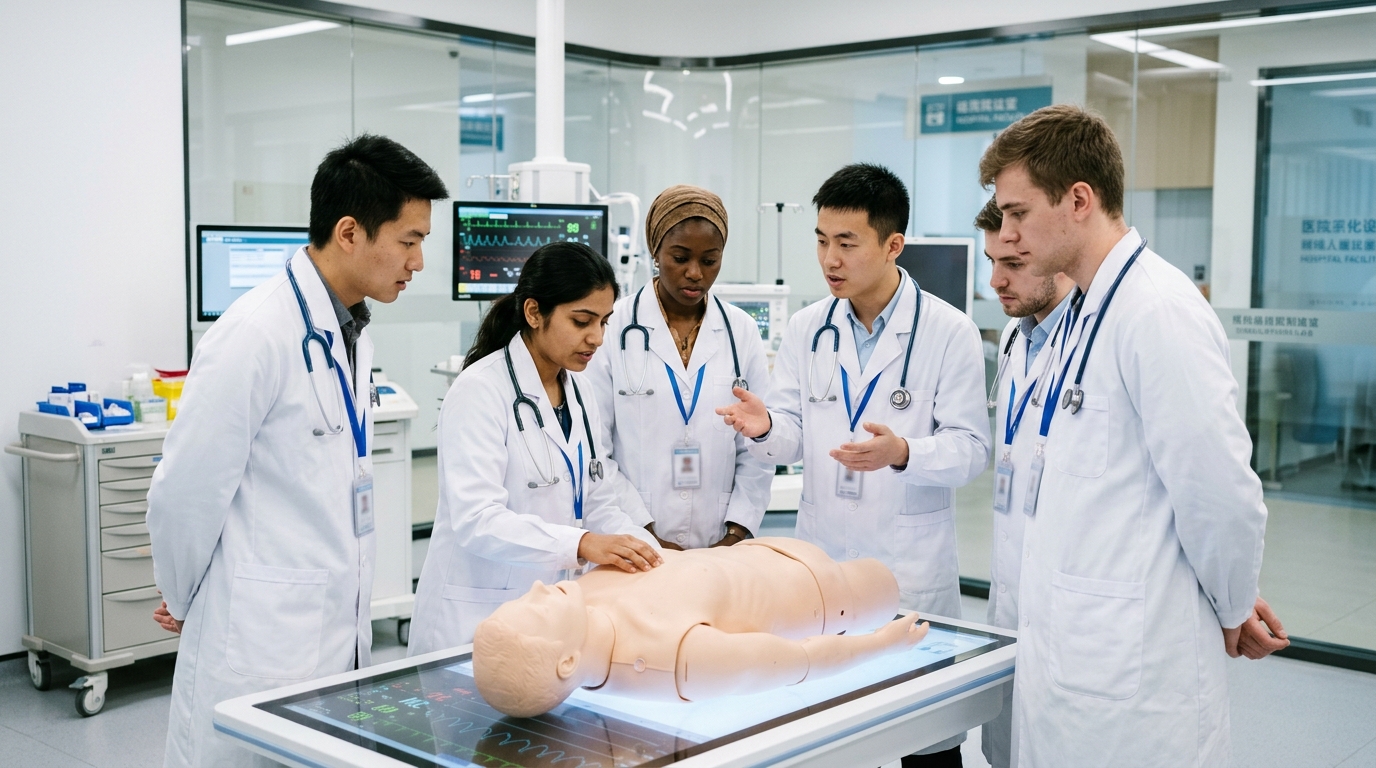
What most students don’t realize is that China strictly regulates English-taught medical education. The Chinese Ministry of Education (MOE) maintains an official roster of only 45 authorized universities permitted to enroll international students for English-medium clinical medicine. Every legitimate institution on this list is cataloged in the World Directory of Medical Schools (WDOMS), making your degree eligible for medical council licensing exams back home or abroad, including the Moroccan CNOM, the UK GMC, and USMLE.
The standard clinical medicine program spans six academic years, designed to balance rigorous pre-clinical theory with intensive bedside training:
Program breakdown:
Here’s the thing about the language barrier: your lectures, exams, and textbooks are entirely in English, but real patients speak Chinese. Because of this, universities require you to reach at least HSK Level 3 or HSK Level 4 before you enter your hospital rotations in Year 4.
Honestly, here’s what I think: view the mandatory Chinese language classes in your first two years as an advantage rather than an obstacle. You can complete your final-year internship in an affiliated Grade 3A Chinese hospital or apply for elective rotations in your home country, giving you unbeatable clinical exposure before you even graduate.
What most students don’t realize is that studying business in China puts you directly inside the engine of world commerce. You aren’t just learning standard financial models; you are analyzing real-time cross-border supply chains, live streaming e-commerce ecosystems, and digital currency adoption as they happen.

Here’s the thing: commerce faculties across China have modernized rapidly. Alongside traditional MBA tracks, specialized degrees like International Economics and Trade, Cross-Border E-Commerce, and Financial Technology (FinTech) now dominate international admissions.
Top business hubs and their flagship universities:
Studying in these commercial epicenters provides direct access to corporate internships with multinational giants like Huawei and international logistics firms. These practical placements give Moroccan and international graduates a distinct edge when coordinating trade corridors between China, the Middle East, and Africa.
Work opportunities after your degree are also far more accessible than in past years. Graduates holding a master’s degree from a recognized Chinese university can now qualify directly for a Chinese Z-visa (work visa) without the old mandate of two years of prior overseas work experience.
Whether you choose international trade or software engineering, your primary fork in the road is your language medium. The good news? You do not need to speak Mandarin before boarding your flight if you opt for an English-taught degree.
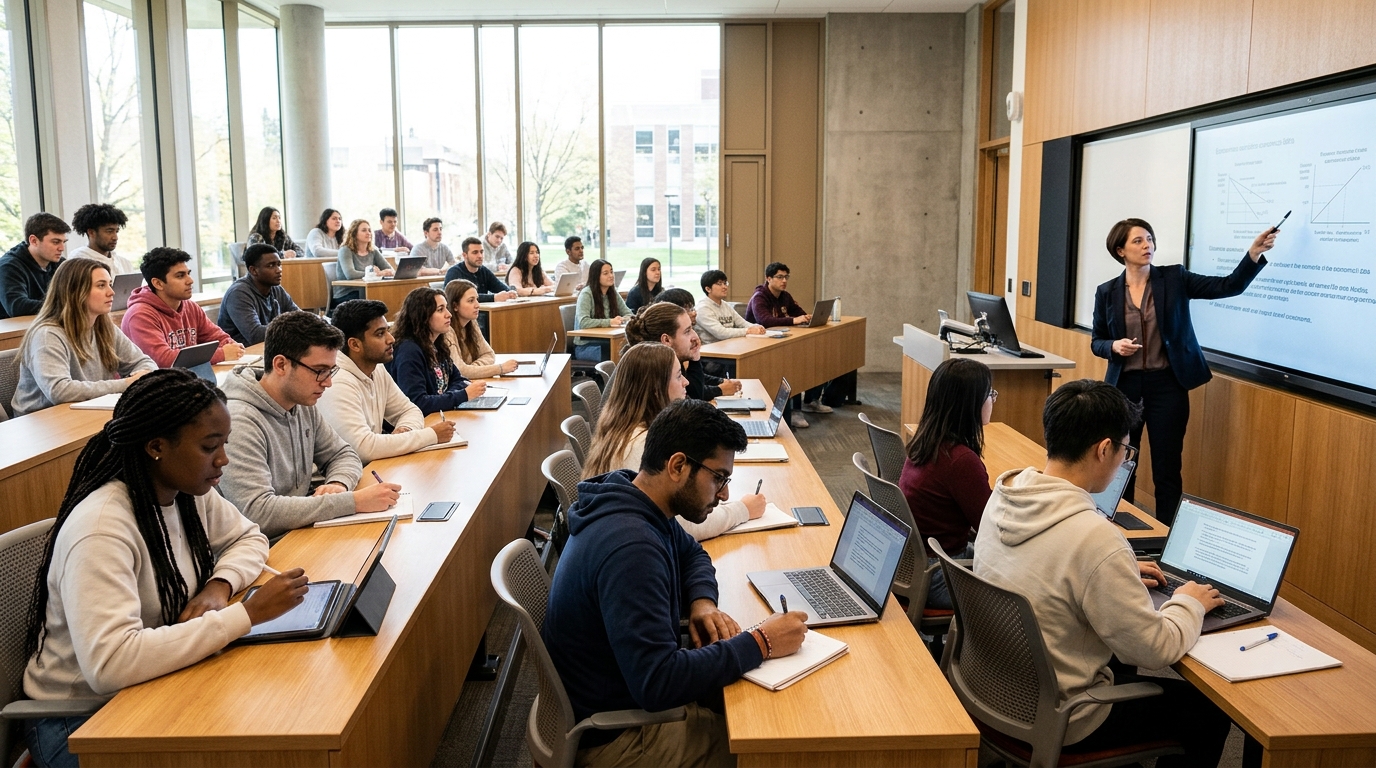
What most students don’t realize is how strictly Chinese institutions differentiate between their two instruction streams.
Standard entry requirements by track:
Can you skip taking an IELTS or TOEFL? Yes, under clear conditions. If your previous diploma was delivered entirely in English—such as an American high school program, British A-Levels, or an international degree—universities routinely accept an official English Proficiency Certificate from your school. Our advisors at Great Wall Education help applicants verify whether their previous school credentials qualify for this fee-saving waiver.
Here’s the thing: studying in English does not mean living in an isolated linguistic bubble. China’s Ministry of Education mandates that every international undergraduate and postgraduate student complete foundational Mandarin classes alongside their chosen major.
These introductory modules are built directly into your semester timetable. By graduation, you will typically need to achieve HSK 3 or 4, giving you the practical language tools needed to navigate daily life and stand out to multinational employers.
Once you have your language qualifications sorted, the next crucial step is matching your field of study to elite institutions. Navigating an exhaustive china university majors list can feel overwhelming, but focusing on C9 League and Double First-Class institutions immediately pinpoints where your field is genuinely world-class.

Here’s the thing: elite Chinese campuses have distinct academic specializations, so you should align your career goals with an institution’s historical strengths rather than prestige alone.
Flagship pairings for top majors in Chinese universities:
What most students don’t realize is that tuition across Chinese public universities depends far more on the discipline than on institutional ranking. When mapping your finances for study in china programs 2026, benchmark your budget against standard baseline ranges.
Standard annual tuition ranges:
Your major choice directly influences which scholarship scheme you can secure. National and municipal grant funds are allocated strategically based on national industry targets and institutional strengths.
Scholarship routing for china university degree programs:
Picking a top institution from the China university majors list is only half the battle, and making a rushed academic choice can derail both your degree recognition and your funding.

Navigating the comprehensive china university majors list for the 2026–2027 academic year ultimately comes down to one principle: alignment. When you match your true career goals with the right instruction language, realistic budget boundaries, and accredited universities, your path forward becomes remarkably straightforward.
The smartest move you can make right now is to start preparing your portfolio early. Gathering your academic transcripts, polishing your personal statement, and getting your documents verified ahead of time ensures you secure your spot before competitive program quotas fill up.
Earning your degree in China is a transformative adventure that builds international resilience and opens real global opportunities. Take a deep breath, trust the work you put in today, and take that next step with confidence. You have an exciting journey ahead.
You can find the official China university majors list directly on the China Scholarship Council portal (Campus China) and individual university admissions portals. These directories catalog thousands of degree programs across engineering, medicine, and business for 2026. Always confirm whether your chosen program is accredited and currently open to international applicants before submitting documents.
Focus on your long-term career goals, your language comfort, and national degree recognition. If you plan to practice back home in Morocco or elsewhere abroad, verify that fields like Medicine (MBBS) or Civil Engineering are accredited by relevant national ministries. Also check whether your chosen major qualifies for full or partial university scholarships.
Yes, hundreds of majors in Chinese universities are taught fully in English. Top tracks include Clinical Medicine (MBBS), Computer Science, Artificial Intelligence, and International Trade. You do not need to know Mandarin before arriving for these tracks; an English proficiency certificate or high school instruction letter is usually sufficient for admission.
Yes, medical degrees from Chinese universities approved by the Ministry of Education are recognized worldwide. Qualified graduates can sit for licensing exams such as the USMLE in the United States, the PLAB in the UK, and medical council equivalency exams across North Africa. Always ensure your chosen university is listed in the World Directory of Medical Schools.
No, you do not need to speak Mandarin to apply for English-taught study in China programs 2026. Your lectures, coursework, and exams will be conducted entirely in English. Most universities even provide beginner Chinese language classes during your first year so you can navigate everyday life off-campus with total confidence.
Learn how to apply CSC scholarship 2026 step by step. Complete guide covering
Explore the official China university majors list for 2026-2027. Discover English-taught degrees, engineering,

Introduction Opening a Business in China is a high-intent query for students