study in china
Best Cities to Study in China for Moroccan Students (2026 Complete Guide)
Introduction The best cities to study in China for Moroccan students in 2026

Scholarship application and exam preparation support.
Practice tests, strategies, and feedback to help you achieve your target score.
Targeted training and past paper practice to boost your exam performance.
Mock interviews and coaching to help you succeed in admissions and visa interviews.


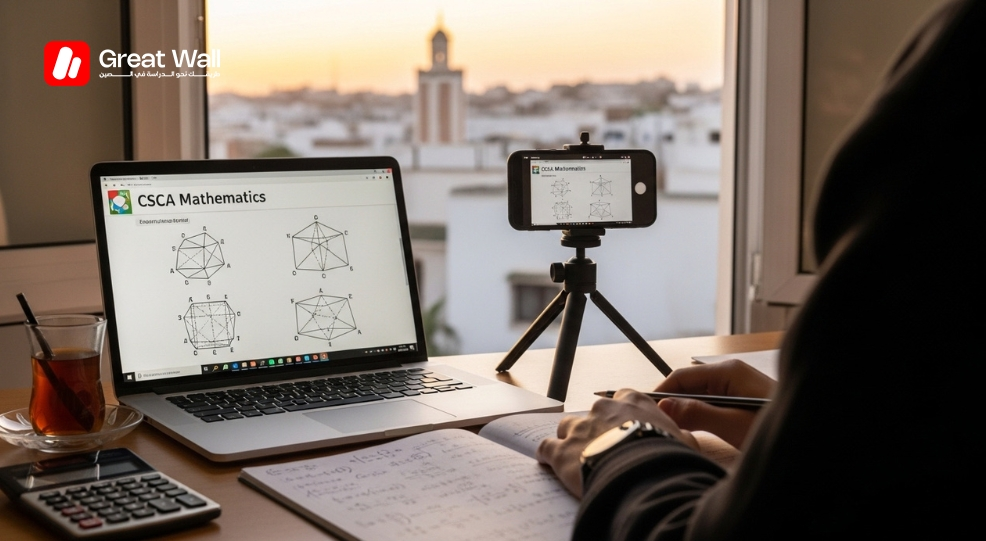
The CSCA Test (China Scholastic Competency Assessment) is a standardized academic test and assessment designed to ensure international students can handle the rigor of university-level study in China.
While the HSK measures how well you speak Chinese, the CSCA measures how well you think in an academic environment. It evaluates:
Starting with the 2026/2027 academic year, China has raised the bar for undergraduate admissions to:
The CSCA is generally mandatory for:
Pro Tip for Moroccan Students: The Math and Physics levels are comparable to the Moroccan National Baccalaureate (Sciences Maths/Physiques). Early revision of these core concepts is your biggest advantage.
Some English-taught programs may not require Professional Chinese, but Mathematics is often still mandatory.
Always verify your target university’s official requirements before registration.
| Subject | Duration | Questions | Language | Key Focus | Required For |
| Professional Chinese | 90 mins | 80 MCQs | Chinese | Academic Reading | Chinese-taught programs |
| Mathematics | 60 mins | 48 MCQs | CN / EN | Algebra, Calculus | All undergrad applicants |
| Physics | 60 mins | 48 MCQs | CN / EN | Mechanics, Optics | Engineering/Physics majors |
| Chemistry | 60 mins | 48 MCQs | CN / EN | Atomic Law, Organic | Medicine & Biology majors |
To succeed, you must align your revision with the official content modules. Before you begin, check the List of 306 Chinese Universities Requiring the CSCA Test for 2026 to see if your target school is on the list.
This test is designed to evaluate international students’ understanding of mathematics, with special emphasis on core mathematical concepts, logical reasoning skills, and analytical problem-solving abilities.
Its purpose is to ensure that candidates have the necessary academic preparation for undergraduate studies at Chinese universities, while also establishing a strong foundation for advanced learning in mathematics, science, and engineering fields.
This test is aims to evaluate the essential physics competencies required for international students intending to pursue undergraduate studies in science and engineering programs in China.
It focuses on students’ understanding of fundamental physics principles, their grasp of scientific reasoning, and their ability to apply knowledge across interdisciplinary contexts.
These competencies serve as the basis for university-level physics courses, underpin key fields such as mechanical engineering, electrical engineering, and materials science, and establish a strong foundation for future research, innovation, and professional engineering practice.
Targeting Elite Schools? Check our guide to the Top 10 Engineering Universities in China to see where these subjects matter most.
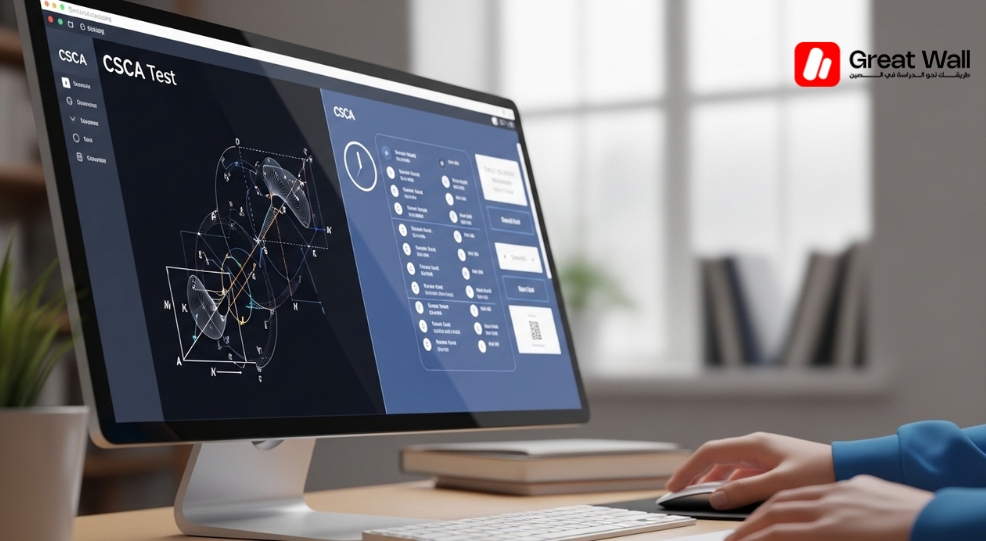
This examination is intended to evaluate the fundamental chemistry competencies required for international students seeking admission to undergraduate science and engineering programs in China.
It assesses students’ command of core chemical principles, their understanding of scientific reasoning, and their capacity to carry out experimental investigations.
These competencies underpin university-level chemistry coursework, support related disciplines such as chemistry, chemical engineering, materials science, and environmental engineering, and provide a strong basis for future research, innovation, and professional engineering practice.
Please note that the STEM Chinese examination is conducted entirely in Chinese; therefore, an official English version of the syllabus is not available.
This test evaluates students’ ability to use Chinese as the language of instruction in science and engineering programs. Its purpose is to ensure that candidates possess the academic Chinese proficiency required to successfully participate in first-year undergraduate STEM courses at Chinese universities.
Students are expected to clearly distinguish between technical academic language and everyday conversational Chinese. They should understand the core grammatical structures, terminology, stylistic conventions, and pragmatic features commonly used in scientific and engineering contexts. A solid command of specialized vocabulary in mathematics, physics, chemistry, and computer science is required.
Candidates must be capable of independently reading university-level foundational textbooks and using reference materials to interpret academic research papers within related disciplines. Additionally, they should demonstrate the ability to engage in subject-related discussions with professors and classmates and express key theories and concepts using appropriate academic language.
Sections include:
1. Foundational Scientific Concepts
2. Core Undergraduate Coursework
3. Academic Application Contexts
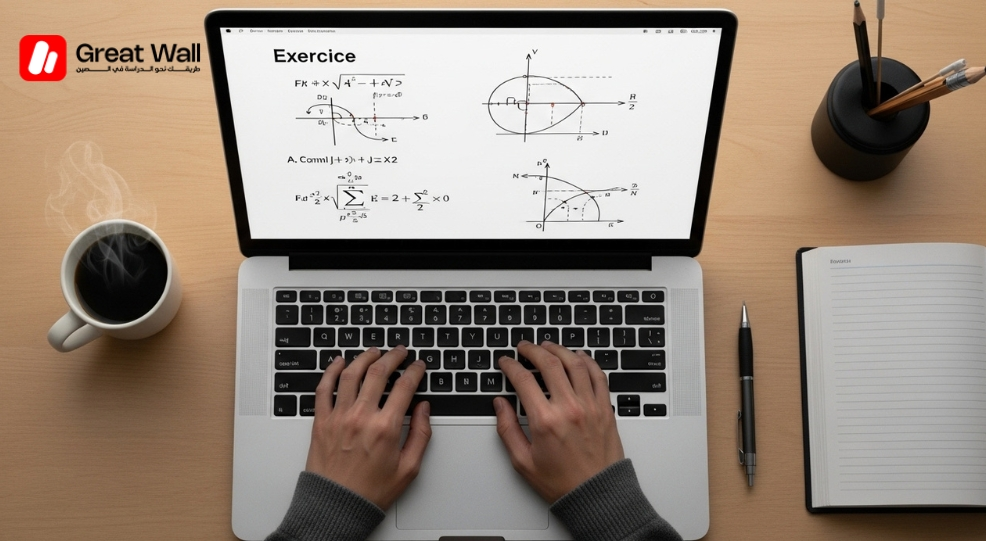
The Humanities Chinese examination is administered entirely in Chinese; therefore, no English-language syllabus is officially provided.
This examination assesses students’ ability to use Chinese effectively in humanities-related academic programs. It ensures that candidates have the necessary language proficiency to successfully engage in first-year undergraduate humanities courses at Chinese universities.
Students should be able to follow classroom lectures delivered in Chinese, extract essential information, and take organized notes. They are expected to understand formal written expressions commonly used in academic texts within humanities disciplines.
Candidates should also apply reading strategies such as skimming and scanning to efficiently identify key terms and central ideas. They must demonstrate effective academic study skills, use reference tools to read introductory-level scholarly books, and accurately comprehend essential professional concepts and main arguments.
Sections include:
The exam content draws from academic language used across major humanities disciplines, including literature, philosophy, law, education, history, and the arts.
Subject areas covered include:
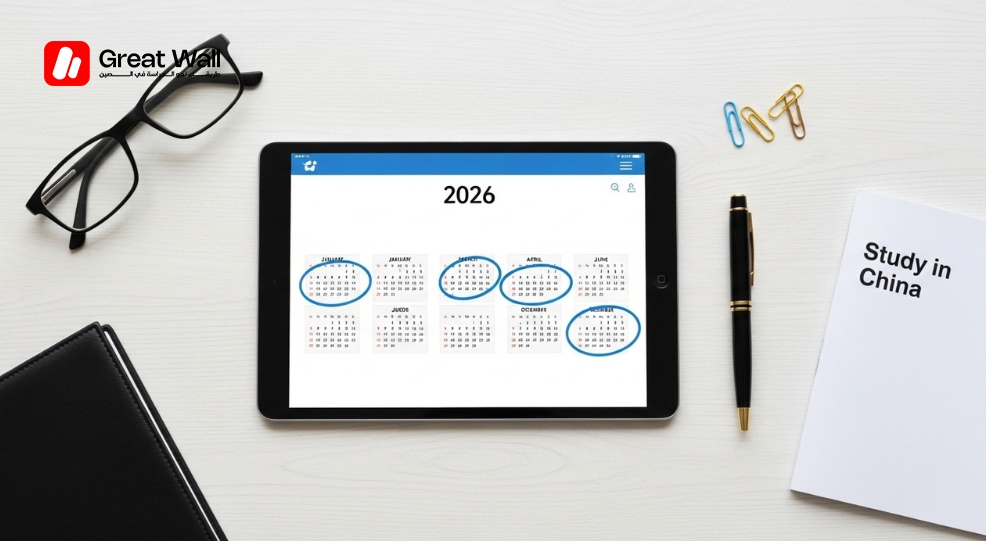
The CSCA is administered five times per year:
If you miss the March session, you may miss the main window for the Full CSC Scholarship 2026. Moroccan students should aim for the January or March sessions.
The CSCA uses a Strict Remote Proctoring system. To ensure a smooth exam day, prepare your setup:
Cameras and microphones must remain active throughout the exam. The testing environment must be private and quiet.
All applicants are required to complete their registration through the official CSCA website (www.csca.cn).
Registration must be done using a valid, long-term personal email address. The entire process, including form submission and payment, is completed online.
Candidates should consult the official CSCA test website or log into the registration system to confirm the exact deadline for their chosen test session, as dates may vary.
Applicants must carefully verify that all personal details provided during registration—such as full name and identification number, are correct, authentic, and identical to the information shown on the valid identification document presented on test day.
Any mismatch or incorrect information will lead to disqualification from the examination.
The test fee must be paid online at the time of registration. Updated fee details and accepted payment methods (including VISA, MasterCard, and UnionPay) are available on the official registration page.
Admission tickets will be made available for download within a specified period prior to the examination date. A notification will be sent to the registered email address once the ticket is ready.
Candidates must log into the official website to download the ticket and carefully verify that all information matches their valid identification document. The admission ticket is mandatory for entry to the examination venue. Any inconsistencies between the ticket and the ID document will result in denial of access to the test.
Preparation requires more than just reading; you need to master the interface. Take the Official CSCA Mock Test by Great Wall Education
Using this simulation allows you to:
| Feature | HSK | CSCA |
| Purpose | Language Communication | Academic Readiness |
| Focus | Listening, Reading, Writing | Math, Science, Logic |
| Role | Language Certificate | Admission & Scholarship Tool |
With the new CSCA requirement, structured guidance is more important than ever.
Great Wall Education assists students with:
Their academic advisors help students align subject choices with university requirements, especially for competitive majors such as medicine, engineering, and aerospace.
Early preparation significantly increases admission and scholarship success rates.
The CSCA Test represents a major shift in Chinese undergraduate admissions.
It is no longer sufficient to demonstrate language ability alone. Academic readiness in mathematics and sciences is now central to admission and scholarship decisions.
Students who prepare early, take mock exams, and align their subject choices with university requirements significantly improve their chances of acceptance and scholarship success.
If your goal is to study in China in 2026, preparing for the CSCA is not optional; it is strategic.
Before you submit your application, ensure you have followed the Definitive China Application Checklist to avoid common mistakes like incorrect notarization.

Yes, especially for CSC Scholarship applicants and top-tier university admissions.
Yes, the exam is conducted online with remote proctoring. You can take it from home.
1 subject is 450 CNY; 2 or more subjects are capped at 700 CNY total.
Some universities may not require it for certain English-taught programs, but competitive institutions increasingly request CSCA scores.
The CSCA is conducted five times annually: January, March, April, June, and December.
Most medical programs require Mathematics and Chemistry. Some universities may also request Physics.
Yes. HSK evaluates language proficiency, while CSCA assesses academic subjects such as mathematics and sciences.
Yes. The exam is primarily conducted online with remote proctoring and requires two devices for monitoring.
Great Wall Education provides specialized CSCA strategy, university selection, and full visa support for Moroccan students.
Introduction The best cities to study in China for Moroccan students in 2026
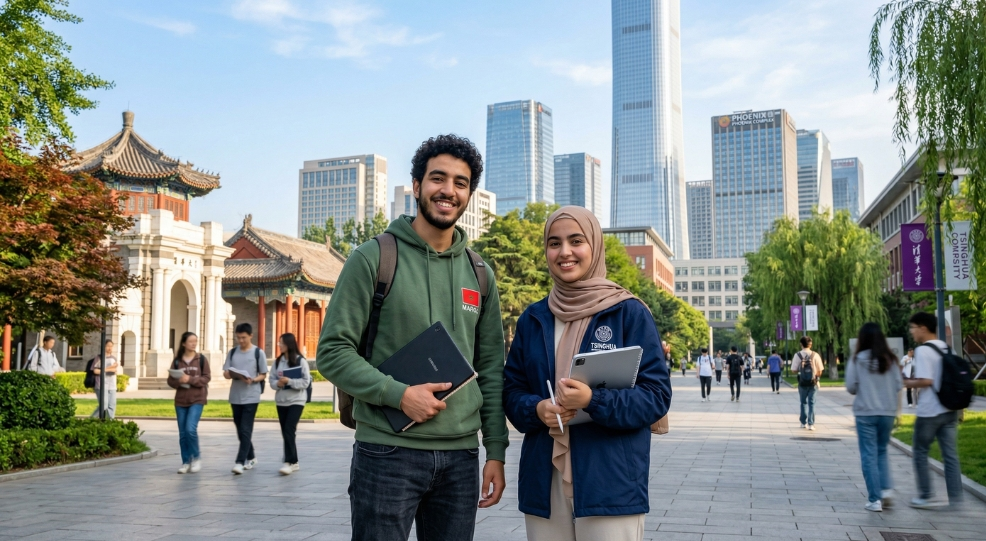
Introduction Cost of studying in China is one of the main reasons why

Introduction CSCA Exam Technical Issues can happen during the test, but they are