
study in china
Best Cities to Study in China for Moroccan Students (2026 Complete Guide)
Introduction The best cities to study in China for Moroccan students in 2026

Scholarship application and exam preparation support.
Practice tests, strategies, and feedback to help you achieve your target score.
Targeted training and past paper practice to boost your exam performance.
Mock interviews and coaching to help you succeed in admissions and visa interviews.


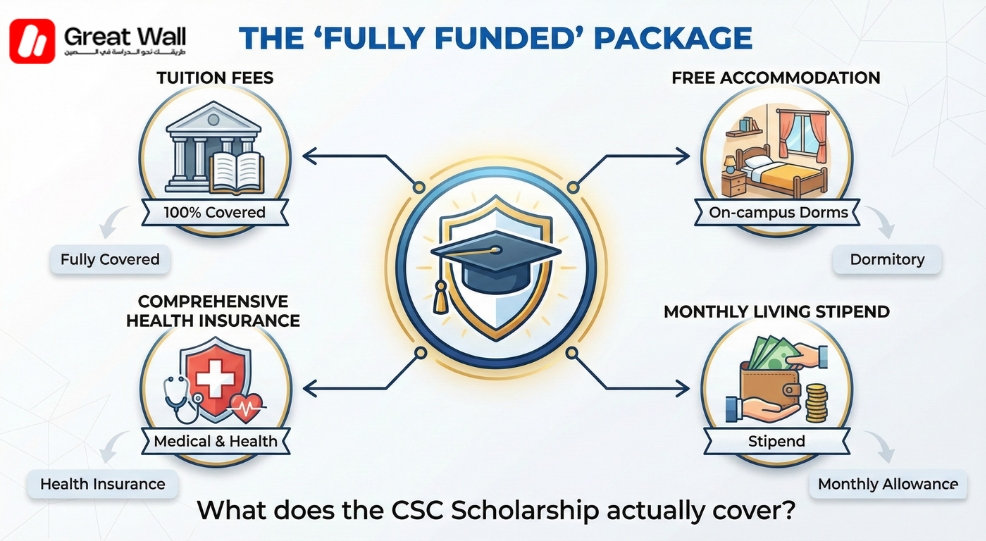
magine studying in China and graduating with an Engineering or Medical degree on a fully funded scholarships; zero debt, no tuition fees, free housing, and a monthly stipend deposited straight into your bank account just for attending class.
This isn’t a scam. It is the reality for thousands of international students. But the competition is getting harder.
To succeed, you need more than good grades; you need a strategy. This CSC scholarship guide will break down exactly how to hack the system, choose the right path (Type A and Type B scholarship), and secure your seat for the 2026 intake.What is the CSC Scholarship? (The “Golden Ticket”)
The Chinese Government Scholarship (CSC) is China’s most prestigious scholarship for international students studying in China, created to bring outstanding global talent to its universities.
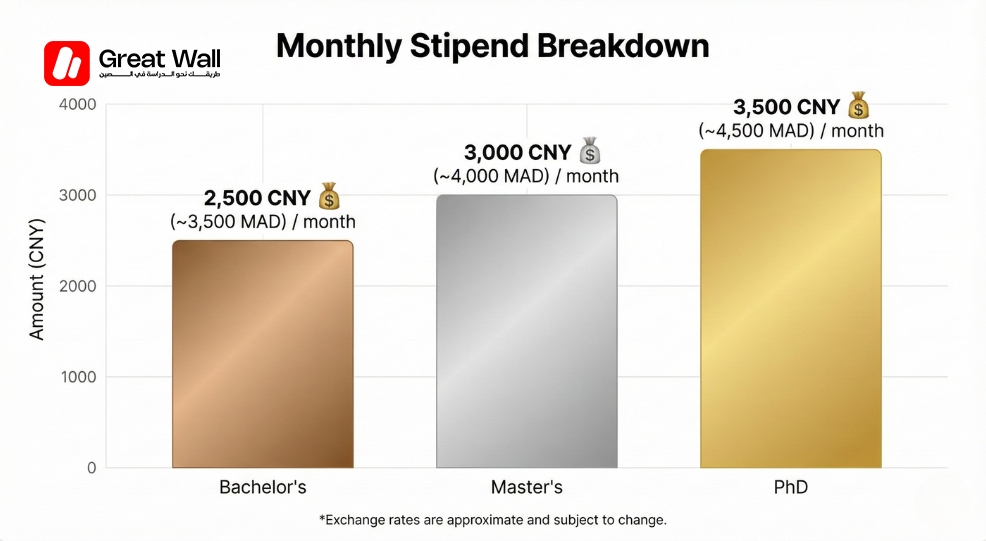
So, what does “Fully Funded” actually mean? Based on Campus China Website (CSC), If you win this grant, you’ll get the followed benefits:
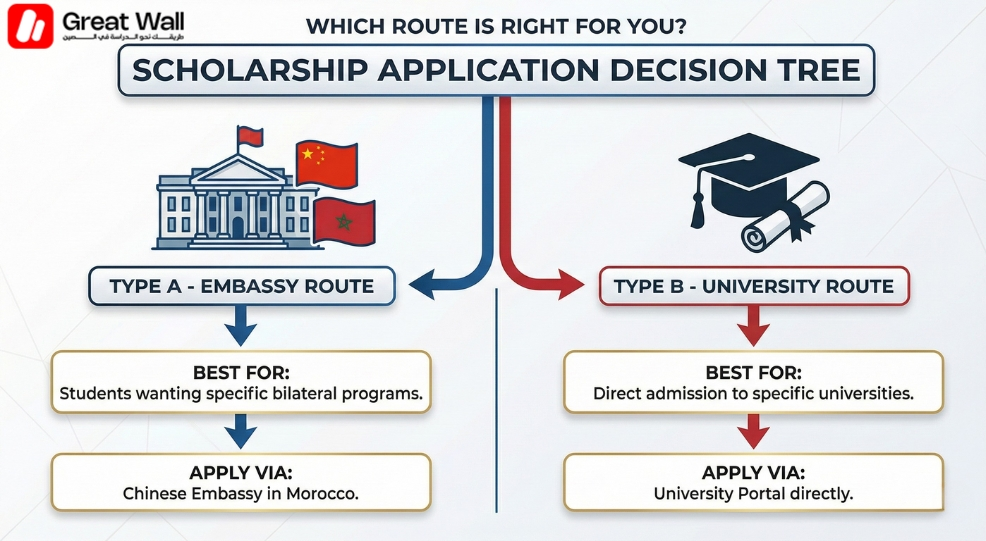
As a matter of fact, most Moroccan students get rejected simply because they apply to the wrong category. You need to understand the difference immediately.
This category is for scholarships managed by government exchange programs.
This category allows students to apply directly to Chinese universities that are eligible to enroll CSC students.
Note: It is important to check if your chosen university offers the specific major you want under the CSC program before applying.
Skip The Stress: Great Wall Education handles all the paperwork for your study in China journey; including the China visa process for Moroccan students.
This is the secret most agencies won’t tell you. Even, if you miss the CSC, you are not out of the game. There are two other goldmines:
Consequently, here is thetThe Strategy that you can follow: When you fill out your application, always tick the box that says “I am willing to accept other forms of scholarships.”
Ready to launch your application for China scholarships 2026? Follow this roadmap to avoid missing deadlines.
Vital Guide: Don’t go to the wrong doctor. Find approved hospitals in Morocco.
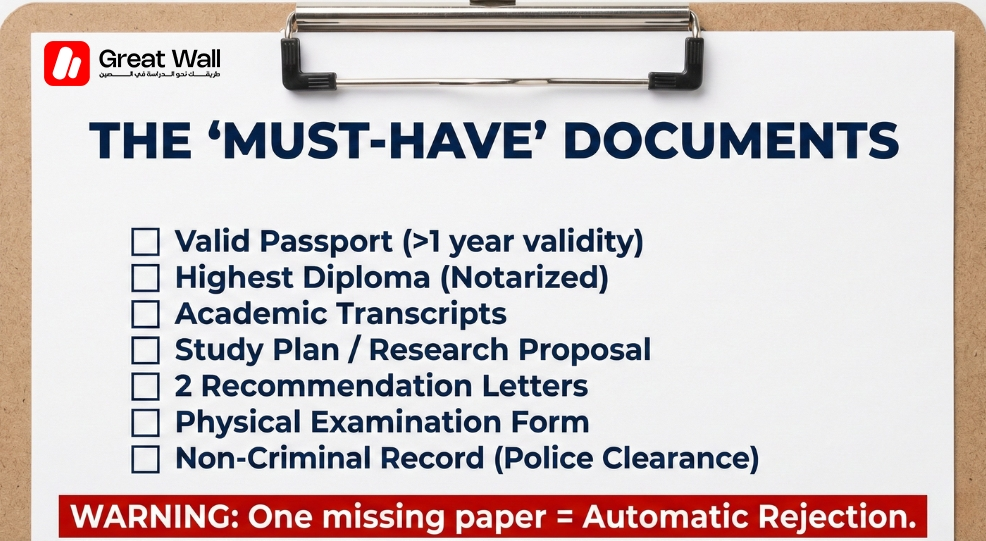
One missing paper = Automatic Rejection. Ensure you have these scanned clearly (NOT with a phone camera).
In conclusion, The window for China scholarships 2026 is opening now. Compared to your friends that might are stressing about French visa rejections, you could be securing a fully funded future in the world’s next superpower.
Don’t wait for the deadline. The early applicants get the attention.
Need a professional review of your application? We have helped 1500+ students secure funding.
Let the experts handle it for you: Great Wall Education manages every bureaucratic requirement for your China study application.
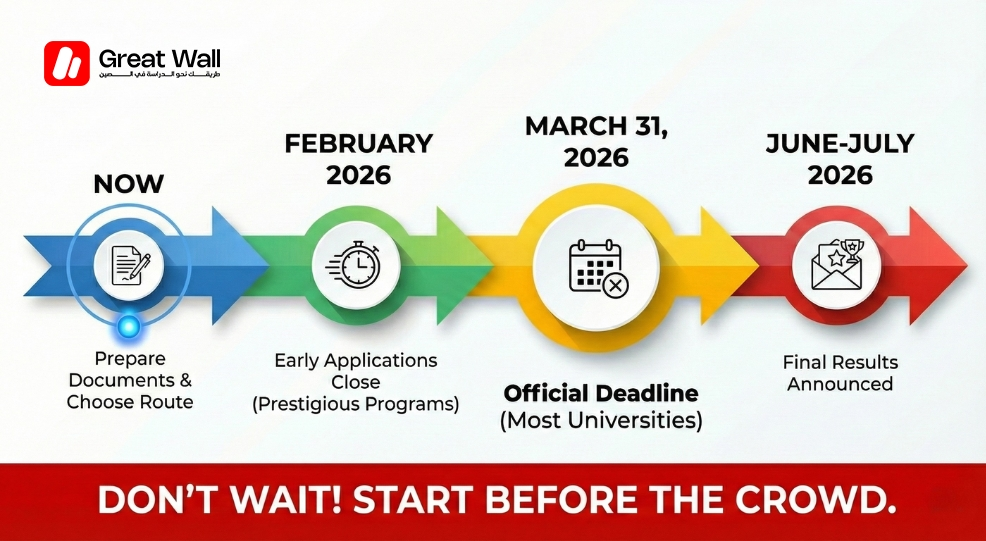
Most universities close their applications by March 31, 2026. However, some prestigious programs may close as early as February.
No, many universities offer programs taught entirely in English. However, passing HSK (Chinese proficiency test) levels can strengthen your application.
Yes, you can apply through the Embassy (Type A) and directly to universities (Type B) to maximize your chances, provided you follow the specific guidelines for each.
Generally, applicants for Bachelor’s degrees should be under 25, Master’s under 35, and PhD under 40.
In addition, to ensure the accuracy of the information provided in this guide, the following official government sources and regulatory bodies were consulted:
1. China Scholarship Council (CSC)
2. Embassy of the People’s Republic of China in the Kingdom of Morocco
3. Ministère de l’Enseignement Supérieur (Maroc)
4. Center for Student Services and Development (CSSD)
Introduction The best cities to study in China for Moroccan students in 2026

Introduction Cost of studying in China is one of the main reasons why

Introduction CSCA Exam Technical Issues can happen during the test, but they are