
study in china
Study Abroad: The Ultimate Guide to Study in China (2026)
Introduction Study abroad is no longer just about getting a diploma. It’s about

Scholarship application and exam preparation support.
Practice tests, strategies, and feedback to help you achieve your target score.
Targeted training and past paper practice to boost your exam performance.
Mock interviews and coaching to help you succeed in admissions and visa interviews.
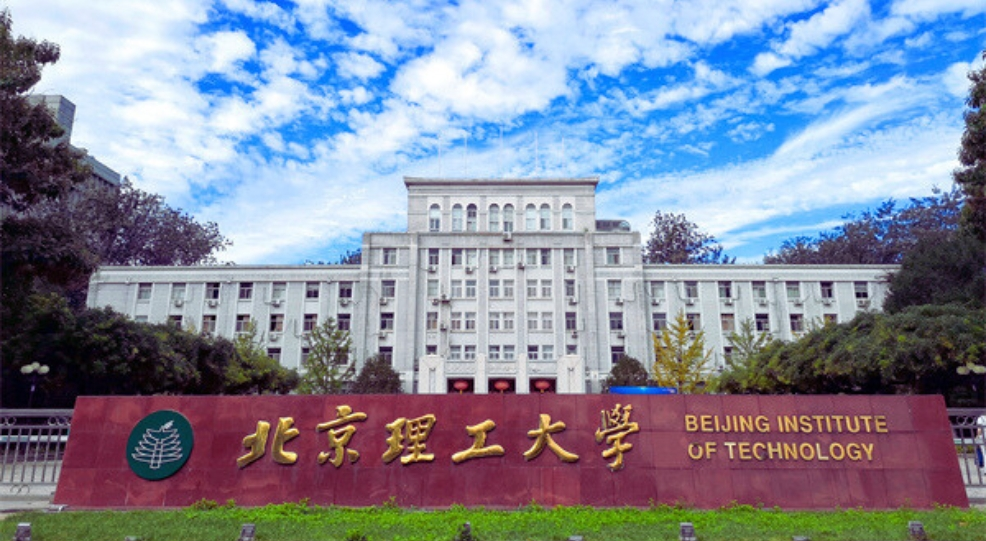

When students first encounter Beijing Institute of Technology, they usually see the numbers: Top 150 globally, Top 5 in Aerospace Engineering, Top 15 in Energy Science.
But rankings do not fully capture what BIT represents.
BIT university is built around technological intensity. It is deeply embedded in China’s advanced research infrastructure, particularly in aerospace systems, intelligent manufacturing, automation engineering, energy technologies, and computational sciences.
Research at Beijing Institute of Technology is not theoretical decoration. It is funded, applied, and aligned with national innovation priorities. This integration with industry fundamentally shapes the academic experience.
For international students; especially those coming from Morocco or other developing academic ecosystems, this environment can be transformative. You are not studying engineering as abstract theory. You are studying in a system where those technologies are actively being built.
Before applying, it is important to understand the full academic and administrative process through our detailed Requirements to Study in China for Moroccan Students guide.

Academic Ranking of World Universities (ARWU)
BIT has demonstrated consistent global growth, maintaining Top 150 status worldwide, according to: Global Ranking of Academic Subjects (Shanghai Ranking)
Top Ranked Subjects:
These are not regional rankings. They are global indicators of research intensity and academic impact.
The bachelor’s experience at Beijing Institute of Technology (BIT university) is structured as professional formation, not passive learning.
From the first year, students are immersed in rigorous foundations:
Calculus is intensive. Mechanics is uncompromising. Programming requires structural understanding rather than memorization. The academic philosophy at BIT university is clear: strong fundamentals determine long-term engineering competence. As students’ progress, specialization deepens.
If you are still evaluating your academic readiness, our Checklist to Study in China – 2026 Guide can help you assess documents, language levels, and timelines before applying to BIT university.
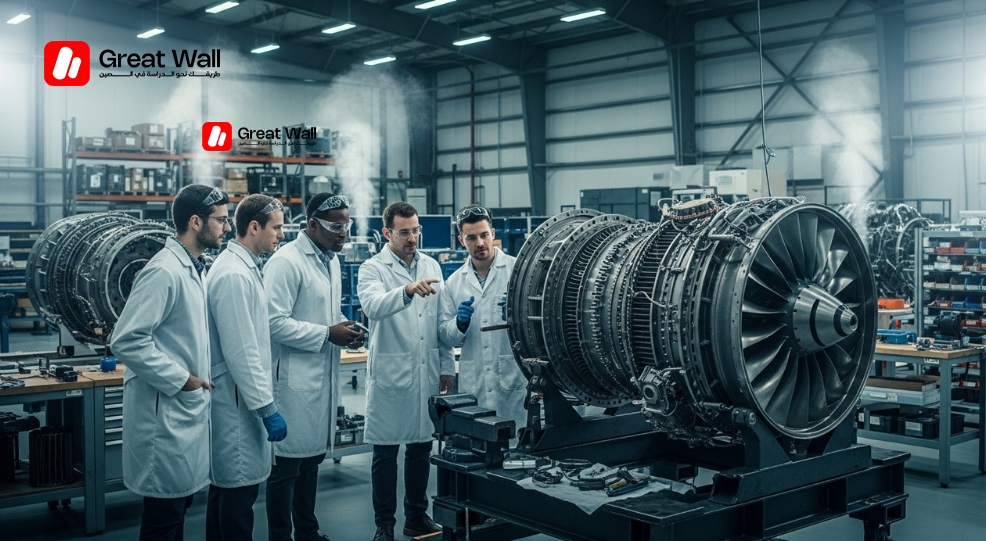
Students transition rapidly from theoretical mechanics to applied aerospace systems, including:
Laboratory simulations and modeling projects gradually replace textbook-only exercises. Even during early semesters, students operate in an environment surrounded by research groups working on propulsion modeling, satellite subsystems, and structural simulations.
This immersion changes perspective. The academic question shifts from “Will this be on the exam?” to “How does this system behave under real-world constraints?”
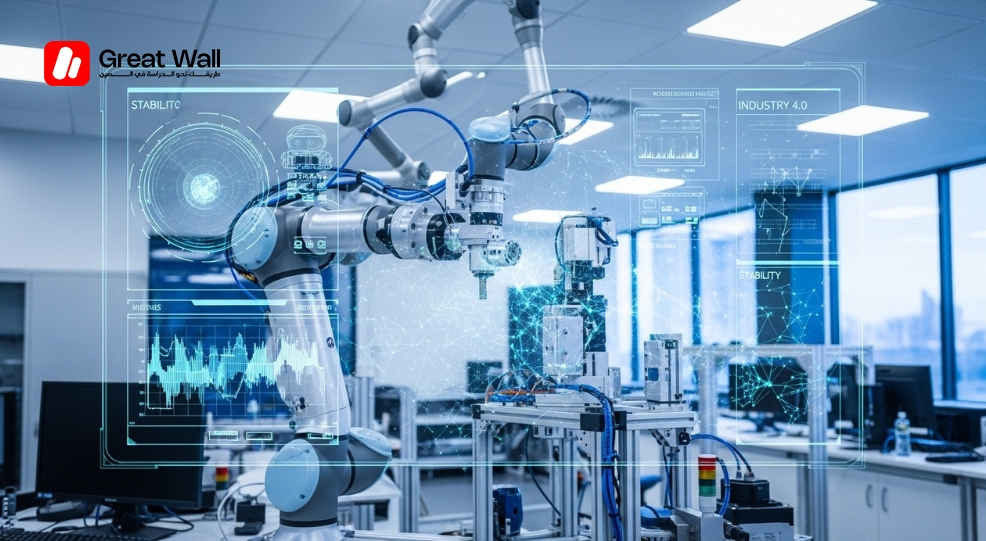
Automation at BIT university centers on understanding dynamic systems and intelligent control. Core areas include:
Students learn how machines behave under variable conditions and how to design systems that maintain stability and efficiency. Automation is not treated as abstract mathematics alone; it is framed as industrial infrastructure, essential to modern manufacturing and robotics.
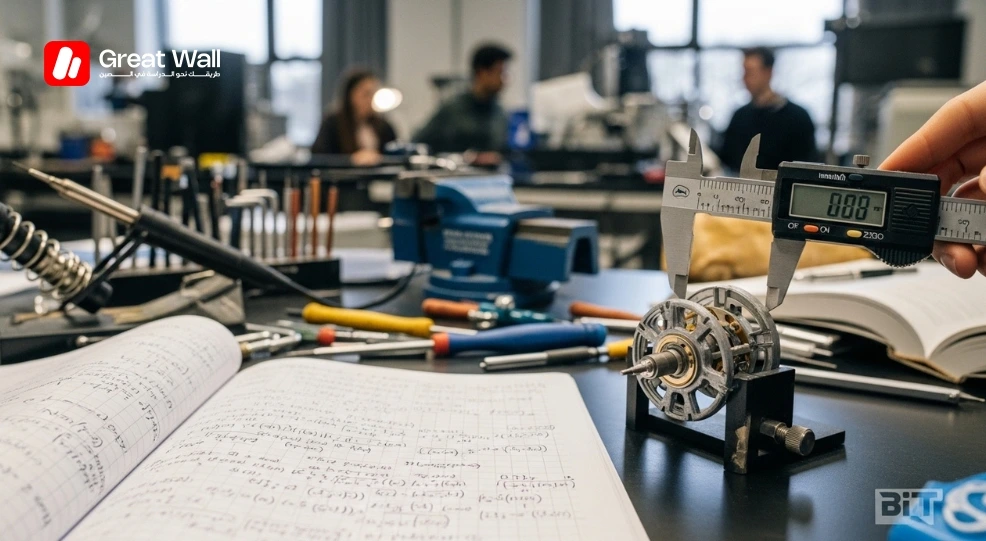
Mechanical Engineering maintains strong classical foundations while integrating modern industrial technologies:
Students are trained to understand both physical systems and computational optimization. The integration of Industry 4.0 principles ensures graduates are prepared for hybrid engineering environments.
Computer Science at Beijing Institute of Technology operates with structural depth. Students are expected to move beyond surface-level coding and understand computational systems holistically:
The focus is analytical rigor. Students must analyze complexity, design scalable systems, and think architecturally.
Even non-engineering programs reflect BIT’s applied philosophy. This program integrates:
Students study how economic systems interact with technological infrastructure, positioning them within China’s industrial ecosystem.
Note: What distinguishes the bachelor’s stage at BIT university is early exposure to laboratory culture. Students engage in research teams, technical competitions, and applied engineering projects earlier than at many global institutions.
By graduation, the transformation is visible. Students approach complex systems methodically. They analyze before reacting. They think structurally rather than emotionally.
If the bachelor’s program builds discipline, the master’s program at Beijing Institute of Technology builds intellectual authority.
At graduate level, evaluation shifts from exams to research contribution. Students are expected to generate insight, refine models, and defend methodologies.
Graduate coursework and research include:
Research frequently intersects with national aerospace initiatives. Simulation models must be defensible. Assumptions must withstand mathematical scrutiny. This is not academic rehearsal; it is professional preparation.
Master’s students engage deeply with:
Projects often reflect real-world energy transition and sustainability challenges. Research outcomes are aligned with global carbon neutrality goals.
This specialization integrates hardware and intelligence through:
Graduate students frequently collaborate on industrial-scale research projects involving automated production systems and high-precision equipment.
At master’s level, Computer Science deepens significantly:
Students are expected not only to implement algorithms but to refine and extend them. Research discussions are technical and iterative.
This program bridges engineering with strategy through:
It prepares students for leadership roles in technical industries and consulting environments.
Note: The defining shift at master’s level is autonomy. Students operate inside research groups, attend high-level technical meetings, defend their methodologies, and refine their models repeatedly. Many describe this stage at BIT university as the moment they stopped being students of engineering and started becoming engineers.
BIT is demanding. Workloads are substantial. Laboratory standards are precise. Deadlines are strict.
International students sometimes struggle during their first semester, especially while adapting to a new academic culture or language environment.
However, the intensity mirrors high-performance engineering industries. The resilience developed under that structure often becomes one of the most valuable long-term professional assets.
Students frequently reflect that the pressure at BIT university did not break them; it strengthened them.
Why Study at BIT University? The Beijing Innovation Ecosystem
Studying at Beijing Institute of Technology means studying in China’s capital.

Beijing offers access to research academies, aerospace enterprises, high-tech innovation hubs in Zhongguancun, and international conferences. The ecosystem surrounding BIT university reinforces ambition.
You are not isolated in a small academic town. You are embedded in a national innovation network.
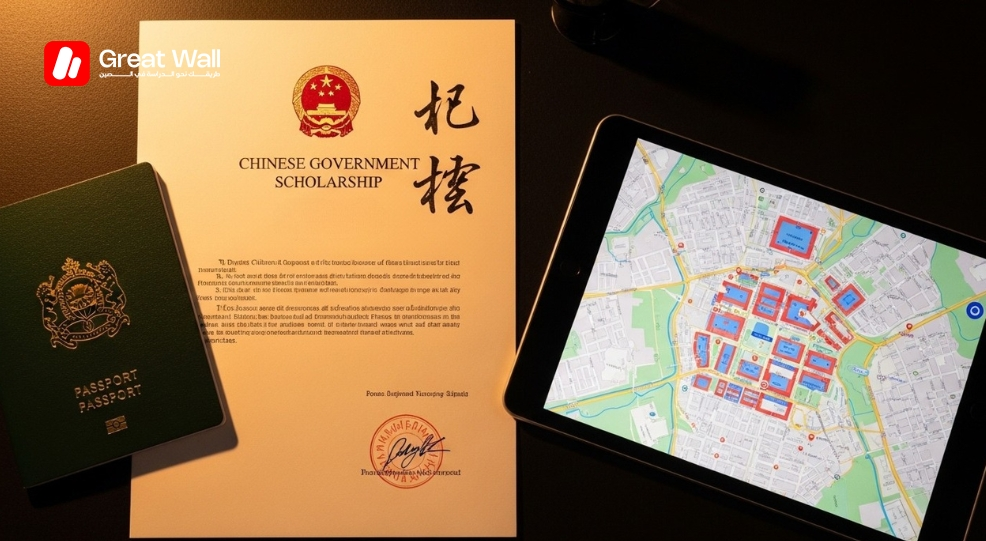
Beijing Institute of Technology remains financially competitive compared to Western institutions. International students may apply for the Chinese Government Scholarship (CSC), BIT university scholarships, and Beijing municipal funding.
CSC typically covers tuition, accommodation, medical insurance, and provides a monthly stipend.
Strategic preparation; including document verification and language certification, significantly improves acceptance chances. Also, understanding living expenses in Beijing is equally important, which is why students should review our updated Cost of Living in China – 2026 Student Guide before making financial decisions.
Students aiming for financial support should carefully review our complete guide on How to Get a Full CSC Scholarship from Morocco, which explains eligibility, documentation, and success strategies.
BIT is not designed for comfort. It is designed for growth.
If your ambition lies in aerospace systems, intelligent automation, advanced manufacturing, AI-driven engineering, or energy technologies, Beijing Institute of Technology stands among China’s most strategically positioned universities.
The ranking confirms its global status.
The structure confirms its rigor.
The experience confirms its long-term impact.
Applying to a competitive institution like Beijing Institute of Technology (BIT university) requires more than strong grades. Scholarship strategy, document preparation, program selection, and timeline management all play a critical role in acceptance outcomes.
Great Wall Education specializes in guiding Moroccan and international students through the Chinese university admission process; from selecting the right major at Beijing Institute of Technology to preparing CSC scholarship applications and handling visa documentation (JW201/JW202 forms).
Rather than simply submitting applications, the approach focuses on positioning: aligning academic background, language certification, and scholarship eligibility to maximize acceptance probability.
For many students, structured guidance transforms what feels like a complex process into a clear, strategic pathway.
For international students; especially Moroccan applicants targeting aerospace, mechanical engineering, automation, or artificial intelligence; three names consistently dominate the conversation.
All three are members of China’s elite defense and aerospace university ecosystem. All three are heavily research-driven. And all three are highly competitive for CSC scholarship applicants.
But they are not identical.
This guide breaks down the differences clearly; academically, structurally, and strategically.
| Criteria | Beijing Institute of Technology (BIT) | Harbin Institute of Technology (HIT) | Northwestern Polytechnical University (China university”] (NPU) |
| Location | Beijing (Capital City) | Harbin (Northern China) | Xi’an (Central China) |
| Climate | Cold winters, manageable | Extremely cold winters | Moderate climate |
| Core Strength | Aerospace + AI + Automation | Traditional Aerospace & Astronautics | Aeronautics & Aerospace Specialization |
| Aerospace Prestige | Strong & modern | Historically dominant | Highly specialized |
| Engineering Focus | Interdisciplinary systems | Deep theoretical foundation | Aerospace-centered |
| AI & Automation Integration | Very strong | Moderate | Growing |
| Defense & National Projects | Yes | Very strong involvement | Strong involvement |
| Academic Intensity | High | Very high (most rigorous) | High |
| International Exposure | Strong (capital access) | Moderate | Moderate |
| Cost of Living | Higher | Lower | Moderate |
| Best For Students Who Want… | Tech + capital exposure | Pure engineering rigor | Aerospace specialization |
| CSC Scholarship Competitiveness | High | Very high | Very high |
| Ideal Student Profile | Analytical + interdisciplinary | Strong math/physics background | Aerospace-focused profile |
| If You Want… | Best Choice |
| Maximum academic rigor | HITSZ |
| Pure aerospace identity | NPU |
| Aerospace + AI integration | BIT |
| Capital city exposure | BIT |
| Lower living costs | HITSZ |
| Balanced environment + aerospace | NPWU |
Yes — Beijing Institute of Technology (BIT university) is worth it for Moroccan students & international students seeking rigorous engineering, technology, and applied science education in China.
At both bachelor’s and master’s levels, BIT is designed to develop analytical discipline, research capability, and real-world problem-solving skills. Undergraduate programs emphasize strong foundations in mathematics, physics, programming, and engineering systems, while graduate programs focus on research depth, innovation, and technical contribution.
For Moroccan and international students, Beijing Institute of Technology stands out for its strength in aerospace engineering, automation, energy science, mechanical engineering, artificial intelligence, and computer science. The university’s close integration with national research initiatives and industrial projects gives students early exposure to laboratory culture and applied research.
In short:
If your goal is to study in China at a university that prioritizes rigor, research, and long-term engineering credibility, Beijing Institute of Technology is a strong and strategic choice.
Beijing Institute of Technology is ranked 101–150 globally in the Academic Ranking of World Universities (ARWU 2025).
Yes. BIT is ranked #4 worldwide in Aerospace Engineering according to Shanghai Ranking Global Ranking of Academic Subjects.
Yes. BIT university offers selected bachelor’s and master’s programs in engineering, computer science, and business-related disciplines in English.
Bachelor’s programs at Beijing Institute of Technology typically cost between 20,000 and 26,000 CNY per year, while master’s programs range between 28,000 and 35,000 CNY per year depending on specialization.
Yes. International students may apply for the Chinese Government Scholarship (CSC), BIT university scholarships, and Beijing municipal funding programs.
Beijing Institute of Technology is a public research university funded and administered by the Chinese government.
Introduction Study abroad is no longer just about getting a diploma. It’s about

Introduction Baccalaureate exam preparation is one of the most decisive moments in the

Introduction Baccalaureate preparation is where most Moroccan students either unlock their future; or